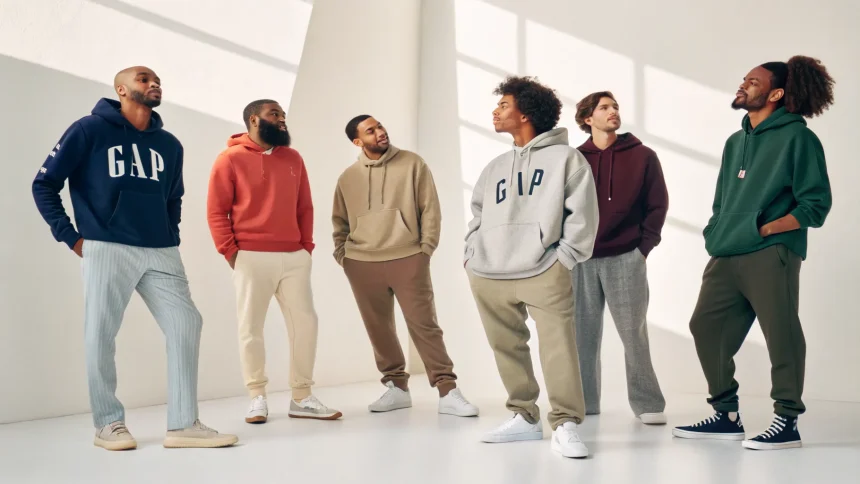
Gap’s classic sweatshirt is getting a fresh spin, as six creators reinterpret the staple through their own style and stories. The effort brings new energy to a decades-old icon and speaks to how heritage brands refresh familiar items to stay relevant with younger shoppers who crave individuality.
The project centers on six women—Manon, Daniela, Sophia, Megan, Lara, and Yoonchae—each shaping a version that reflects personal identity. Their remixes highlight the pull of a known logo with a new, personal twist. It’s a simple idea with clear stakes: keep a staple alive by letting more people see themselves in it.
Manon, Daniela, Sophia, Megan, Lara and Yoonchae each reimagined Gap’s iconic sweatshirt to reflect their personal style and diverse backgrounds.
A Heritage Basic Gets Personal
The Gap sweatshirt is shorthand for American casual wear. Born from a brand founded in 1969, the piece surged in the 1990s and has cycled back as logo wear returns to street style. Reworks like this ride that nostalgia while updating fit, color, and meaning for a new audience.
What stands out here is the focus on the people, not just the product. Instead of a single “definitive” version, the project celebrates difference. That approach answers what younger buyers ask for: choice and a story they can wear.
- Six creators: Manon, Daniela, Sophia, Megan, Lara, and Yoonchae
- Shared canvas: the Gap logo sweatshirt
- Core theme: personal style and diverse backgrounds
Why Brands Rework Icons
Remixing a proven hit is lower risk than launching from scratch. It also lets a company speak to new communities without abandoning its roots. The sweatshirt’s familiarity does the heavy lifting; the reinterpretations add relevance.
Fashion cycles favor items that can be styled many ways. A logo sweatshirt fits that brief. By inviting multiple voices into the design conversation, the brand widens both the look and the audience.
Diversity as Design, Not Slogan
The creators’ identities are part of the product itself, not a tagline. That matters. Consumers respond when representation shows up in the actual garments and imagery, not only in marketing copy.
The line in focus makes the intent plain: each piece expresses a lived experience. The result is less about a single trend and more about range—silhouettes, palettes, and styling choices shaped by different cultures and tastes.
What This Means for Retail
Heritage brands are leaning on icons as anchor products. The strategy works best when the core item stays recognizable while the styling and storytelling rotate often. That keeps shelves fresh without confusing loyal customers.
This project also hints at a steady shift from one-size-fits-all to curated micro-edits. Limited runs tied to creators can spark demand, drive social buzz, and test ideas before broader rollout.
Signals To Watch Next
Expect more remix projects that pair classic items with distinct points of view. If the response is strong—measured by sell-through and engagement—future drops could expand into fits, materials, and localized editions.
Key questions remain: Will these versions be widely available or kept scarce? How will pricing reflect the added storytelling? And can the brand maintain the sweatshirt’s core appeal while inviting constant change?
The takeaway is simple: a familiar favorite can carry new meaning when many voices shape it. With six creators front and center, this remix turns a logo into a platform. If the momentum holds, the sweatshirt won’t just be back—it will be personal, again and again.