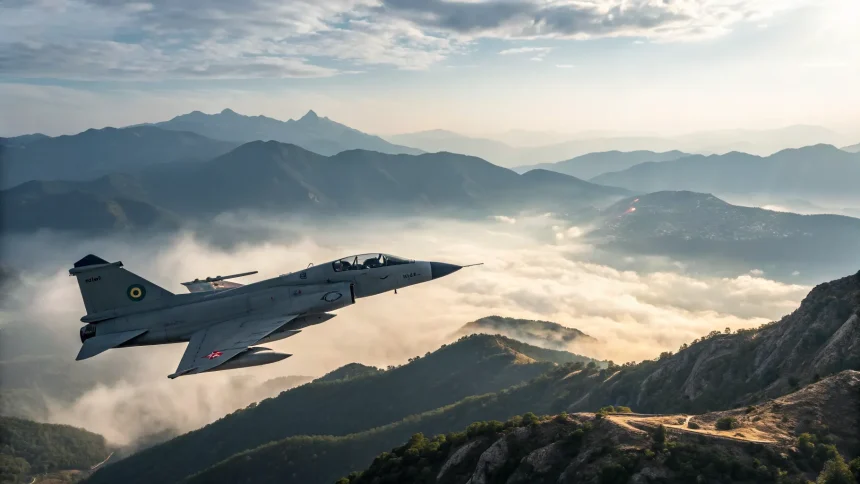
A deadly attack in the disputed Kashmir region has stoked new fears of escalation between nuclear-armed India and Pakistan. As news spread, an old video reappeared online with false claims that Pakistani troops had shot down an Indian warplane. The clip does not show combat. It shows a separate crash in western India linked to a technical fault.
The incident highlights how fast misinformation can inflame a volatile dispute. It also shows why careful checks are vital when emotions run high. The stakes in South Asia are high, and false claims can make a tense moment even worse.
Old Crash Clip Resurfaces After Attack
Soon after reports of the attack, social media feeds filled with dramatic footage. Many posts tied the clip to fresh fighting. Users repeated claims that a Pakistani unit brought down an Indian jet.
“Social media users shared an old clip falsely claiming it shows wreckage of an Indian warplane shot down by Pakistani troops.”
The posts gained rapid traction as people searched for proof of retaliation or loss. The clip’s age and location were missing from most captions and shares.
What The Footage Really Shows
The video is unrelated to the latest violence. It captures a different event in western India, where a fighter jet went down after the crew reported a malfunction.
“The video actually shows a fighter jet that crashed in western India after its pilots reported a technical snag.”
No link to cross-border fire exists in that case. The cause was mechanical, not combat. That key detail was stripped away as the clip traveled online.
Why False Claims Gain Traction
Conflict zones create a rush for fast answers. Shocking visuals spread faster than corrections. Algorithms reward engagement, not accuracy.
Old footage is easy to repurpose. Cropped angles, new captions, and urgent language can fool even careful readers. The lack of clear dates and locations adds to the confusion.
Misinformation also exploits prior fears. India and Pakistan have fought wars over Kashmir. Each fresh attack sparks rumors about strikes, shootdowns, or troop moves.
History and High Stakes in Kashmir
The Kashmir dispute has lasted since the partition of British India in 1947. Both countries claim the territory. Skirmishes along the Line of Control are common. Crises have escalated before, drawing global attention and calls for restraint.
Both sides possess nuclear weapons. That fact raises the cost of misreading events. False reports can push public opinion and decision-makers toward rash steps. Clear information can help prevent that slide.
How To Check Conflict Videos
- Look for the original upload date and source channel.
- Use a reverse image or video search to find earlier versions.
- Check for landmarks, uniforms, or license plates that place the scene.
- Compare with official briefings and trusted local outlets.
- Be wary of cropped clips and dramatic captions without details.
What The Mislabeling Means Now
Mislabeling raises the risk of panic and retaliatory calls. It can also distract from verified facts on the ground. That hurts relief efforts and obscures real accountability for the attack itself.
The episode is a reminder to slow down before sharing. Clear context—time, place, and cause—matters as much as the image. Once a false claim spreads, corrections struggle to catch up.
The latest surge of misleading posts shows how fragile the information space is during crises. The re-shared crash video did not prove a new shootdown. It showed an older accident tied to a technical fault. As officials assess the attack and its fallout, readers should expect more claims to surface. The safest course is to verify first, share later, and watch for official updates and on-the-ground reporting. Keeping rumors in check can lower the temperature at a moment when calm is most needed.