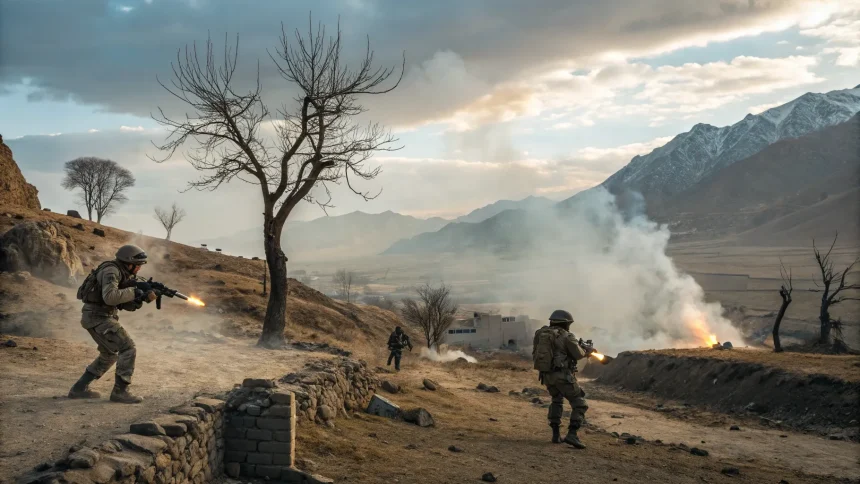
Fighting flared again along the Afghanistan–Pakistan border after a brief ceasefire ended, leaving at least two civilians dead and eight others wounded in eastern Afghanistan. Local officials reported fresh exchanges of fire near key crossing points as both sides blamed each other for the breakdown. The renewed violence threatens fragile trade links and heightens fears for residents caught in the crossfire.
What Happened and Why It Matters
Officials in eastern Afghanistan said the shooting resumed soon after a temporary truce expired. They reported civilian casualties near residential areas. Emergency teams moved the wounded to nearby hospitals. The latest round follows months of tension across the frontier, where disputes over fencing, patrols, and militant movements often spark clashes.
“Renewed fighting has erupted along the border after a temporary ceasefire expired,” officials said, reporting “at least two civilians killed and eight others wounded.”
The Afghanistan–Pakistan border stretches for more than 2,600 kilometers. It cuts through mountainous terrain and is difficult to police. Skirmishes tend to cluster around major gates, including Torkham in the east and Spin Boldak in the south, where closures can halt trade worth millions each day.
Background: Years of Tension on a Disputed Line
The frontier, known as the Durand Line, dates back to the 19th century. It remains a source of dispute, with periodic flare-ups since the Taliban took power in Kabul in 2021. Pakistan has built extensive fencing and tightened checks. Afghan authorities have protested the measures and accused Pakistani forces of firing into Afghan territory.
Security concerns add pressure. Pakistan says militants cross from Afghan soil to stage attacks, pointing to groups like the Tehreek-e-Taliban Pakistan. Afghan officials reject those claims and say Pakistan shells border districts, hitting homes and farms. Civilians often pay the price when artillery and small arms fire spill into villages.
Conditions on the Ground
Residents near the crossing points described panic as shots rang out. Local clinics reported treating shrapnel wounds. Market stalls shuttered and truck lines stalled for hours. Aid groups warned that any extended closure could disrupt food and fuel deliveries to remote districts.
- Civilian toll reported: at least two dead, eight wounded.
- Fighting erupted after a temporary ceasefire lapsed.
- Trade and travel slowed near eastern crossings.
Competing Claims and Calls for Restraint
Officials on both sides urged calm but traded accusations over who fired first. Border commanders often set up short truces to evacuate the wounded and reopen key gates. These arrangements can collapse quickly without a longer plan.
Regional analysts say the core disputes remain unresolved. They point to three pressure points: security, recognition of border controls, and trade facilitation. Without progress on these fronts, new incidents are likely.
Afghan authorities called for joint investigations and a return to dialogue. Pakistani officials emphasized the need to stop militant infiltration and protect border posts. Neither side announced a new ceasefire by late day.
Economic and Human Impact
Border closures strain local economies. Thousands rely on daily crossings for work, medical care, and family visits. Long delays raise transport costs and can push up prices of food staples. Traders who move fruit, cement, and fuel face mounting losses when convoys idle at checkpoints.
Schools and clinics near the line sometimes suspend operations during clashes. Families shelter indoors. Some move deeper inland until the shooting stops. The recurring cycle leaves communities anxious and unsure when it is safe to return to normal routines.
What Comes Next
Diplomats and tribal elders often broker quick de-escalation. These efforts can reduce firing but rarely tackle root causes. Security experts recommend repeatable steps: joint patrol hotlines, clear rules for border construction, and scheduled command-level meetings. Humanitarian groups also press for protected corridors so ambulances and civilians can pass even during standoffs.
Forecasts remain uncertain. If both sides reopen talks and agree to coordinated patrols, border towns could see relief. If not, sporadic clashes may continue, with civilians again at risk.
The latest violence shows how fragile the situation is along the frontier. The immediate priority is to protect civilians and stabilize key crossings. Lasting calm will likely depend on sustained talks, credible verification of incidents, and practical steps that keep communication open when tempers rise. Observers will watch for signs of a new truce, any shift in border protocols, and whether trade flows resume without interruption.