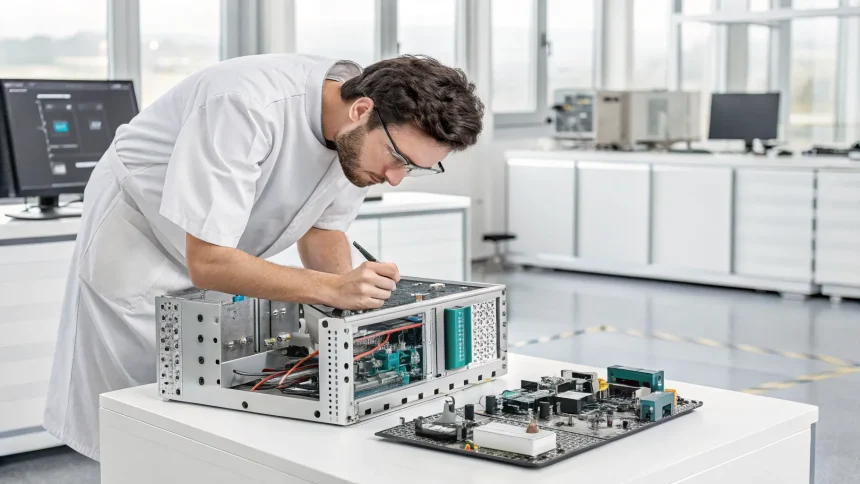
A Barcelona-based startup says it will sell a do-it-yourself quantum computer kit, promising a lower-cost path into one of tech’s hardest fields. Qilimanjaro is pitching an all-in-one package that buyers assemble themselves, a move that could widen hands-on access to quantum hardware.
The company framed the offering as a complete set of parts, with the catch that users must know how to put it together. The announcement speaks to rising interest from universities, research labs, and advanced hobbyists. It also raises questions about safety, practicality, and what “quantum computer” means at a starter price point.
What Qilimanjaro Says Is New
“Qilimanjaro is selling a relatively cheap kit with everything you need for a quantum computer – you just need to be able to put it together.”
The message suggests a shift from black-box systems toward hands-on assembly. It implies an educational or prototyping focus rather than a production-grade machine. By bundling parts, the kit could reduce months of sourcing and integration work for newcomers.
The pitch aligns with growing demand for practical training tools. Many institutions now run quantum courses but lack hardware access. An assemble-it-yourself kit could bridge that gap for advanced classes and lab programs.
Background: Quantum Hardware Remains Hard
Quantum computers rely on fragile qubits that are easily disturbed. Most systems need extreme cooling, precise control electronics, and careful shielding. Even small demonstrations often require specialized spaces and expert handling.
Until now, access has largely come through cloud services or expensive, ready-made units. Some benchtop devices use approaches that work at room temperature but offer few qubits and limited performance. Others require cryogenic setups and clean-room know-how. A kit that claims “everything you need” will face those realities.
Who Might Use a DIY Kit
Educators could use a kit to teach hardware principles, not just algorithms. Researchers might test control methods, calibration routines, or error studies on small systems. Startups and labs could prototype before committing to larger builds.
For hobbyists, the barrier will be skill and safety. Assembly may call for vacuum systems, microwave control, optical alignment, or cryogenic handling. The phrase “if you can put it together” suggests Qilimanjaro expects capable users with lab access.
Key Questions on Cost and Capability
Qilimanjaro describes the kit as “relatively cheap,” but quantum hardware is rarely inexpensive in absolute terms. Price, qubit count, fidelity, and required lab gear will define its value. Support and documentation will also matter for first-time builders.
- What qubit technology does the kit use?
- Does it require cryogenics or special facilities?
- What are the target qubit numbers and error rates?
- What tools, training, and safety steps are included?
- How does assembly time compare with a prebuilt unit?
Industry Reaction and Practical Limits
Experts often argue that hands-on access speeds learning and talent growth. A kit could help train the next wave of quantum engineers. It may also support more transparent research, since users can see and alter the setup.
Skeptics will ask whether the kit can deliver useful performance. Even small systems require careful calibration and ongoing maintenance. If buyers need additional lab gear, the true cost could climb fast.
There is also a safety angle. Work involving cryogens, high vacuum, or high-frequency electronics can be risky. Clear guidance and safeguards would be essential for non-specialists.
What It Could Mean for the Market
A credible DIY option would mark a step toward wider hardware literacy. Universities could run more labs. Early-career engineers could gain skills that are hard to teach on cloud simulators alone.
Competition may respond with kits focused on different technologies, such as photonics or room-temperature nuclear magnetic resonance. That could give buyers options across budgets and use cases.
If the kit proves practical, it might push suppliers to standardize parts and interfaces. Easier integration could lower barriers for future projects and collaborations.
What to Watch Next
Details will matter. Buyers will look for specifications, assembly guides, and case studies. They will also want to see repeatable results in classroom or lab settings.
Clear disclosures on required facilities, support levels, and safety training could decide adoption. Early pilots at universities would signal whether the kit meets real-world needs.
Qilimanjaro’s promise is bold: a low-cost package that opens the door to quantum hardware, provided users can build it. The next phase is proof. Pricing, specs, and early user reports will show whether this model can expand access without sacrificing safety or scientific value. If it works, expect more hands-on options and a faster path for training the people who will build the field’s next advances.