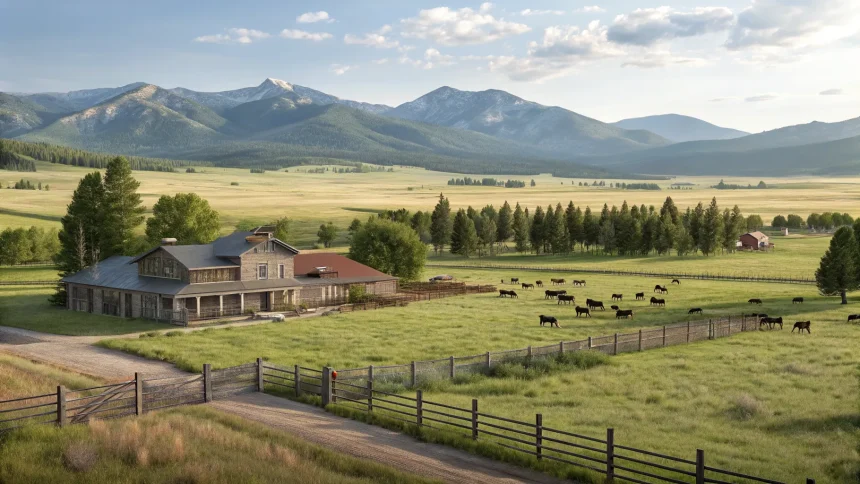
The sprawling ranch at the heart of Taylor Sheridan’s hit “Yellowstone” is a real place with a working gate, grazing cattle, and a mountain view that looks exactly like it does on TV. Since the series premiered in 2018, fans have asked where the Duttons call home, and whether they can see it for themselves. The answer: yes, it exists in Darby, Montana, and no, it’s not just a set.
“Is the Dutton Ranch real?”
The property is known off-screen as Chief Joseph Ranch. It functions as a real cattle ranch and guest ranch when cameras stop rolling. While the show’s drama is scripted, the towering log mansion, the corrals, and the tree-lined driveway are very real and very busy.
The Real Ranch Behind the Fiction
Chief Joseph Ranch sits in Montana’s Bitterroot Valley. Long before it became TV-famous, it was a private ranch with a historic log lodge and cabins. The main house doubles as the Dutton family home on screen, while outbuildings and pastures serve as the show’s daily backdrop.
When the production is not filming, the owners typically open select cabins to paying guests. The lodge itself is not a hotel, and access to the house is restricted. Visitors often stop at the recognizable front gate for a photo, but the property is private and still runs as a ranch, so access depends on schedules and filming needs.
- Name on TV: Yellowstone Dutton Ranch
- Real name: Chief Joseph Ranch
- Location: Darby, Montana
- Status: Working ranch and guest ranch
How Filming Works
The show has filmed key ranch scenes at Chief Joseph Ranch since the start. Early seasons also used locations outside Montana for town and exterior shots. As the series grew, more production shifted to Montana to match the setting fans expect. That move helped keep continuity on screen, while giving the ranch and nearby communities a steady rhythm of filming days and quiet weeks.
Crews adapt the property with temporary sets, corrals, and signage, then remove them after a shoot. The ranch remains a real business underneath the props, which explains why some areas are off-limits and booking windows are tight.
A Tourist Magnet With Real-World Effects
“Yellowstone” has turned the Bitterroot Valley into a bucket-list stop. Local shops, outfitters, and lodges report more visitors asking for directions to the gate or for trails that look like the show’s panoramic rides. The attention brings seasonal traffic and spending, but also pressure on small-town services and public lands.
State and local tourism groups have promoted safe travel tips and urged visitors to respect private property. Ranch owners and production teams have echoed that message. The balance is simple: the ranch is TV-famous, but it is also someone’s workplace and home.
Spin-Offs and Sister Ranches
The franchise’s prequels and offshoots widen the real-estate map. “1883” filmed across Texas and the West to trace the Dutton origin story. “1923” returned to Montana for the early ranch years and also filmed abroad for storylines set overseas. In Texas, the Four Sixes Ranch—known as the 6666—appears in the franchise and is also a historic, working ranch with deep ties to Western cattle culture.
These choices keep the shows grounded in places where ranching is more than a backdrop. Real corrals, real dust, and real weather shape performances and production decisions in ways a soundstage can’t match.
Can Fans Visit?
Yes, with caveats. The ranch is private property first and a filming location second. Some tips for would-be visitors:
- Check the ranch’s official updates before planning.
- Expect limited cabin availability and seasonal closures.
- Do not trespass or drive onto the property uninvited.
- Be respectful if taking photos at the gate.
These simple rules keep the experience safe for guests, staff, and livestock—and help ensure the ranch can keep hosting the shows that made it famous.
In short, the Duttons’ home base is real, and it’s busy. Chief Joseph Ranch has carried the weight of a prime-time saga while staying a working operation. As “Yellowstone” and its spin-offs continue, watch for filming schedules, booking windows, and any changes to public access. The mountains aren’t going anywhere—but a “No Trespassing” sign still means what it says.