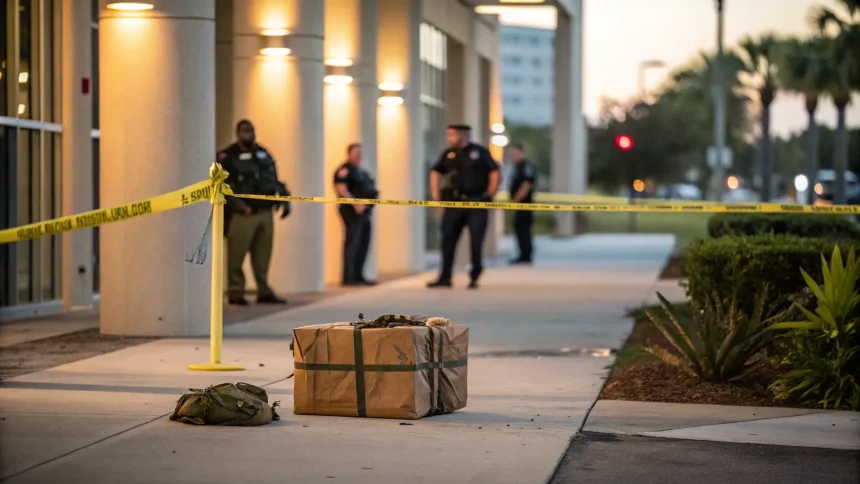
A package that appeared to contain an improvised explosive device was found outside the visitor center at MacDill Air Force Base in Tampa on Thursday, according to multiple sources. The discovery prompted a swift security response at one of the nation’s most sensitive military hubs, where U.S. Central Command and U.S. Special Operations Command are headquartered.
“A package which contained what appeared to be an improvised explosive device was discovered outside the MacDill AFB visitor center, multiple sources told ABC News.”
Authorities did not immediately share details about injuries, suspects, or a motive. The visitor center, which processes base access for civilians and contractors, is a high-traffic point near the main gate.
What Happened
Security personnel reportedly identified a suspicious package near the visitor center entrance. Standard base procedures call for an immediate perimeter, traffic redirection, and coordination with local law enforcement and federal agencies. Bomb technicians are typically called to assess whether a device is real or a hoax.
MacDill officials often caution the public that any unattended item can trigger a shutdown. That caution is heightened at a base with global operations running through its command centers.
Why It Matters
MacDill is not an ordinary installation. It serves as a planning and coordination hub for missions abroad and joint training at home. Any security disruption—even a brief one—can ripple through operations and the surrounding community.
Visitor centers are designed to catch risks at the outer edge. They screen IDs, issue passes, and act as a buffer before people reach sensitive areas. When a suspicious device shows up there, it tests both the speed and discipline of security teams.
Background and Security Context
Military bases across the United States face periodic scares involving suspicious packages. Many turn out to be harmless or training devices. Others are hoaxes meant to cause alarm. The Department of Defense treats each case as real until proven otherwise.
Typical steps include:
- Securing the scene and establishing standoff distance
- Diverting traffic and closing nearby facilities
- Deploying explosive ordnance disposal teams to assess and render safe
- Notifying local and federal partners as needed
These measures can feel disruptive, but they are designed to limit harm and preserve evidence if a crime has occurred.
Voices and Verification
The initial description of the device as “what appeared to be” an IED suggests caution in early reporting. Law enforcement often reserves final judgment until technicians complete their work. Mislabeling a suspicious item can fuel confusion.
Local authorities in Hillsborough County and federal partners typically support base investigations. Public statements, when they come, tend to focus on safety first and investigative details later. That measured approach can frustrate residents, but it helps prevent speculation.
Community Impact and Preparedness
MacDill sits within a dense metro area where commuters share roads with base traffic. A gate closure can snarl routes on Dale Mabry Highway and nearby streets. Businesses that serve military families may see sudden slowdowns during an incident.
Preparedness experts urge residents to follow official alerts, avoid the area during closures, and report unattended items without handling them. Small steps by the public can speed the work of responders and reduce risk.
What to Watch Next
Key questions remain. Was the device genuine or a hoax? Were there credible threats linked to it? Did cameras capture anyone leaving the package? Answers to those questions will guide next steps, from criminal charges to changes in gate procedures.
Officials may also review staffing at access points, screening technology, and public messaging. After-action reviews are routine after any security scare, even if no harm occurs. Lessons learned often lead to quick fixes, such as clearer signage or tighter drop-off rules near entrances.
The discovery near MacDill’s visitor center is a reminder of how fragile the daily routine can be around critical sites. For now, the priority is clear: confirm the nature of the device, keep people safe, and keep information accurate. Once investigators brief the public, the community will have a clearer picture of risk, response, and any changes on the way.