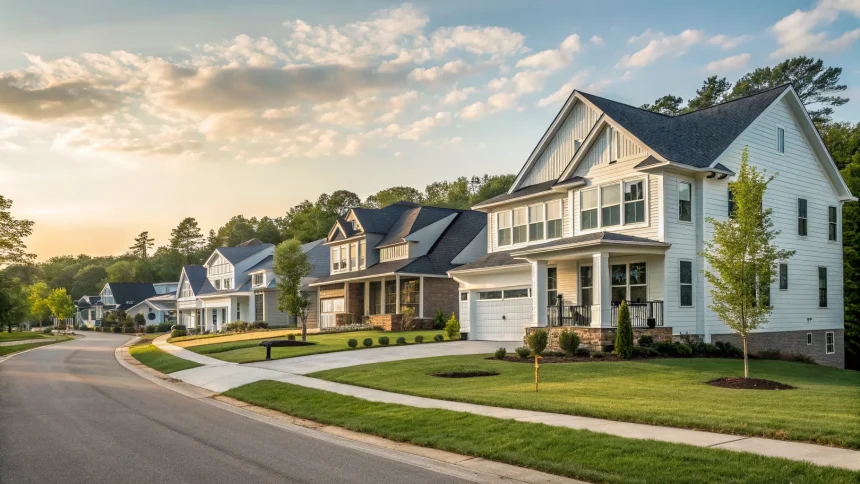
Newly built houses are finally going toe-to-toe with older listings on price, as a new report shows the affordability gap narrowing, especially in the South and West where supply is rising. The finding points to a shift in a market that has favored sellers for years. It also hints at a busier spring and summer for buyers squeezed by high borrowing costs.
“The housing affordability gap narrows as new home prices become competitive with existing properties, especially in South and West where inventory increased, a new report found.”
How the Market Got Here
During the pandemic, prices surged as demand boomed and supply fell. Homeowners then locked in low mortgage rates and chose not to move. That choked the flow of existing listings.
Builders filled part of the gap. They added inventory, offered rate buydowns, and trimmed floor plans to hit lower price points. As a result, the price premium for new homes began to shrink.
Higher mortgage rates also changed the math. A new home with a builder-paid rate buydown could beat a similar older home without incentives. Buyers noticed.
Why New Builds Are Catching Up
Three shifts are driving the change, according to the report’s core finding.
- More inventory: Builders brought more homes to market, easing pressure on prices.
- Incentives: Rate buydowns and closing credits lowered monthly payments.
- Product mix: Smaller, more efficient models hit lower price tiers.
When inventory rises, sellers—old or new—have less pricing power. In areas where supply is growing fastest, the gap closes fastest.
South and West Lead the Shift
The report highlights the South and West. Those regions added the most new-home supply, thanks to ample land, faster permitting, and steady in-migration.
More lots and faster build times let builders adjust prices sooner. That puts pressure on sellers of existing homes to match. In many Sun Belt suburbs, price cuts and incentives are now common.
Some buyers still prefer older homes in central locations. But a shorter commute is getting harder to value over a lower rate and a warranty.
What It Means for Buyers and Sellers
For buyers, more choice is the headline. A smaller gap means a real decision between a turnkey new build and an older home that may need work. Monthly payment wins the day for most budgets.
Sellers of existing homes face a test. Listings that need repairs or are priced above nearby new construction may sit longer. Pricing right matters again.
Builders, meanwhile, are walking a line. They want to keep sales moving without giving up too much margin. Incentives let them thread that needle.
Data Signals to Watch
Several metrics will show whether this trend holds through the year.
- Months of supply: Rising supply in the South and West suggests more bargaining power for buyers.
- Price spreads: The median price difference between new and existing homes is the key measure.
- Incentive depth: Larger rate buydowns often precede price cuts.
If mortgage rates ease, more owners may list, pushing existing supply higher. That could tighten the race further.
Risks, Caveats, and the Road Ahead
Construction costs are still volatile. Labor, materials, and insurance can move north fast. That limits how far builders can trim prices.
Zoning and permitting delays can also slow new supply in coastal markets. In land-constrained areas, the gap may stay wider.
Yet the pattern is clear in growth markets. Where inventory is rising, pricing is getting more level. Buyers finally have room to negotiate.
The bottom line: The report points to a more competitive field between new and existing homes, led by the South and West. Expect sharper pricing, more incentives, and tighter spreads as builders defend market share and sellers adjust. Watch inventory and rate trends. If both move in buyers’ favor, this affordability break could last through the busy season.