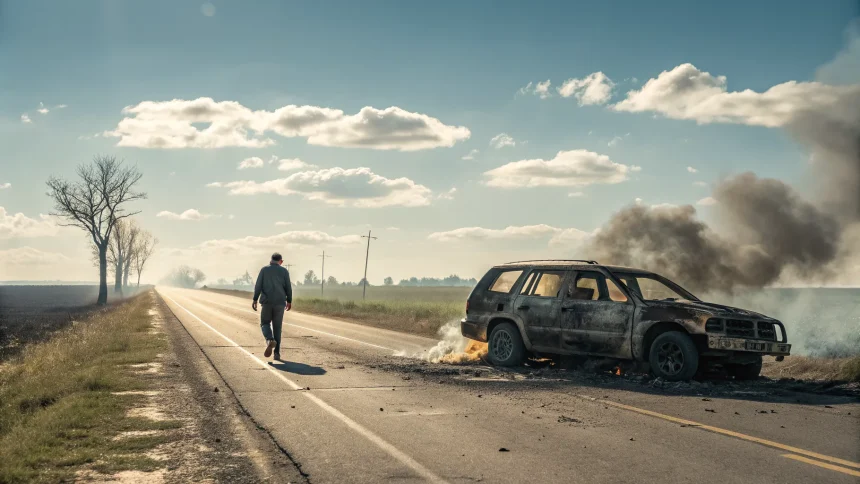
A Texas man who witnessed his friend’s fatal shooting by a federal immigration agent last year died last weekend in a fiery car crash, thinning a fragile chain of firsthand accounts in a case already shadowed by grief and questions.
Authorities had not released further details as of press time, including the man’s name, the exact location of the crash, or whether foul play is suspected. The shooting he witnessed occurred last year in Texas. The involved agency was a federal immigration arm. It is not clear if an investigation into that shooting is still active or if the man had provided formal testimony.
What Happened
A Texas man who saw his friend get shot and killed last year by a federal immigration agent died last weekend in a fiery car crash.
The brief facts are stark and leave little room for certainty. A witness to a deadly use-of-force incident is now dead. The cause and context remain unknown. The loss raises fair questions about evidence, accountability, and the burden carried by those caught up in violent events.
A Witness Lost, A Case Complicated
The death of a key eyewitness can reshape any review of a prior shooting. Eyewitness accounts often provide details not captured in reports or radio logs. They can fill gaps in timelines and clarify distances, warnings, or perceived threats.
When an incident involves a federal officer, reviews typically include an internal inquiry and, at times, a local or federal criminal probe. If video exists, it may be weighed against physical evidence and witness statements. Without a living witness, investigators lean harder on forensics and any recordings.
Legal analysts say this can change outcomes. It may not end a case, but it narrows the lanes for challenging narratives. That is especially true when facts turn on seconds, angles, and words shouted in the dark.
Community Trauma And Calls For Clarity
In communities touched by deadly force, the ripples do not fade fast. Friends and family often seek answers and a clear timeline. Advocates typically ask for transparency, including the release of reports and any available footage. They argue that sunlight calms rumor and helps rebuild trust.
There is also the quieter toll. Witnesses to violence can carry heavy stress. Counselors say some people struggle with sleep, flashbacks, or guilt. Those effects can mount when cases linger and public debate grows harsh.
What We Know And What We Don’t
- Known: A Texas man died in a fiery crash last weekend. He had witnessed his friend’s fatal shooting by a federal immigration agent last year.
- Unknown: The man’s identity, crash location, cause of the crash, and whether investigators see any link to the prior shooting.
- Unknown: Whether the earlier shooting review is ongoing, closed, or reopened after the crash.
Accountability And The Path Ahead
Officer-involved shootings by federal agents draw close scrutiny. Reviews often ask whether force was reasonable under the circumstances. They also weigh training, policy, and the speed of events.
In recent years, large agencies have expanded internal review units and promised more public reporting. Some have piloted cameras, though coverage and release policies differ widely. Families and civil rights groups push for clearer timelines and independent oversight. Unions and many officers urge patience, citing split-second judgment calls and the risk of rushed conclusions.
Without new public facts, this case sits at the tense crossroads of those positions. The crash adds pain and uncertainty. It may also renew pressure for records tied to the earlier shooting, such as reports, audio, or any video.
Why It Matters
When a witness dies, truth can grow harder to pin down. Evidence becomes more technical and less human. That shift can affect legal strategies, settlement talks, and public trust.
The next steps likely hinge on routine but important work: crash reconstruction, autopsy results, and any mechanical inspections. If investigators rule out foul play, attention may return to the prior shooting and what remains in the files.
The picture is incomplete, but the stakes are clear. A man is dead after seeing death up close. Investigators owe the public a clean accounting of both events. Watch for official crash findings, any release of records from the earlier shooting, and whether oversight bodies step in. Until then, questions linger where answers should live.