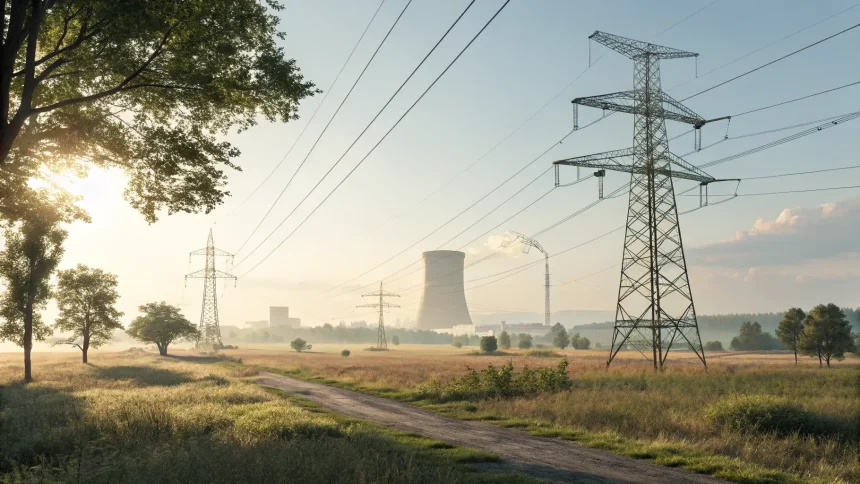
Ukraine’s foreign minister accused Russia on Sunday of cutting the external power link to the Zaporizhzhia nuclear power station to shift the facility onto Moscow’s grid. The charge centers on Europe’s largest nuclear plant, which sits in Russian-held territory in southern Ukraine. Kyiv says the move threatens safety and cements control over occupied energy assets amid the ongoing war.
“[Russia] deliberately severed the external power line to the Russian-held Zaporizhzhia nuclear power station in order to link the plant to Moscow’s power grid,” the minister said.
The accusation highlights a long-running fight over energy infrastructure as a tool of war and leverage. It also raises renewed concerns about nuclear safety after repeated power losses at the plant since Russian forces seized it in 2022.
A Nuclear Plant Under Occupation
The Zaporizhzhia facility, with six reactors, falls within an active combat zone and has changed hands in practice, though Ukraine remains the legal operator. Since Russian forces took control in March 2022, the site has suffered multiple losses of off-site power and periods relying on diesel generators. International nuclear experts have warned that stable external power is essential for cooling and safety systems, even when reactors are not producing electricity.
The International Atomic Energy Agency (IAEA) has kept a monitoring team at the site for much of the conflict. Its director, Rafael Grossi, has repeatedly called for a protection zone and for reliable power connections. The agency has logged several outages and stressed that any cut to external lines raises the risk of a safety incident.
Competing Claims and Verification
Kyiv argues that cutting an external line is a deliberate step to detach the facility from Ukraine’s grid. Officials in Moscow have previously accused Ukraine of shelling near the plant, arguing that security risks and damage to lines originate from Kyiv’s attacks. Each side denies targeting the site directly.
Independent verification remains difficult. The front line around the facility is heavily militarized. Access for outside observers is limited. The IAEA has confirmed past line outages but does not assign blame without on-the-ground evidence. In this case, the agency had not yet issued a public technical assessment at the time of the accusation.
Energy Control as a War Strategy
Power infrastructure has been a frequent target during the war. Strikes have hit substations and transmission lines across Ukraine, pushing the national grid to operate under strain. Control over the Zaporizhzhia plant offers both symbolic and practical advantages. It affects local electricity flows and gives leverage in occupied regions.
Ukraine synchronized with Europe’s power network in 2022, which helped it import electricity during shortfalls. Russia, in turn, has sought to integrate occupied areas into its own systems. If the plant is linked to Russia’s grid, Kyiv could lose a major asset while facing new hurdles in stabilizing supply, especially during peak demand seasons.
- Stable off-site power is vital for reactor cooling and spent fuel pools.
- Grid shifts can complicate safety oversight and crisis response.
- Damage to lines increases the risk of emergency diesel reliance.
Safety Risks and What Could Happen Next
Even with reactors in cold shutdown, the plant needs constant electricity for pumps and safety equipment. Repeated outages force reliance on backup generators, which depend on fuel deliveries that can be disrupted by fighting. Nuclear experts warn that sustained instability increases the chance of human error and equipment failure.
If the plant is fully reconnected to Russia’s grid, day-to-day operations and maintenance could drift further from Ukrainian regulation and oversight. That would complicate inspections, spare parts sourcing, and emergency planning. It could also set a precedent for energy annexation, drawing more civilian infrastructure into the conflict.
International Response and Calls for Restraint
Western governments have urged restraint around nuclear sites and backed IAEA access. The agency continues to press for a safety and security zone that shields the plant and its power lines from fighting. Nuclear industry groups emphasize the need for multiple redundant power sources and clear command lines to reduce risk.
For now, the dispute over the latest line cut shows how critical infrastructure has become a front in its own right. Each outage adds pressure on operators and heightens public anxiety in nearby regions.
The accusation signals rising tension over who controls a key asset at the center of Europe’s energy and safety concerns. The main questions now are whether the plant will be switched to Russia’s grid and whether independent monitors can verify the condition of its power lines. Watch for the IAEA’s next site update, any documented grid reconfiguration, and changes in reactor status. Clear, sustained access for inspectors—and a buffer for transmission lines—remain the most direct steps to lower the risk of a nuclear safety emergency.