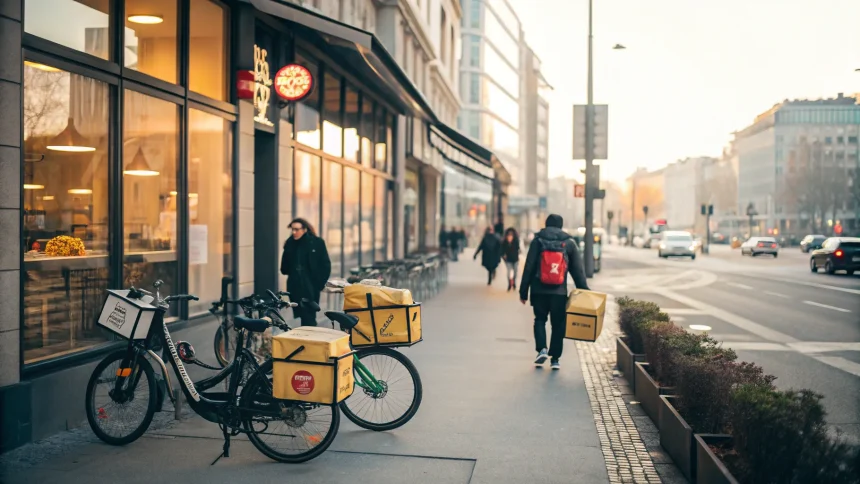
Uber reported a sharp rise in its food delivery business, saying revenue grew 30% and topped Wall Street expectations. The update signals steady momentum for Uber Eats at a time when delivery habits are settling after the pandemic surge and inflation pressures. The company framed the growth as proof that diners are still ordering in, restaurants are sticking with third-party platforms, and new categories like grocery are adding fuel.
“Uber said revenue in its food delivery business increased 30%, beating analysts’ estimates.”
How Delivery Got Its Second Wind
Food delivery soared in the early lockdown years. Many expected a pullback as dining rooms reopened. Instead, the sector has evolved. Consumers now mix takeout with sit-down meals. Restaurants lean on delivery to reach new customers and fill slow hours. Uber’s latest figure suggests that pattern has staying power.
Uber Eats also spans more than restaurant meals. It includes convenience items and grocery orders in many cities. Those add-ons have boosted order frequency and helped fill off-peak times. Larger baskets from grocery can also lift revenue per transaction, even if margins differ.
What’s Driving the Growth
Executives have pointed to a few steady levers in delivery. None are flashy, but together they move numbers.
- More choice: More restaurants and stores on the app draw more users.
- Logistics gains: Better batching and routing can lower delivery times.
- Memberships: Subscription plans can nudge customers to order again.
- Ads: Sponsored listings create a new revenue stream.
The 30% growth rate suggests a mix of demand and monetization. Even modest gains in average order value or frequency can compound quickly at scale. Hitting above analysts’ estimates also hints that either demand was stronger than modeled, or cost and fee structures delivered more revenue per order than expected.
The Competitive Picture
Uber faces familiar rivals in the United States and abroad. Delivery remains a hard-fought market with aggressive promotions and tight unit economics. Share tends to shift city by city. Partnerships with large chains can swing local results. Smaller restaurants often work with multiple apps to hedge risk and reach more customers.
That competition pushes platforms to improve reliability and keep fees in check. It also pressures them to find new profit pools. Advertising has become a favorite answer. Restaurants pay for visibility, while users see more personalized suggestions. If ads grow, they can help fund lower delivery fees or better courier incentives without eroding margins.
What It Means for Restaurants, Couriers, and Diners
For restaurants, a stronger delivery channel can flatten the week’s ups and downs. It widens reach beyond a neighborhood and helps test new menu items. The trade-off is fees and the loss of some direct customer contact.
For couriers, steadier order volume can mean more consistent earnings opportunities. The flip side is that efficiency gains, like order batching, change how time converts to pay. Platforms must balance speed, pay, and customer affordability.
For diners, higher revenue often reflects more choices and faster service. Yet service fees and tips still shape final costs. Price sensitivity remains a factor, especially for frequent users.
Analysts’ Models vs. Reality
Beating estimates matters because it resets expectations. Analysts track order volumes, take rates, and cost trends. When actuals come in hotter, it can reflect stronger demand or sharper execution. It can also flag that models need updating for newer lines of business like grocery, convenience, and ads.
Investors will want to know how much of the 30% came from pure order growth versus higher revenue per order. They will also ask whether the pace is sustainable without heavy promotions. Those answers will shape views on profitability through the year.
What to Watch Next
Three signposts can show where the delivery story goes from here:
- Ad revenue mix: More high-margin ad dollars can stabilize profits.
- Grocery traction: Bigger baskets can offset softer restaurant orders.
- Local regulation: Rules on fees and gig work can shift costs.
Uber’s report puts a clear marker down: delivery demand is not fading. The 30% revenue lift and a beat against estimates suggest a flywheel that is still turning. The open question is how much of that speed comes from durable habits versus temporary boosts.
For now, the company has the wind at its back. If ads mature, logistics keep improving, and grocery keeps growing, the delivery unit could carry more weight in the broader business. Watch for details on order frequency, take rates, and membership adoption in the next update.