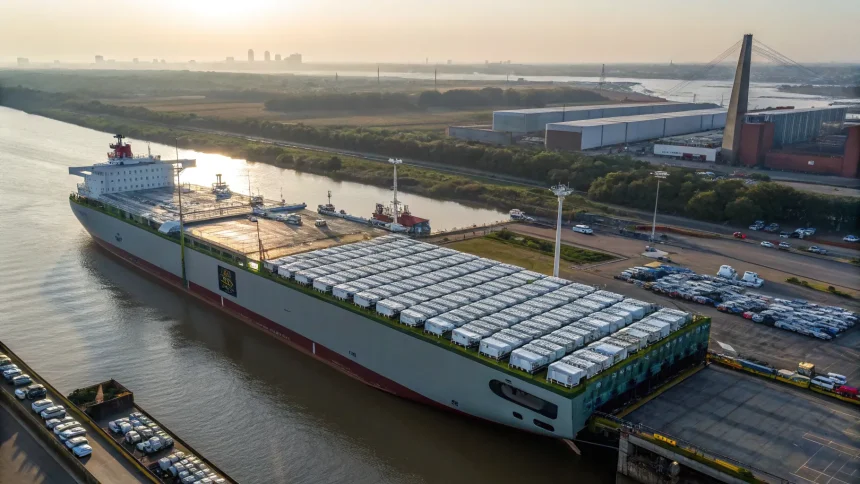
More than 5,800 electric and hybrid cars arrived on a Chinese vessel Wednesday at a river port in eastern Argentina, marking a major push into a sensitive market. The shipment, carried by the BYD Changzhou, signals a fast-growing flow of Chinese-made vehicles into South America as buyers look for lower prices and better fuel savings.
The delivery comes as Argentina faces high inflation, a weak currency, and shifting import rules. It also lands in the middle of a global battle for the future of the auto industry, with electric models gaining ground but still limited by charging networks and high upfront costs.
“The vast field of over 5,800 electric and hybrid vehicles gleamed on the cargo deck of the BYD Changzhou, a Chinese container vessel unloading Wednesday at a river port in eastern Argentina.”
Why This Shipment Matters
BYD, a Chinese automaker, has grown rapidly by selling lower-cost electric and hybrid cars. Shipments to Latin America have increased as Chinese brands seek new markets. Argentina, with a large urban population and long commutes, is seen as a test for wider regional adoption.
The country has promoted hybrid models with tax breaks at times, though policy has shifted with economic stress. Import controls have also tightened and eased over the past few years. The arrival of thousands of vehicles at once suggests suppliers see an opening under the current rules.
For local buyers, cheaper hybrids can cut fuel bills. Fully electric cars are still rare on Argentine roads, in part due to charging access. Hybrids may be a bridge for many drivers who want savings without range anxiety.
Regional Context and Global Pressure
China became the world’s top car exporter in 2023, driven by electric and hybrid shipments. European and U.S. officials have raised concerns about pricing and subsidies. Latin America has been more open, balancing consumer demand with industrial policy goals.
Argentina’s auto sector employs thousands and is tied to the Mercosur trade bloc. Local assembly focuses on internal combustion models and pickups. A surge in imported electrified cars could pressure domestic producers unless they retool or form partnerships.
BYD and other Chinese brands have explored regional manufacturing in Brazil and Mexico. Industry analysts say local production could follow demand, but only if policy is stable and volumes are high.
Impact on Consumers and the Market
Price is the key driver. Chinese hybrids often undercut rivals by several thousand dollars. That gap can widen with currency swings. Dealers may also offer financing to speed sales.
Charging remains a hurdle for pure electric cars. Public charging corridors exist in major cities and along some highways, but coverage is patchy. Home charging works for many urban owners, yet apartment dwellers face barriers.
- Hybrids reduce fuel use without relying on public charging.
- EVs cut emissions but need reliable infrastructure.
- Battery warranties and service networks will shape buyer trust.
Environmental and Energy Considerations
Electrified vehicles can lower urban air pollution and reduce oil imports over time. Argentina’s power mix includes natural gas, hydro, wind, and growing solar. The emissions benefit of EVs depends on this mix and grid efficiency.
Scaling chargers at bus depots, malls, and workplaces could ease adoption. Utilities will need to plan for peak demand. Smart charging, time-of-use rates, and fleet electrification can help manage the load.
What Industry Voices Are Watching
Local suppliers worry about job losses if imports surge. Labor groups may push for content rules or incentives for assembly. Consumer groups want clear pricing, transparent warranties, and service parts availability.
Auto dealers expect brisk interest in hybrids first, then selected EV models. Fleet buyers, such as ride-hailing operators and delivery services, could drive early volumes if total cost of ownership is favorable.
The Road Ahead
This shipment is a signal that Chinese brands see strong demand potential in Argentina. The next steps will depend on policy clarity, currency stability, and charging buildout. If prices stay attractive and service networks mature, more ships will follow.
For now, buyers get new options as fuel costs bite. Local producers face a clear choice: invest in electrified models, form joint ventures, or risk losing share. Regulators must balance consumer relief with industrial goals and grid planning.
The unloading of the BYD Changzhou may look like a logistics milestone. It is also a market test. Watch pricing, dealer inventory, and charger installations over the next six months. They will show whether this wave becomes the new norm.