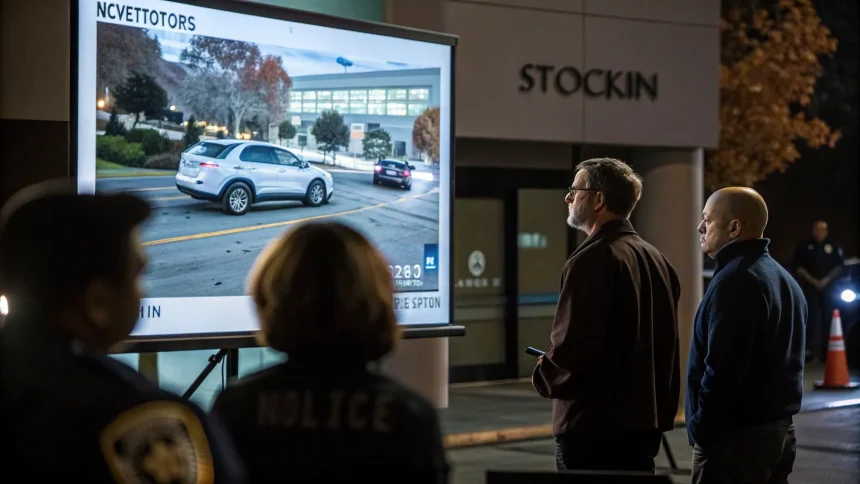
Investigators released new surveillance footage of two vehicles tied to a November mass shooting near Stockton, California, renewing a public push for leads in a case that rattled the region.
The video, shared this week, shows vehicles believed to be connected to the attack. Authorities did not disclose the exact location or time the footage was captured but said the images could help identify suspects and reconstruct the timeline.
The release signals a fresh phase in the investigation as officials seek witnesses, traffic camera matches, or doorbell video that might place the vehicles before or after the shooting.
What Investigators Shared
New surveillance footage was released by investigators of two vehicles suspected of being involved in a November mass shooting near Stockton, California.
The footage, according to officials, offers clearer angles of the vehicles and possible distinguishing features. Investigators are analyzing the video frame by frame, comparing it with traffic data and prior calls from residents.
Law enforcement often releases images once internal checks are exhausted. That timing helps preserve key details while prompting the public to fill gaps.
Background and Community Context
Stockton and nearby communities have worked to reduce gun violence for years. Community groups, schools, and local leaders have focused on prevention programs, youth outreach, and neighborhood responses after major incidents.
California agencies typically coordinate across city, county, and state lines after high-casualty events. That can include ballistic testing, license plate database searches, and regional tip-sharing. Collaboration is routine when suspects may move quickly between jurisdictions along major corridors.
Public releases like this also serve a civic purpose. They acknowledge community anxiety and offer a clear step residents can take: look at the vehicles, check cameras, and report details that could help.
The Search for the Vehicles
Vehicle-focused investigations hinge on small details. Investigators study paint color, body damage, aftermarket parts, stickers, wheel designs, and unique lighting patterns. Even a missing hubcap or faded bumper can be decisive.
Analysts also map routes around the scene. They check likely entry and exit roads, nearby gas stations, parking lots, and freeway ramps. Each camera along that path is a possible breadcrumb.
- Identify make, model, and year range from body lines.
- Isolate timestamps to build a movement timeline.
- Compare against traffic and toll camera archives.
- Cross-check crowd-sourced video from residents and businesses.
The strategy is simple but effective: reduce the field until only a few vehicles match, then connect those to potential suspects.
Why Video Matters
Surveillance video has reshaped modern investigations. It supports witness statements, tests theories, and can reveal new paths when tips run dry.
In many cases, footage provides the first independent clue that breaks a stalemate. Even partial images, combined with mapping and data tools, can narrow searches in days rather than weeks.
Courts also treat clean, time-stamped images as strong evidence. That encourages investigators to secure original files and maintain a clear chain of custody from the start.
Community Response and Safety
For residents near Stockton, the footage is a reminder of lives disrupted and the work still ahead. Faith leaders and counselors often step in after such violence, offering support and organizing vigils. Those gatherings keep pressure on officials to deliver answers and give families space to grieve.
Officials usually advise residents to review doorbell and business cameras for the dates around the incident. They recommend sharing video securely with investigators, not on social media, to protect the case.
What Comes Next
The next steps are predictable yet vital: verify the vehicles’ identities, locate owners, and match any forensic evidence. Investigators will continue to seek witnesses who saw the vehicles before or after the shooting.
Public attention can fade as days pass. The video release aims to prevent that. It keeps eyes on the streets and encourages one more look at saved footage.
The investigation’s progress now hinges on recognition. A neighbor spotting a distinctive dent. A clerk recalling a plate frame. A driver remembering an unusual convoy. Small details can push a case forward.
As authorities pursue new leads, the core message remains direct and urgent. Review the footage. Share what you know. Justice often starts with a single, specific tip.