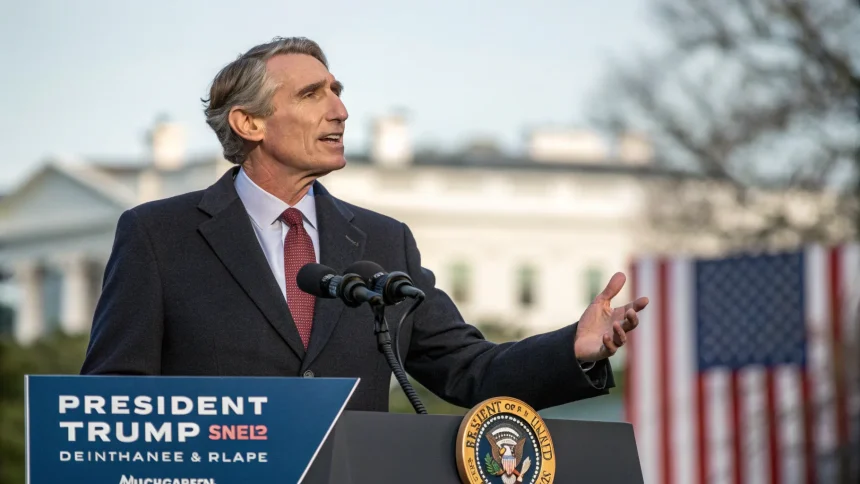
U.S. Interior Secretary Doug Burgum used a morning television appearance to press the case for President Donald Trump’s “energy dominance” agenda, linking it to stronger growth, easing inflation, and national security at a time of global strain. Speaking on Fox Business’ Mornings with Maria, Burgum framed energy policy as central to household costs and America’s position overseas.
The discussion came as energy production remains near record highs and policymakers debate how to balance output with environmental goals. It also arrived as inflation has cooled from its 2022 peak, while conflict and shipping risks continue to sway global oil markets.
The segment focused on “energy dominance,” surging drilling permits, falling inflation, and rising national security stakes at home and abroad.
Energy Agenda and Permit Trends
Burgum tied the administration’s approach to expanding U.S. supply across oil, gas, and permitting on federal lands. The Interior Department plays a key role in leasing and permit decisions, which affect the pace of development on public lands and offshore.
Permit activity has not moved in a straight line across administrations. Federal drilling approvals have seen periods of increase under both Republican and Democratic presidents, reflecting backlogs, legal rulings, and market prices. Industry groups argue that a faster, clearer process lowers costs and supports investment. Environmental advocates counter that expanding fossil fuel production locks in emissions and climate risks.
U.S. crude oil output reached record levels in 2023 and 2024, according to the Energy Information Administration. Natural gas production also set new highs, aided by shale drilling and efficiency gains. Supporters of Trump’s plan say these highs validate a strategy of opening access and streamlining rules.
Inflation, Prices, and the Family Budget
The conversation linked energy policy to everyday costs. Energy prices help shape headline inflation through gasoline, diesel, electricity, and heating. Inflation has cooled from its 2022 peak, though Americans still face higher prices than before the pandemic.
Economists say more domestic supply can blunt price spikes, but global factors still matter. OPEC+ decisions, shipping disruptions, and refinery outages can move prices quickly. Analysts note that easing inflation reflects improved supply chains, higher interest rates, and slower demand, not only energy costs.
- Gasoline and diesel prices remain sensitive to global crude prices.
- Electricity costs vary by region, fuel mix, and grid investment needs.
- Households feel relief when energy prices fall, but stickier costs persist elsewhere.
National Security and Global Risks
Burgum cast energy production as a security tool. The argument: higher U.S. output reduces reliance on imports, supports allies with exports, and cuts revenue for adversaries that depend on oil and gas sales. Europe’s scramble for gas after Russia’s invasion of Ukraine underscored that point.
Shipping threats in the Red Sea and strikes on energy infrastructure have added risk premiums to oil markets. Policy hawks say stable U.S. supply, a rebuilt Strategic Petroleum Reserve, and expanded export capacity help soften shocks. Critics warn that doubling down on fossil fuels may complicate climate goals and provoke trade tensions, including carbon border measures abroad.
Environmental Pushback and Legal Hurdles
Environmental groups continue to challenge leasing and permitting in court, citing climate, wildlife, and air quality. Agencies face legal deadlines under environmental laws, which can lengthen timelines. Court rulings have forced revisions to lease sales and methane standards in recent years.
Some states welcome expanded drilling for tax revenue and jobs. Others emphasize clean energy mandates and stricter emissions limits. That divide shapes how quickly projects advance, even with federal support. Companies also weigh long-term demand, investor pressure on emissions, and the cost of capital.
What Lies Ahead
Industry leaders are watching for clarity on leasing schedules, methane rules, and infrastructure approvals. Liquefied natural gas export capacity is scheduled to grow, which could boost shipments to Europe and Asia. On power, utilities plan more renewables and gas to replace aging coal plants, while grid upgrades lag demand from data centers and electrification.
Policy analysts say three signals will guide the next phase: steady federal leasing, predictable permitting timelines, and coordination with states on transmission. If those line up, companies are likely to keep investing. If not, project delays could tighten supply and lift prices.
Burgum’s message placed energy at the center of economic and security strategy. Supporters see a path to lower costs and stronger leverage abroad. Opponents warn of climate risks and missed clean energy opportunities. For households, the stakes are simple: stable prices and reliable power.
The next test will come as agencies finalize rules and lay out leasing plans for the year. Markets will respond to those signals, along with global events. Watch for movement on export terminals, methane enforcement, and new drilling auctions as early indicators of how the agenda will play out.