IndusInd Bank shares are in focus after a senior market strategist pointed to a bullish chart formation that could lift the stock in the near term. Rajesh Palviya of Axis Securities said the private lender has broken out of a long consolidation, with momentum turning positive. He projected a move to Rs 960–990 over the next one to two months if the trend holds.
The view ties the bank’s recent price action to a classic “rounding bottom” pattern, a setup that signals a shift from weakness to strength. The call comes as investors weigh the health of India’s banking sector and watch policy cues that influence lending and deposit costs.
Technical Picture and Price Levels
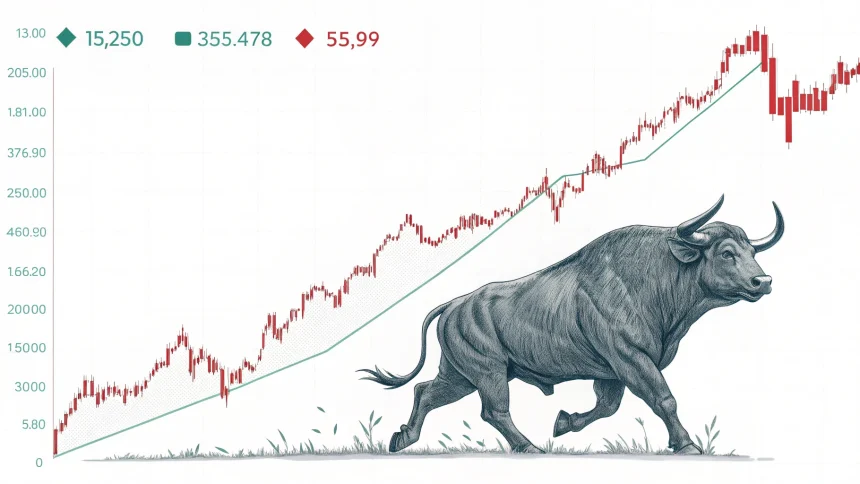
“IndusInd Bank stock is showing a favorable technical setup with positive momentum building after a prolonged consolidation phase. The chart indicates a rounding bottom pattern. Traders can buy for a target of Rs 960-990 in the next 1-2 months,” said Rajesh Palviya, SVP – Research, Axis Securities.
A rounding bottom forms when a stock’s declines slow, flatten out, and then start to rise in a smooth curve. It suggests sellers are losing control as buyers step in.
In this setup, traders often watch for rising volumes on up days and steady support near recent lows. A sustained close above resistance can act as a trigger. Palviya’s targets point to a measured advance if the pattern continues.
Why the Pattern Matters
Rounding bottoms tend to appear after extended periods of range-bound trading. They can mark a change in sentiment from caution to accumulation. For banks, such shifts often align with improving credit trends or a stable rate backdrop.
Technical signals do not stand alone. Many traders pair them with basic checks on earnings, loan growth, and asset quality. That mix helps judge whether momentum can last.
- Pattern signal: rounding bottom after consolidation
- Timeframe: 1–2 months
- Price objective: Rs 960–990
Sector and Market Context
IndusInd Bank is part of India’s large private banking cohort. These lenders serve retail and corporate clients and are active in vehicle finance and consumer loans. Stock moves in the group often track shifts in the Bank Nifty index and policy moves from the Reserve Bank of India.
When policy rates stabilize, funding costs can level out. That can support net interest margins for some banks. On the other hand, tighter liquidity or rising deposit competition may pressure margins and loan growth.
Investors also watch asset quality. Any change in slippages, provisioning, or recovery trends can sway sentiment faster than charts alone. As a result, a technical breakout may need support from steady credit metrics to sustain momentum.
Other Views and Key Risks
Not every technician reads patterns the same way. Some will wait for a higher high and a higher low to confirm the turn. Others prefer a retest of the breakout level before adding exposure.
There are broader risks. A weaker macro outlook can slow demand for loans. Regulatory changes can affect fees and capital needs. Global risk-off episodes can pull down financial stocks even when local data is stable.
Traders often manage position size and use stop-loss rules when acting on short-term signals. That helps protect capital if the setup fails or news flow turns negative.
What It Means for Investors
Palviya’s call highlights growing optimism in the stock’s near-term path. If the rounding bottom holds, the stated range offers a clear objective for momentum traders. Longer-term investors may look for confirmation in quarterly results, deposit trends, and commentary on credit costs.
For now, the trade is a technical one. The next tests will come from price follow-through, volume support, and company updates. Any improvement in sector sentiment could add to the tailwind.
IndusInd Bank’s chart has put the name back on watch lists. The coming weeks should show whether the breakout attracts sustained buying or meets resistance near prior highs. Investors will be watching price action and earnings signals to judge the staying power of this move.