In the wake of deadly floods in Spain in 2024, photographer Raúl Belinchón turned his lens on the people who waded into danger to help. His portraits of “mud-soaked volunteers” have drawn wide attention and later earned acclaim at the Sony World Photography Awards. The work captures a moment of national grief and solidarity, while raising questions about how images shape public memory of disasters.
Background On A National Tragedy
Spain has faced repeated bouts of severe weather in recent years. Sudden cloudbursts have overwhelmed towns, causing flash floods and landslides. In 2024, authorities reported fatalities after storms dumped intense rain across several regions. Rivers breached banks, roads vanished under water, and power outages spread.
Emergency crews struggled to reach scattered communities. Local groups stepped in. Farmers arrived with tractors. Youth clubs formed sandbag lines. Neighbors opened schools and sports halls for shelter. The toll extended beyond lives lost to homes, shops, and crops. Insurance claims and cleanup costs mounted for months as mud clogged streets.
The flooding also revived debates over climate risk. Urban growth in floodplains, aging drainage systems, and rising temperatures all play a role. Scientists say heavier downpours are becoming more common in parts of the Mediterranean, increasing flash flood danger.
Portraits That Traveled The World
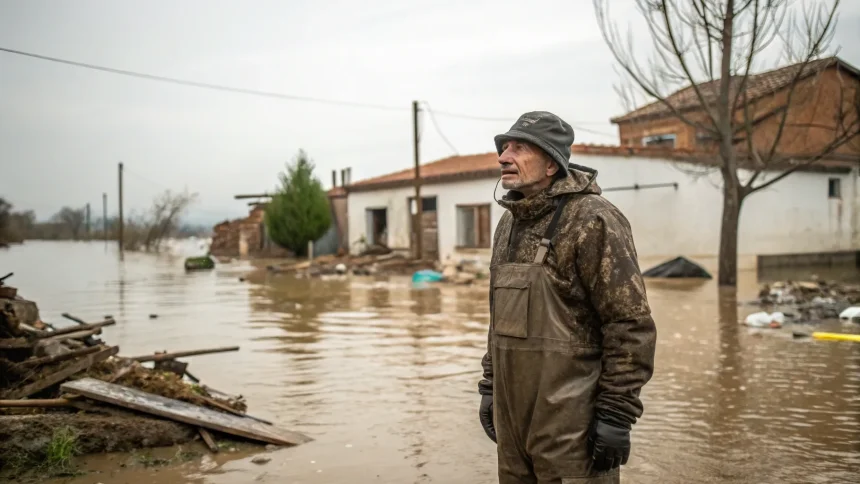
Belinchón focused on the human face of the recovery. He photographed volunteers after long days in the sludge. Their clothes were torn. Their boots were caked. Their expressions mixed exhaustion and resolve. The images center dignity rather than spectacle.
After fatal floods swept through Spain in 2024, photographer Raúl Belinchón captured powerful portraits of mud-soaked volunteers, a series that later won acclaim at the Sony World Photography Awards.
The recognition placed the series on a global stage. Jurors praised the visual honesty and restraint. The portraits avoid dramatic stunts and rely on careful light, tight framing, and stillness. Viewers see hands rubbed raw by shovels and faces marked by grit. The result is intimate but not intrusive.
Why These Images Matter
Disaster coverage often focuses on wreckage. Portraits of helpers tell a different story. They mark the labor that restores towns long after sirens fade. They also invite reflection on who gets seen. Not every volunteer wears a uniform or appears at a news conference.
Curators say such work can guide donations and policy. People respond to named faces more than to statistics. At the same time, photographers must weigh consent, context, and fatigue. Subjects need space and clarity about how images will be used.
- Witness: photographs serve as records for families and historians.
- Recognition: volunteers gain visibility and respect.
- Accountability: images can press officials on recovery gaps.
Multiple Views On Representation
Some critics argue that post-disaster portraits risk turning pain into spectacle. Others see them as acts of care when handled with respect. Belinchón’s restrained approach, with subjects presented as partners rather than props, has drawn support from museum circles.
Community leaders point to the practical effects. Exhibits can raise funds for tools, pumps, and repairs. They can also keep pressure on planners to elevate infrastructure, clear riverbeds, and map evacuation routes.
A Record For The Future
The series now sits within a wider shift in Spanish photojournalism. More projects follow recovery over weeks and months, not just the first day. That shift mirrors a larger media trend to track climate-related risk over time. It also reflects public demand for stories that explain cause and consequence, not only shock.
As Spain rebuilds, the portraits offer a quiet ledger of effort. They may help schools teach readiness. They may help councils remember where support fell short. Most of all, they honor the daily, unglamorous work that saves neighborhoods.
Belinchón’s recognition signals a growing audience for careful reporting through images. The news is not only the flood but the people who showed up in boots and gloves. As storms grow less predictable, expect more projects that document both rescue and repair. The next step is clear: invest in prevention while keeping the stories of helpers in view. These pictures make that task feel both urgent and possible.