Seoul will build its first civilian bunker designed to withstand a nuclear attack beneath a public housing complex by 2028, a city official said Monday. The plan comes as the city seeks stronger civil defense measures against threats from North Korea, putting protection closer to residents in one of the world’s most densely populated capitals.
The project marks a shift from relying on subway stations and basements to purpose-built shelters. It would be the first nuclear-hardened bunker for the general public in the capital, which sits within artillery range of the border.
“Authorities in Seoul plan to build the South Korean capital’s first civilian bunker capable of withstanding a nuclear attack underneath a public housing complex by 2028,” a city government official said, citing the need “to guard against threats by the North.”
Why Seoul Is Moving Now
Security tensions on the Korean Peninsula are long-standing. The Korean War ended with an armistice in 1953, not a peace treaty. North Korea has conducted six nuclear tests, most recently in 2017, and continues to develop ballistic missiles. Seoul’s proximity to the border keeps risk calculations high for city planners and emergency officials.
South Korea has held civil defense drills for decades, and many buildings designate spaces for shelter. But most of these locations were built for conventional threats and may not meet standards to withstand a nuclear blast, heat, or radiation. The new bunker is intended to raise the bar for survivability and post-blast protection, according to the city’s description.
What We Know About the Plan
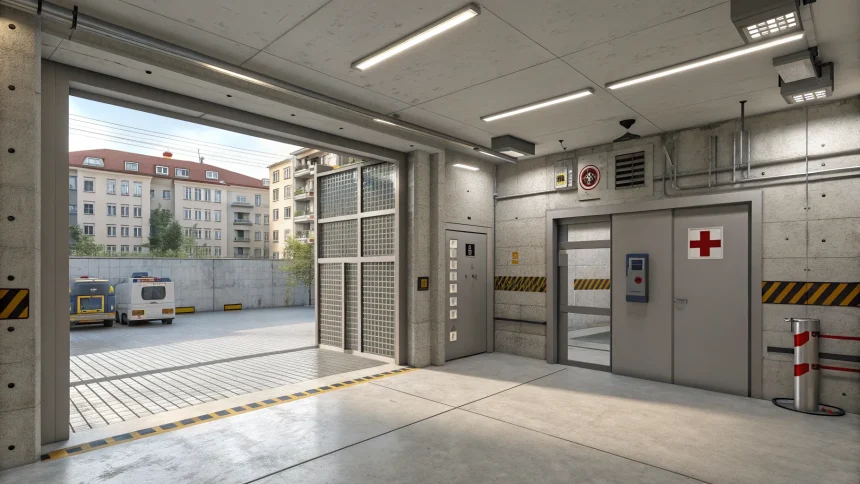
Officials say the shelter will be built under a public housing complex, placing protection near large numbers of residents. Locating the bunker beneath new or renovated housing also lowers land acquisition costs and allows the structure to be integrated into normal life until needed.
- Location: Beneath a public housing complex in Seoul.
- Purpose: First civilian bunker designed for nuclear survivability.
- Timeline: Target completion by 2028.
The city has not released detailed technical specifications, but nuclear-rated shelters typically require reinforced concrete, blast doors, air filtration systems, independent power, and provisions for water and sanitation. Planners also consider capacity, evacuation routes, and how long occupants could remain inside after an attack.
Costs, Trade-Offs, and Public Debate
Building nuclear-hardened infrastructure is expensive and complex. Urban planners often weigh the value of a single high-protection site against a wider network of upgraded shelters spread across neighborhoods. Some experts argue that both are needed: a flagship site to set standards and a broader program to lift baseline safety citywide.
Residents may welcome added protection but could raise concerns about construction disruption near homes or the allocation of funds. Supporters point to the bunker’s placement under public housing as an equity choice, directing advanced protection to communities that benefit from public projects.
Regional and Global Context
Other cities with security concerns have updated their civil defense plans. Some have expanded public shelters, revamped signage and alert systems, and run emergency drills focused on chemical, biological, radiological, and nuclear scenarios. Seoul’s move aligns with a trend of revisiting Cold War-era planning with current technology and urban realities.
Analysts note that while no shelter can remove risk, hardened structures can save lives by reducing blast and radiation exposure. Clear communication, training, and maintenance are as important as concrete and steel.
What Comes Next
The city is expected to detail design standards, capacity, and operations, including how residents would access the site during an emergency. Questions remain about how this bunker fits into a broader network, how many additional sites are planned, and how the city will maintain readiness over time.
If the 2028 target holds, Seoul will gain a high-protection public shelter in a central residential setting. The project signals a pragmatic approach: integrate stronger civil defense into everyday infrastructure while planning for low-probability but high-impact events. The key issues to watch are funding, transparency on safety features, and whether the model scales across districts most at risk.