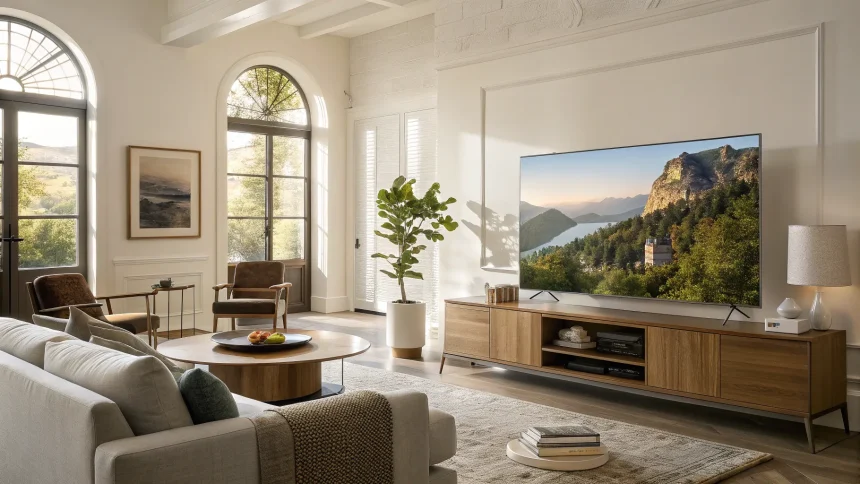
Interest in design-first televisions is rising as buyers look for options that match décor without sacrificing picture quality. The hunt for a strong Samsung Frame TV alternative is gaining momentum in living rooms and design forums alike. At the center is a simple prompt from viewers and reviewers: what delivers artful styling and solid performance at a fair price?
The Samsung Frame TV carved out a niche with a wall-friendly profile and art display features. It made the TV feel like part of the room, not an intrusion. Now consumers are asking whether comparable experiences exist across other brands and price points.
Why Design-Led TVs Are in Demand
Televisions no longer sit in dedicated media spaces. Open layouts push screens into shared areas. That shift makes looks matter as much as specs. Buyers want slim designs, near-flush mounts, and frames that blend with furniture and artwork.
The Frame helped normalize the idea that a TV can behave like a picture frame. Its art mode made blank screens less distracting. That thinking now influences product lines from several manufacturers, from premium models to budget-friendly 4K sets with smart displays.
What Consumers Mean by “A Great Alternative”
“A great Samsung Frame TV alternative.”
That request boils down to a few shared needs. Shoppers want a TV that looks good when off, shows art with low glare, and performs well during movies or sports. They also seek value, flexible mounting, and strong smart features.
- Clean, flush-to-wall mounting and a thin profile
- Customizable bezels or design-friendly finishes
- Low-glare or matte screen options for art display
- Reliable picture quality for mixed use
- Simple cable management and smart platform support
Strengths and Trade-Offs Across the Market
Several brands now pitch gallery-style designs. Premium OLED models emphasize thin panels and wall mounting kits. They deliver deep blacks for films but may rely on third-party art apps. Some midrange LED sets mimic picture frame styling and offer matte-like coatings. They often cost less but can trail on contrast in dark rooms.
Buyers should compare how each TV handles ambient light. A matte-style finish can help with a daytime art display, though it may soften perceived contrast. Glossy panels can look richer at night but reflect lamps and windows. Either way, settings for brightness, motion, and color matter as much as panel type.
Smart platforms differ in app support and ease of use. Consider how the TV handles artwork, idle screen features, and photo uploads. Some systems allow personal galleries or subscription art libraries. Others focus on streaming and leave art functions to screensavers.
Mounting, Cables, and Room Fit
Mounting hardware and cable routing can define the experience. A near-gap wall mount keeps the set flush and centered. Slim, single-cable solutions help hide wires in open spaces. If the TV uses separate control boxes, plan shelf space or wall recesses. If it does not, ensure there is a path to conceal HDMI and power.
Room lighting also matters. A window-heavy space needs a screen that handles glare. A dark media room rewards higher contrast. Art display features should match the wall color, frame style, and viewing distance.
Price and Value Calculus
Value is a major driver for anyone searching for a Frame alternative. Premium models charge for design, panel tech, and software perks. Budget sets can hit the look at a lower cost but may cut back on advanced dimming or motion smoothing. Warranty terms, panel durability, and software updates add to the equation over time.
Accessories can change the total cost. Custom bezels, mounts, and sound solutions add up quickly. Buyers should factor these into comparisons rather than judging only the base price.
How to Choose the Right Fit
Start with the wall. Measure the space, stud placement, and viewing distance. Pick a size that feels balanced with surrounding art and furniture. Check available ports, gaming features, and voice control if those are important. Finally, test a store display under bright lights, and view the same model in dim conditions if possible.
A short checklist can help narrow options quickly and avoid returns.
- Does it mount flush and manage cables cleanly?
- Is the screen comfortable to view during the day?
- Do art and ambient modes meet expectations?
- Is movie and sports performance strong enough?
- Are the accessories and total cost acceptable?
The appetite for a strong Samsung Frame TV alternative shows how design and function now share the spotlight. Buyers want a screen that supports streaming and still looks stylish on a quiet evening. The best choice will match the room, the budget, and how the set is used. Watch for more models with matte finishes, slimmer mounts, and cleaner cable solutions as brands respond to this demand.