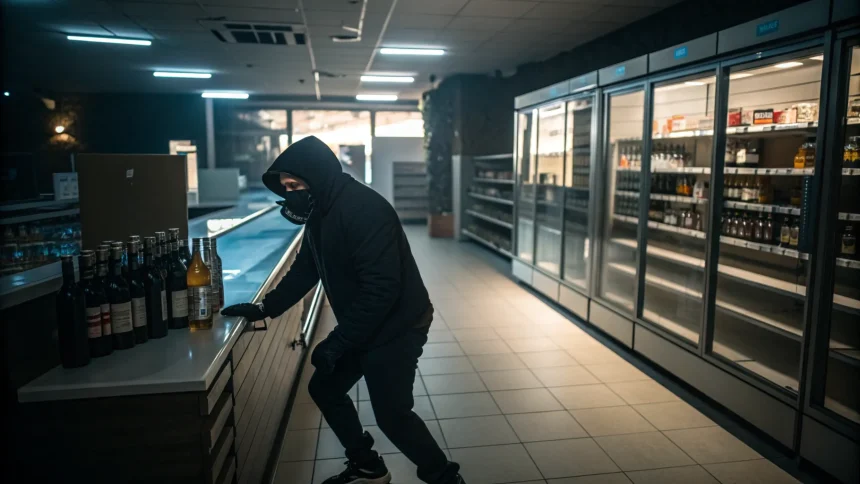
A masked intruder slipped into a liquor store in Ashland, Virginia, early Saturday and headed straight for the whiskey shelf, authorities said. The store was closed at the time. The focused move suggests the person knew where valuable bottles were kept and may have been after a specific brand.
The incident happened before sunrise in a small retail corridor just off Interstate 95. Police are reviewing surveillance footage and working to confirm what, if anything, was taken. No injuries were reported.
“Un intruso enmascarado se metió en una tienda de licores de Virginia el sábado temprano mientras aún estaba cerrada y se dirigió al estante inferior, donde se almacenaba el whisky.”
The Early-Morning Break-In
Details from the initial report indicate the intruder went directly to the lower shelf, where whiskey was stored. That level of precision can signal planning rather than a random smash-and-grab. Investigators will try to determine if the person had visited the store before or studied its layout.
Nearby security cameras on surrounding businesses may help trace the person’s approach and escape route. Early-morning break-ins often last only a few minutes. Thieves aim to grab high-value items and leave before officers arrive.
A Focus on High-Value Spirits
Whiskey has become a top target for shoplifters and burglars because some bottles fetch high prices on secondary markets. Limited releases can move quickly through informal networks, making recovery difficult. Retailers say the same few brands attract constant attention.
Store owners describe a pattern: intruders head straight for known sections and select specific labels. Even mid-shelf bottles can add up fast. A single bag may hold several hundred dollars in inventory.
Security Measures Under Review
Liquor stores have increased protective steps in recent years. Many keep premium bottles in locked cases or behind counters. Some move popular labels to lower shelves to hinder quick grabs, while others do the opposite and keep sought-after items in plain sight but near staff.
- Upgraded cameras and lighting outside and inside the store
- Reinforced entry points and shatter-resistant film on glass
- Locked displays for top-shelf or collectible spirits
- Inventory tracking to spot losses in real time
Local merchants in Ashland have discussed sharing footage and alerting each other through messaging groups. Coordinated alerts can help police connect incidents across neighborhoods.
What Investigators Are Likely Checking
Police will look for telltale signs of planning. That includes how the door or window was breached, whether alarms were bypassed, and how the shelves were approached. They will also check for gloves, footprints, or fibers and compare the intruder’s clothing to other area incidents.
Investigators commonly review resale listings and social media posts after a theft. Quick postings of rare bottles can offer leads. If a serial number or tax stamp is known, recovery chances improve.
Community Impact and Next Steps
Small retailers face tight margins, and even a single break-in can hurt. Insurance claims may not cover the full loss or the downtime. Some owners respond by shortening overnight hours and removing displays near windows.
Authorities encourage residents to report suspicious activity near closed shops, especially vehicles idling with lights off. Clear descriptions and time stamps help narrow searches.
For now, the focus is on identifying the masked intruder and confirming the extent of any loss. The direct move toward whiskey raises the possibility of repeat attempts or a wider trend. Retailers will be watching for similar cases in the region and weighing stronger safeguards as the holiday season approaches.