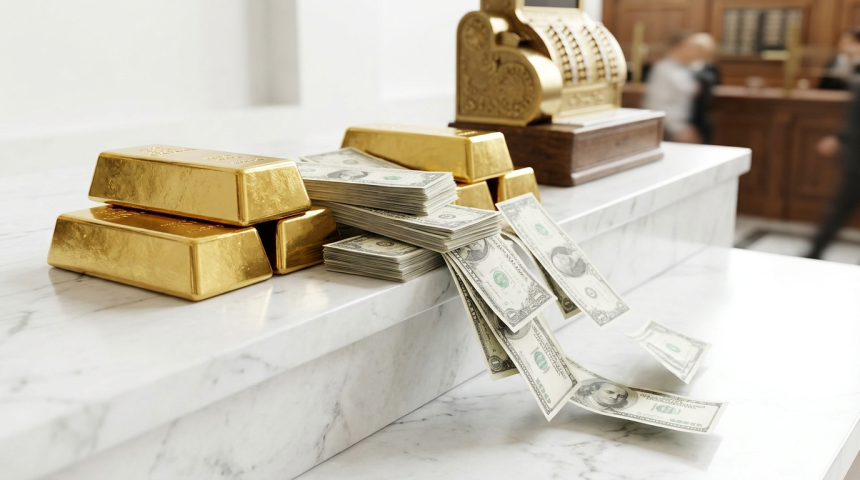
Gold prices climbed 3% on Wednesday as the dollar fell after Democrats swept the U.S. midterm elections. The currency’s post-election decline increased demand for bullion, giving the metal a sharp lift on Nov. 4.
The move showed how quickly political results can spill into financial markets. Investors often reassess government policy, public spending, and economic growth after an election changes the balance of power.
A Weaker Dollar Lifts Gold
Gold and the U.S. dollar often move in opposite directions. Bullion is priced in dollars, so a weaker currency can make it less expensive for buyers using euros, yen, or other currencies.
That relationship helped explain Wednesday’s rally. As the dollar lost ground, demand for gold increased. The 3% rise was large enough to signal more than routine market noise.
Currency weakness can also make gold more attractive as a store of value. Investors may seek the metal when they worry that political or economic changes could reduce the dollar’s purchasing power.
“Gold prices climbed 3% on Wednesday, as a post-election slide in the dollar lifted demand for bullion.”
Still, the relationship is not automatic. Gold can fall alongside the dollar if investors sell assets to raise cash. It may also struggle when interest rates rise because bullion pays no interest.
Election Results Reset Market Expectations
The Democratic sweep of the midterm elections gave investors a new political map to assess. Markets typically focus less on campaign slogans and more on what winning parties may do next.
Traders often watch several policy areas after a major vote:
- Changes in government spending and budget deficits
- Possible shifts in tax and trade policy
- The election’s effect on economic confidence
- Any pressure on inflation or interest-rate expectations
The dollar’s decline suggested that investors saw the result as negative for the currency, at least in the first trading response. Gold was a direct beneficiary of that judgment.
Investors Face More Than Politics
An election can trigger a strong one-day move, but gold’s longer path usually depends on several forces. These include inflation, central-bank policy, bond yields, currency trading, and demand for safer assets.
A sustained dollar decline could offer further support to bullion. A rebound in the currency, however, could remove part of the fuel behind the rally. Rising bond yields could also compete with gold for investor money.
The market’s next test will be whether the initial reaction survives closer study of the election’s policy effects. Investors will also watch economic data and central-bank signals for evidence that the currency move has staying power.
For now, the message from Wednesday’s trading was clear: the election reshaped expectations, the dollar paid the immediate price, and gold enjoyed the political afterglow. Whether that 3% surge becomes a lasting trend will depend on what policymakers and markets do next.