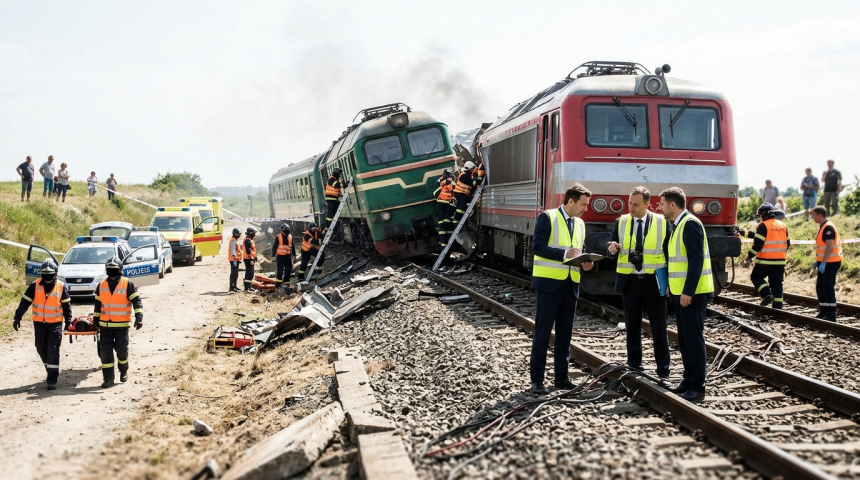
Two trains crashed shortly after 9 a.m., prompting authorities to investigate the cause and determine how many people were injured.
A government spokesperson confirmed the collision but released few details. The location, train operators, passenger totals, and damage were not immediately disclosed.
“The two trains crashed just after 9 a.m.,” the spokesperson said, adding that the cause and number of injuries were still being determined.
The limited statement leaves major questions unanswered during the first stage of the response. Officials have not said whether the trains carried passengers or freight, or whether either train derailed.
Injury Count Remains Unclear
Authorities were still assessing possible injuries after the crash. That process can take time, especially if emergency teams must inspect several carriages or reach damaged sections safely.
No deaths were reported in the initial announcement. However, the absence of a confirmed injury count does not establish that everyone escaped harm.
Early reports after rail accidents often change as emergency workers search trains, interview witnesses, and compare passenger records. Hospitals may also receive injured people before agencies issue a shared total.
Officials had not identified the agencies leading the emergency response. They also did not say whether nearby rail service had been suspended or diverted.
Investigators Face Several Questions
The cause was unknown, and there was no official evidence pointing to equipment failure, human error, signaling problems, or track conditions. Any conclusion at this stage would be premature.
Rail investigators typically preserve the scene and gather records before reaching findings. Key evidence may include:
- Train speed and braking data
- Signal and control records
- Radio communications
- Track and equipment inspections
- Statements from crews and witnesses
Investigators may also examine operating rules and maintenance records. Those checks help distinguish an isolated failure from a wider safety concern.
A final cause can take far longer to establish than an initial timeline. The first public account may explain where the trains were moving, but a formal inquiry must test that account against physical and electronic evidence.
Public Information Still Limited
The government’s confirmation provides a basic time for the collision, but little else. No independent witnesses, railway officials, emergency responders, or medical authorities had provided public accounts.
That lack of detail makes careful reporting essential. Unverified casualty figures and images can spread quickly after major transport accidents, sometimes creating confusion for families and rescue teams.
The next official update will be important for establishing the crash location, the condition of those involved, and the effect on rail traffic. Authorities may also clarify whether passengers need help finding relatives or arranging alternate travel.
For now, the central facts remain narrow: two trains collided shortly after 9 a.m., while the cause and human toll were under review. The injury count and early investigative findings will show the severity of the crash and whether wider safety action is needed.