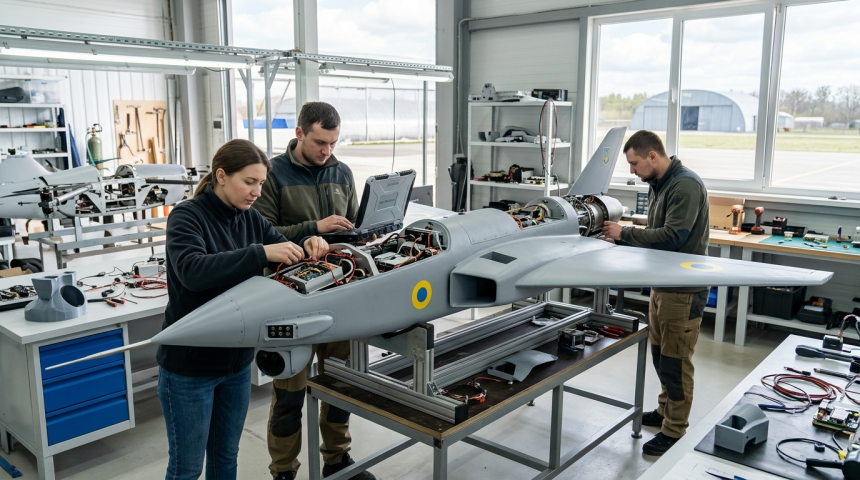
Ukrainian engineers are racing to perfect artificial intelligence-guided, jet-powered interceptors as Russia fields faster aerial threats. The effort marks a new phase in the military technology contest shaping the war.
The project seeks to give Ukraine a quicker and more affordable way to stop Russian weapons before they reach troops, cities, or key infrastructure. Its urgency reflects a central problem for air defense: attackers can change their systems faster than defenders can acquire traditional weapons.
A Faster Threat Demands a Faster Response
Ukraine has relied on layered air defenses to counter Russian missiles and drones. Those defenses include mobile gun teams, electronic warfare equipment, interceptor aircraft, and surface-to-air missile systems.
Yet fast targets place added pressure on radar crews and defensive weapons. Operators have less time to detect a threat, identify its path, and launch an interceptor.
Jet propulsion could help close that gap. A jet-driven interceptor can travel faster than many propeller-powered drones. That speed may allow it to pursue targets that would otherwise escape slower defensive aircraft.
The engineering push is focused on a clear goal described as stopping “a fast Russian threat.” The exact target, interceptor specifications, and development timetable have not been disclosed.
AI Could Reduce the Burden on Operators
Artificial intelligence guidance could help an interceptor track a moving object during the final stage of an attack. Software may process camera or sensor data and adjust the aircraft’s course without constant human control.
That capability could matter in areas where communications are disrupted. Both sides use electronic warfare to interfere with navigation signals and links between drones and their operators.
AI guidance also carries limits. A system must distinguish its target from friendly aircraft, civilian objects, and background clutter. Errors at high speed can waste an interceptor or create new safety risks.
Engineers must balance several demands:
- Enough speed to catch the intended target
- Reliable detection and tracking under combat conditions
- Resistance to electronic interference
- A cost low enough for repeated use
- Production methods suited to urgent wartime demand
A Continuing Technology Contest
The work is part of what has become a “deadly tech duel.” Ukraine and Russia repeatedly modify drones, communications systems, sensors, and defenses in response to battlefield experience.
A successful design may provide only a temporary advantage. Once a defensive system becomes effective, an attacker can change speed, altitude, flight path, electronic protections, or launch tactics.
This cycle favors systems that can be updated and produced quickly. Conventional air-defense missiles remain important, but they can be costly and limited in supply. Smaller interceptors may offer another defensive layer rather than a full replacement.
Testing Will Decide Battlefield Value
The largest question is whether the interceptors can perform reliably outside controlled trials. Combat introduces poor weather, damaged communications, deceptive targets, and crowded airspace.
Success will depend on more than the aircraft itself. Detection networks must find incoming threats early enough to direct an interceptor into position. Launch crews also need clear procedures for identifying targets and avoiding friendly systems.
Ukraine’s engineering race shows how quickly aerial warfare is changing. Jet propulsion may provide the needed speed, while AI may improve tracking and autonomy. Neither feature guarantees an effective defense.
The next tests will show whether the project can move from urgent development to dependable field use. Its progress will also signal how far low-cost autonomous interceptors can reshape air defense in Ukraine and other future conflicts.