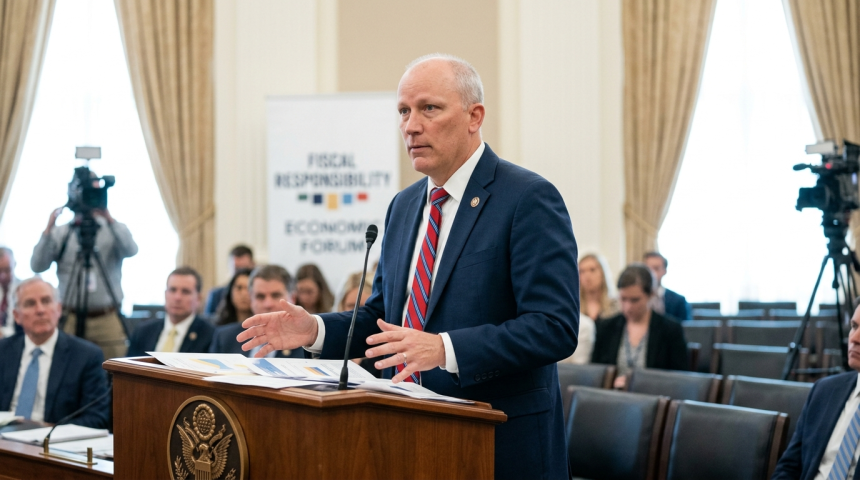
Rep. Chip Roy, a Texas Republican, is renewing his criticism of federal spending after the deficit reached $2 trillion, linking the fiscal strain to concerns about a larger government role in health care.
Roy also criticized Sen. Bernie Sanders’ “Medicare for All” proposal. The debate places two major policy questions side by side: how Washington should control its borrowing and how the United States should pay for medical care.
A $2 Trillion Warning
A federal deficit occurs when annual government spending exceeds revenue. Washington covers the gap by borrowing, which adds to the national debt.
The $2 trillion figure gives fiscal conservatives such as Roy fresh evidence for their case. They argue that persistent deficits leave the government less prepared for recessions, wars, public health emergencies, and other costly events.
Interest costs also consume a growing share of federal revenue when debt rises or borrowing rates remain high. That can reduce the money available for defense, health programs, infrastructure, and other priorities.
Roy’s response reflects a long-running Republican call for tighter spending controls. Yet reducing the deficit is difficult because much of the federal budget funds widely used programs or legally required payments.
- Social Security and major health programs account for a large share of federal spending.
- Defense remains a major expense with strong support in Congress.
- Tax cuts without matching spending reductions can also widen deficits.
Medicare for All Faces Cost Questions
Sanders, an independent senator from Vermont who works with Democrats, has long promoted “Medicare for All”. His plan would replace much of the current insurance system with federally financed health coverage.
Supporters say a single public program could provide universal coverage, simplify billing, and give the government greater power to negotiate medical prices. They also argue that households and employers already pay heavily through premiums, deductibles, and other charges.
Critics, including Roy, focus on the plan’s federal cost and the taxes needed to support it. They also question whether patients would face delays or fewer choices under a national system.
The competing claims often depend on how analysts count health spending. A federal plan could sharply increase government expenses while reducing private insurance payments. The total effect would depend on benefit levels, provider payment rates, drug prices, taxes, and patient demand.
Both Parties Face Fiscal Pressure
The deficit dispute is not limited to one proposal or political party. Republicans have often supported tax reductions and military spending, while Democrats have defended health and social programs. Both parties have approved emergency measures that increased borrowing.
That history makes deficit reduction politically risky. Large savings would likely require some mix of spending cuts, higher revenue, slower benefit growth, or changes to major federal programs.
Health care presents an added challenge because the United States spends heavily under its current mixed system. Rejecting Medicare for All would not settle how to control hospital bills, prescription costs, insurance premiums, or public program expenses.
What Congress Must Decide
Roy’s criticism highlights the central trade-off facing lawmakers. Expanded federal benefits may improve access to care, but they require a clear and sustainable financing plan. Spending restraint may slow borrowing, but major cuts could affect services used by millions.
The next stage of the debate will turn on specific numbers rather than broad slogans. Lawmakers will need to explain who pays, which benefits change, and how quickly any plan would reduce deficits.
For voters, the $2 trillion deficit adds urgency to those questions. The fiscal outlook will depend not only on whether Congress rejects new programs, but also on whether it addresses the cost of existing commitments and the revenue available to fund them.