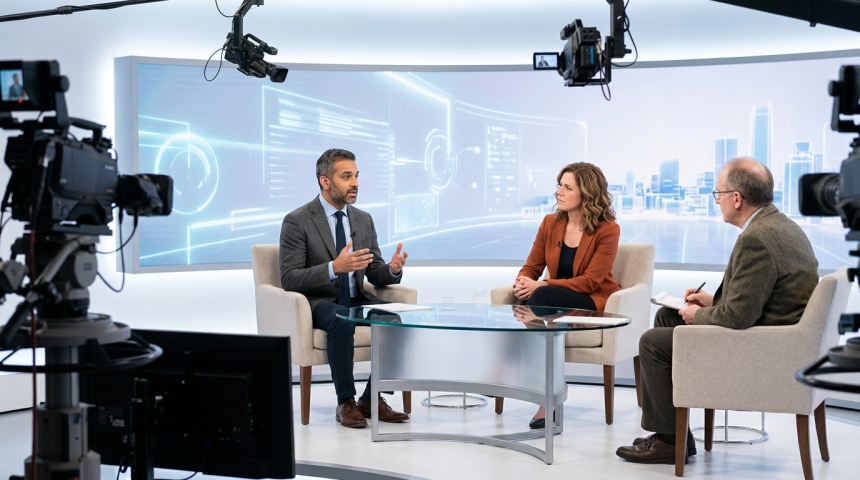
Warnings that artificial intelligence could trigger an “apocalypse” received fresh scrutiny during a television discussion featuring Patrick McGovern Foundation President Vilas Dhar.
Dhar appeared on “Jesse Watters Primetime” to discuss concerns associated with the political left. The segment placed a heated technology debate before a broad cable news audience, where AI risks are often filtered through partisan views.
The discussion comes as governments, companies, and public-interest groups weigh AI’s benefits against possible harm. Those risks range from job losses and misinformation to discrimination and threats from highly capable future systems.
Apocalyptic Language Shapes the Debate
The phrase “artificial intelligence apocalypse” captures the most severe warnings about AI. It suggests systems could become difficult to control or cause damage on a vast scale.
Such language can draw attention to serious safety questions. It can also reduce a complex policy dispute to two opposing camps: those predicting catastrophe and those dismissing the concern.
Dhar’s role adds an important public-interest perspective. The Patrick McGovern Foundation works on questions involving technology and society. Its focus places Dhar near debates about how AI affects institutions, communities, and human welfare.
The television appearance also shows how AI policy has entered partisan media. Once framed as a left-versus-right dispute, technical questions may become linked to political identity rather than evidence.
Risks Extend Past Worst-Case Scenarios
The debate is not limited to theories about machines escaping human control. Existing AI systems already raise practical questions that policymakers and businesses must address.
- Automated tools can produce false or misleading material.
- Biased data can lead to unfair decisions.
- Workplace automation may change jobs or reduce some roles.
- Weak oversight can leave people without clear ways to challenge errors.
These concerns do not require an apocalyptic outcome to matter. Errors in hiring, lending, health services, or public benefits can carry serious costs for affected people.
At the same time, AI can help workers analyze information, improve access to services, and complete routine tasks. A balanced policy must consider those gains without treating safety concerns as mere political theater.
Politics Could Complicate Oversight
Political framing may affect how lawmakers respond. One side may favor stronger safeguards, while another may stress innovation, competition, and limits on government control.
Those positions are not always incompatible. Rules can target high-risk uses while allowing lower-risk research and commercial tools to develop. Clear testing standards, public reporting, and avenues for appeal could help connect safety with practical use.
Media discussions also carry responsibility. Dramatic labels may attract viewers, but they can hide differences among present harms, long-term forecasts, and speculative claims. Each category needs its own evidence and policy response.
A Test for the Public AI Conversation
Dhar’s appearance reflects a wider struggle over who defines AI risk and how that risk is communicated. Technology leaders, researchers, advocates, workers, and elected officials often approach the issue with different goals.
The central challenge is to prevent partisan labels from replacing careful review. Claims of catastrophe deserve testing, as do assurances that markets or existing laws can manage every danger.
Future debate will likely focus on whether officials can set useful safeguards without blocking beneficial tools. The strongest approach will separate immediate, documented harms from uncertain forecasts while preparing for both. That distinction may determine whether AI oversight becomes practical policy or another political dividing line.