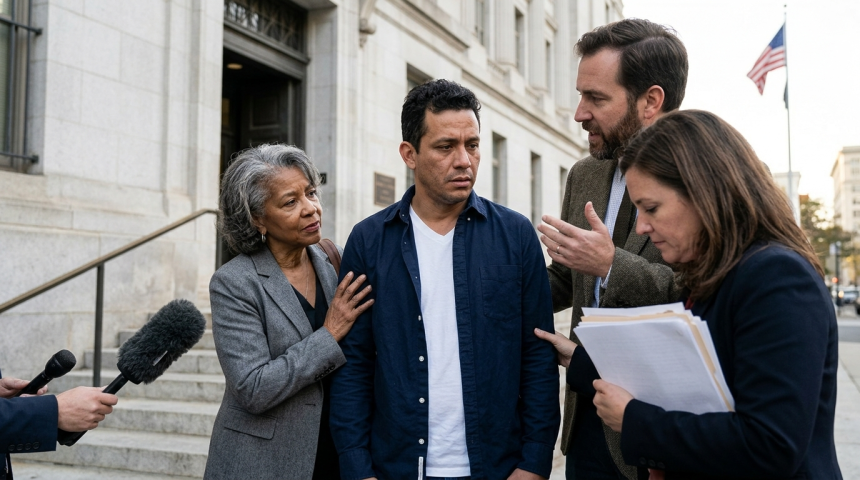
Lawmakers and advocates are urging immigration authorities not to deport Wilber Rafael Garcés Pérez, calling him both the victim and a key witness in an ICE shooting.
Garcés Pérez spoke while being held in immigration detention. His supporters argue that removing him from the United States could prevent a full investigation and place vital evidence out of reach.
The appeal raises two linked questions: whether Garcés Pérez received fair treatment after the shooting, and whether immigration enforcement could interfere with efforts to establish what happened.
A Witness Facing Removal
Lawmakers and advocates described Garcés Pérez as the shooting’s “key witness”. They also said he was the victim of the encounter involving U.S. Immigration and Customs Enforcement.
That combination makes his detention especially sensitive. A person who witnessed an officer-involved shooting may hold evidence needed by investigators, attorneys, and public officials.
Supporters contend that deportation could sharply limit access to Garcés Pérez. It could make further interviews harder and complicate his participation in any legal or administrative proceedings.
Advocates and lawmakers said Garcés Pérez “shouldn’t be deported” because he is both the alleged victim and the central witness.
The available account does not include ICE’s response to those claims. It also does not establish the circumstances that led to the shooting, the agency’s stated reason for detention, or whether a removal date has been set.
Two Government Processes Collide
The case sits where immigration enforcement and official accountability meet. ICE has authority to detain some noncitizens while their immigration cases proceed. A shooting involving federal officers can trigger a separate review.
Those processes may move on different schedules. Immigration proceedings can continue even while investigators examine an officer’s conduct. That creates a practical problem if the detained person is also a central witness.
Several issues are likely to shape the dispute:
- Whether investigators have taken a complete statement from Garcés Pérez.
- Whether he has access to legal counsel and relevant records.
- Whether deportation would hinder a civil claim or official inquiry.
- Whether ICE will delay removal while the shooting is reviewed.
Keeping Garcés Pérez in detention would not automatically solve those concerns. Detention can restrict communication and make sustained access more difficult. Release, supervised release, or a temporary pause in removal could offer other options, depending on his case.
Accountability Depends on Access
Officer-involved shooting reviews often rely on witness statements, video, medical evidence, and agency records. No single account settles a case, but losing access to a central witness can leave major gaps.
At the same time, describing Garcés Pérez as a victim reflects the position of his supporters. Any final finding would require evidence about the encounter and an opportunity for ICE to explain its actions.
The immediate question is less dramatic than the shooting, but just as consequential: will Garcés Pérez remain available while officials determine the facts?
A pause in deportation would preserve that access without deciding the final immigration case or assigning responsibility for the shooting. The next steps by ICE, investigators, and the courts will show whether immigration enforcement proceeds first, or whether accountability gets time to catch up.