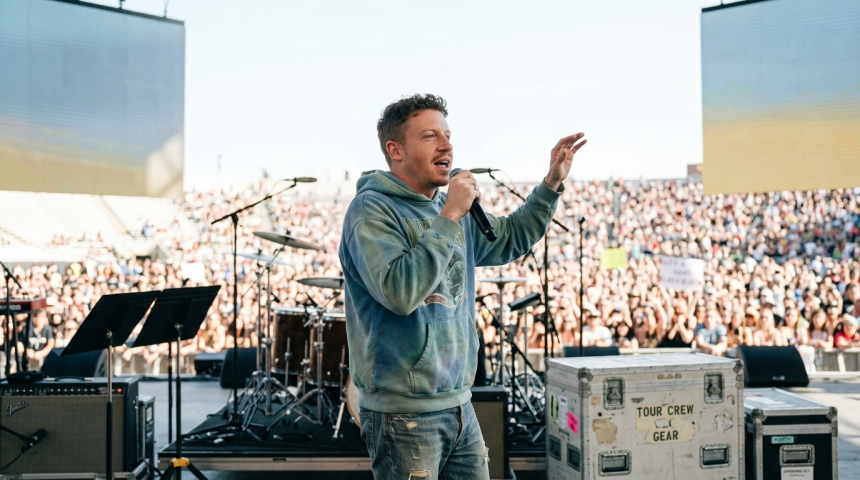
Rapper Macklemore was dropped as an opening act for Ed Sheeran after saying “Free Palestine” onstage, linking a brief political statement to a major tour decision.
The reported move adds to a wider debate about political speech in live entertainment. Details about the concert location, tour dates, and who made the final decision were not provided.
A Short Statement With Career Consequences
Macklemore’s message consisted of two words, but their meaning carries considerable weight amid the Israel-Gaza war and global protests over Palestinian rights.
“Free Palestine.”
The phrase is often used to support Palestinian freedom, civil rights, and statehood. Critics sometimes argue that its meaning depends on context and may be heard as dismissing Israeli security concerns.
No longer serving as an opening act could cost Macklemore access to large crowds and valuable publicity. Opening slots on stadium tours can introduce artists to listeners who might not attend their own shows.
For Sheeran’s tour, the reported change may also create practical questions. Organizers could need a replacement performer, schedule adjustments, or clearer rules about political remarks from the stage.
Music Tours Face Political Pressure
Concerts have long served as places for protest. Artists have spoken from stages about war, racism, elections, LGBTQ rights, and other public issues.
Yet major tours are also large commercial operations. They involve promoters, venues, sponsors, ticketing companies, local authorities, and fans with sharply different views.
That mix can make a microphone politically powerful and financially risky. A remark lasting seconds may trigger public complaints, calls for boycotts, or demands that artists clarify their position.
Supporters of Macklemore’s statement may view his removal as punishment for advocating Palestinian rights. They may also see it as a warning to performers who want to address the humanitarian toll of war.
Others may argue that tour organizers can control their shows and avoid messages that could divide audiences. From that view, an opening performer’s role comes with limits set by the headline act and its partners.
Key Questions Remain Unanswered
The available account does not establish whether Sheeran personally ordered the change. It also does not identify any contract clause, prior warning, or official explanation from tour management.
Several details could shape how the decision is understood:
- Whether Macklemore was removed from one date or the full tour
- Whether the statement alone caused the decision
- Whether either artist was consulted before the change
- Whether organizers had a policy covering political speech
Those facts matter because tour billing can change for many reasons. Without formal statements, the reported cause should be treated carefully rather than stretched into broader claims about either performer.
A Test for Speech and Show Business
The episode shows how quickly artistic expression can collide with commercial control. Performers may see the stage as a place for conscience, while organizers may see it as a tightly managed workplace.
For fans, the next steps will be telling. Clear explanations from Macklemore, Sheeran, or tour representatives could establish who made the decision and why.
Until then, the central fact remains stark: a short call for Palestinian freedom was followed by Macklemore losing an opening slot. The missing details will determine whether the case becomes a lasting dispute over speech, contracts, or both.