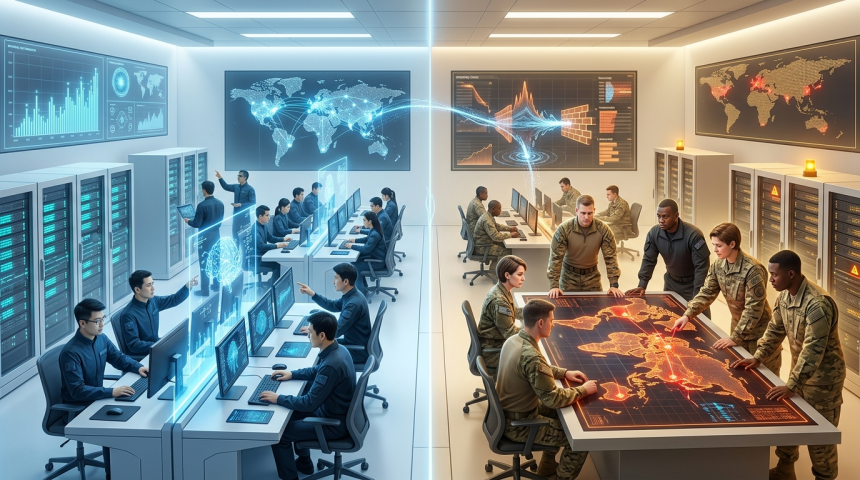
China’s rapid gains in artificial intelligence are renewing concerns about US security, according to former CISA Executive Director Bridget Bean. Speaking on Fox News program “The Ingraham Angle,” Bean examined how faster AI development could create new risks for American institutions and technology systems.
The discussion focused on the speed of China’s progress and the possible consequences for the United States. It also reflected a wider policy challenge: responding to a strategic competitor without treating every AI advance as an immediate threat.
Security Risks Move Into Focus
Artificial intelligence can process large amounts of information, automate tasks and improve digital operations. Those same abilities can support cyberattacks, surveillance, disinformation and intelligence gathering when used by hostile actors.
Bean’s background gives her warning added weight. The Cybersecurity and Infrastructure Security Agency, known as CISA, helps protect federal networks and critical infrastructure from digital and physical threats.
China’s rapid progress could place pressure on US agencies to review how AI may affect vital systems. Areas of concern may include government networks, communications, energy, transportation and private-sector technology.
The central issue is not only whether China develops capable AI systems. US officials must also consider how those systems could be deployed, who controls them and whether American safeguards can keep pace.
A Competition With Civilian and Military Stakes
AI research often has both commercial and national security uses. A tool designed for routine data analysis may also help identify targets, review intelligence or search for weaknesses in computer networks.
This overlap makes policy decisions difficult. Broad restrictions could slow trade, research and useful civilian applications. Weak controls, however, could expose sensitive technology or leave important systems open to attack.
A measured US response could center on several priorities:
- Protecting sensitive research, networks and supply chains.
- Improving threat detection across government and industry.
- Setting clear rules for high-risk AI systems.
- Working with allies on security standards and information sharing.
Such steps would require cooperation among federal agencies, technology companies, universities and infrastructure operators. Many advanced AI systems are created or managed by private companies, while the government carries much of the responsibility for national defense.
Speed Must Be Balanced With Safety
Concern about China may encourage faster US investment and development. Yet speed alone does not guarantee security. Systems released without adequate testing can produce errors, expose private data or create new openings for attackers.
Policymakers also face the risk of overstating an opponent’s progress. AI performance can vary sharply by task, and public demonstrations do not always show how a system works under real conditions. Independent testing and clear evidence are needed before officials make costly decisions.
Bean’s warning places AI competition within a broader security debate. The United States must track China’s advances while strengthening its own defenses and maintaining practical oversight.
The next test will be whether Washington can turn concern into focused policy. Officials will need to identify the highest-risk uses, protect critical systems and avoid rules that block beneficial research. China’s progress raises the urgency, but careful assessment will remain as important as rapid action.