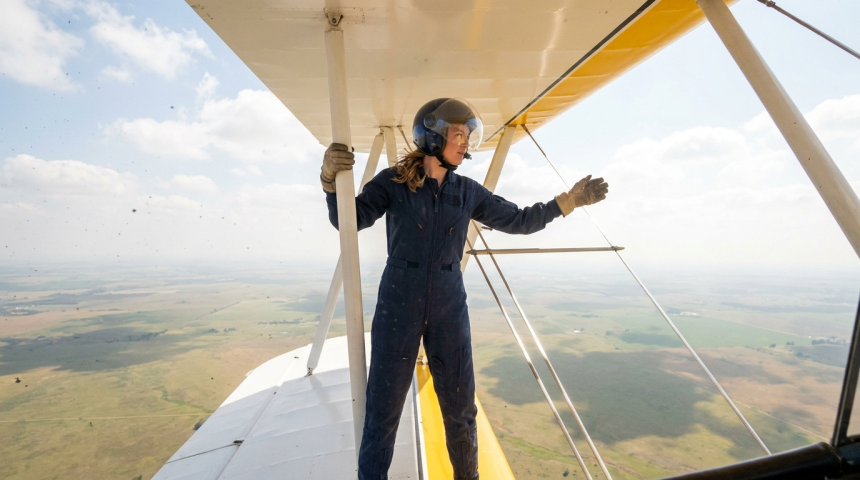
A 28-year-old woman has shared a striking Instagram clip showing her wing walking on an airplane during flight, turning a high-risk stunt into social media spectacle.
The brief account does not identify the woman, pilot, aircraft, location, or date. It also offers no details about training or safety measures. Those gaps matter because wing walking is a specialized aviation activity, not a casual midair adventure.
A Dramatic Stunt With Limited Context
The video was described as an “unreal clip” of the woman performing the stunt while the plane was airborne. The available account does not say whether she stood freely, moved along the wing, or remained secured in one position.
It also does not establish whether the flight was part of a regulated exhibition, a commercial experience, or a private event. Without that context, viewers cannot judge how the stunt was organized.
Wing walkers are typically attached to an aircraft through specialized restraints. Flights also require close coordination between the participant, pilot, and ground crew. Weather, speed, equipment, and aircraft condition can each affect safety.
The clip’s social media framing places attention on the visual shock. Yet the planning behind such a flight may be far less glamorous. Aviation has little patience for improvisation, even when Instagram rewards it.
Social Media Rewards Risky Images
Instagram has helped make extreme activities easier to share with large audiences. Short videos can turn a few seconds of danger into entertainment, often without showing preparation or safeguards.
That creates a challenge for viewers. A polished clip may appear spontaneous, although trained staff could have planned every movement. The reverse is also possible. A dramatic post alone cannot prove that accepted safety procedures were followed.
Several key facts remain unconfirmed:
- The identity and experience of the participant
- The flight’s location and date
- The operator and type of aircraft
- The restraints and protective equipment used
- Whether aviation authorities approved or monitored the activity
The woman was characterized through her age and appearance, including the phrase “blonde bombshell.” That description may attract clicks, but it says nothing useful about her qualifications or the flight’s safety. Her training would be the more relevant detail.
What Responsible Coverage Should Show
Extreme-stunt posts can leave audiences with an incomplete picture. Clear captions should explain whether professionals supervised the event and what precautions were in place. They should also avoid suggesting that viewers can easily copy the act.
Organizers, if identified, could provide records about crew experience, aircraft inspections, weather limits, and emergency planning. Such information would help separate a controlled display from reckless behavior.
The clip has delivered the intended jolt: a person appears outside an airplane while it is flying. The more important story, however, sits outside the camera frame. Until further details emerge, the stunt should be viewed as an eye-catching but poorly documented event. What comes next depends on whether the participant or operator explains how the flight was conducted, and whether safety matched the spectacle.