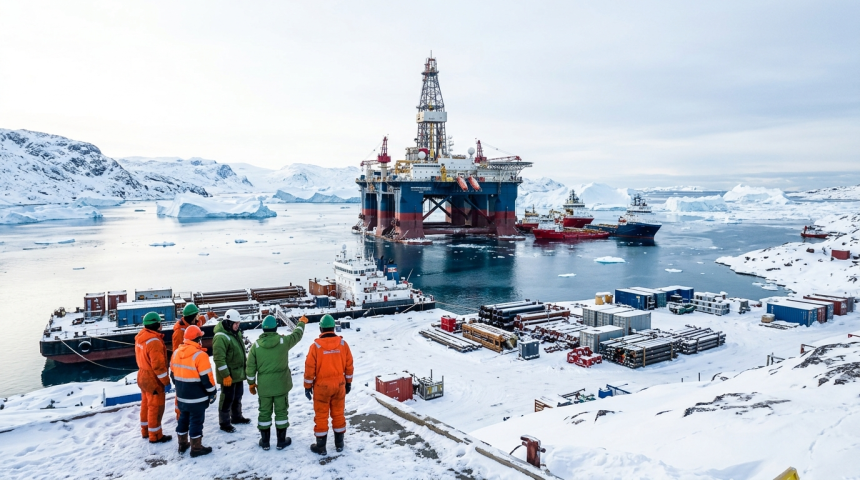
Greenland Energy Company and joint venture partner 80 Mile have postponed planned oil drilling in Greenland until winter 2027. The delay extends the timeline for a project operating in one of the world’s most difficult and closely watched energy regions.
The companies have not disclosed the immediate reason for the revised schedule. They also have not provided details on drilling targets, project costs, or the length of the planned campaign.
Arctic Conditions Shape Project Timelines
Oil exploration in Greenland requires careful planning because of severe weather, remote locations, and limited infrastructure. Equipment, workers, fuel, and emergency services may need to travel long distances.
A winter drilling program can offer firmer ground and more predictable access in some areas. However, extreme cold and limited daylight can create other operational risks. Companies must align logistics, permits, equipment, and contractor availability within narrow work periods.
Moving the campaign to winter 2027 could give the joint venture more time to prepare. It may also increase holding and planning costs before drilling produces new geological information.
Key Questions Remain Unanswered
The short announcement confirms the revised date but leaves several material issues unresolved. Investors and local stakeholders will likely seek more information as the new drilling window approaches.
- The reason for delaying the campaign
- The number and location of planned wells
- The expected cost of drilling
- The status of permits and environmental reviews
- The project’s funding and contractor arrangements
Without those details, the delay cannot yet be linked to a specific technical, financial, or regulatory issue. A schedule change does not itself show whether the partners have altered their view of the resource.
Economic Hopes Meet Environmental Scrutiny
Greenland’s possible oil resources have attracted commercial interest for years. Yet exploration has faced high costs, uncertain discoveries, and public concern about Arctic development.
Supporters of resource projects may point to potential jobs, investment, and public revenue. Any economic benefit would depend on successful drilling, a commercially viable discovery, and years of further development.
Critics focus on spill risks and the difficulty of responding to emergencies in remote Arctic conditions. Oil development also faces wider pressure as governments and investors assess climate targets and long-term demand for fossil fuels.
These competing concerns mean the project’s progress will be judged on more than drilling results. Environmental safeguards, community engagement, regulatory compliance, and financial capacity will also influence its prospects.
Longer Wait for Geological Evidence
Exploration drilling is often the point at which estimates meet physical evidence. Until a well is drilled and tested, uncertainty remains about the presence, quality, and commercial value of hydrocarbons.
The postponement therefore pushes back the earliest opportunity for Greenland Energy Company and 80 Mile to gather that evidence. It may also delay later decisions on appraisal work, infrastructure, and possible production.
The next major signals will be any explanation for the delay, confirmation of financing, regulatory updates, and a firm operational plan. For now, winter 2027 is the new target, while the project’s costs, risks, and potential remain largely undefined.