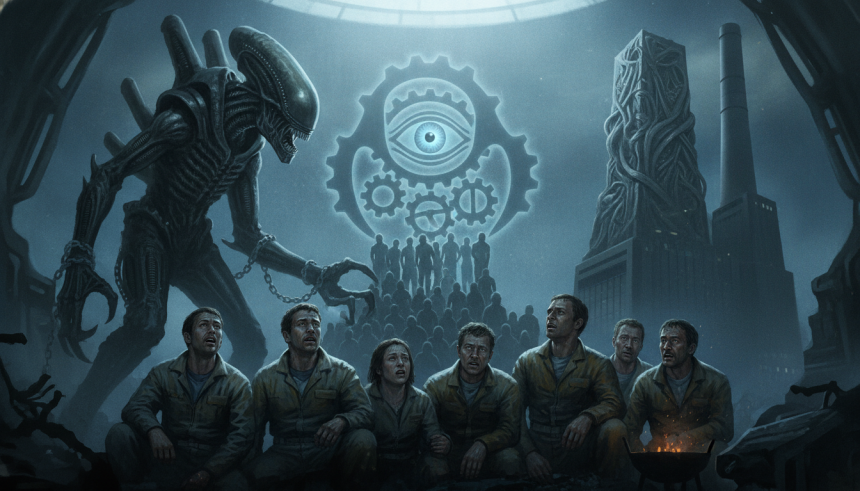
In a fresh reading of the Alien series, the scariest force on screen is not the xenomorph but a single employer with unchecked sway over people’s lives. The franchise’s corporate villain, Weyland-Yutani, stands in for the kind of labor-market power economists say is shaping wages and working conditions today.
Drawing on film scenes and economic research, labor economist Arin Dube discusses how monopsony power can trap workers, and how policy could blunt the harm. Filmmaker Fede Álvarez, director and co-writer of Alien: Romulus, says the new film puts the company’s treatment of workers at the center of the story, reflecting a concern spreading far outside science fiction.
The Concept: One Boss Sets the Terms
Economists use the term “monopsony” to describe a job market where one employer has the clout to push pay and conditions down. As one summary in the discussion explains:
“Monopsony — when one employer dominates a labor market and gains power to underpay and mistreat workers.”
Weyland-Yutani is an exaggerated case. But researchers now argue that real labor markets often look more like a spectrum, with employers gaining leverage through size, geographic isolation, noncompete clauses, or industry consolidation. Dube, whose new book The Wage Standard examines these issues, points to evidence that workers switch jobs less often than a true “free market” model would predict, giving employers room to hold wages down.
Recent policy fights reflect this shift. Regulators have challenged “no-poach” deals, states have moved to limit noncompete agreements, and antitrust agencies have pledged closer attention to labor effects in mergers. All aim to chip away at employer dominance that can suppress pay.
Rewriting the Plot With Policy
Dube is asked what would change if characters in Alien had the protections many economists favor. The answer, he suggests, is a shorter and far less deadly story. With guardrails in place, an employer would have less power to force risky, underpaid missions.
- Higher wage floors can set minimum pay even when a single firm dominates a town or sector.
- Sectoral or industry-wide standards can prevent a race to the bottom on wages and safety.
- Limits on noncompetes and anti-poach clauses make it easier to quit and find better jobs.
- Stronger safety rules and worker voice reduce pressure to accept hazardous work.
Viewed through that lens, Weyland-Yutani’s ability to compel dangerous labor is the product of market power, not only corporate cruelty. Curtailing that power changes outcomes.
On Screen, A Company Town in Space
Álvarez says Alien: Romulus places Weyland-Yutani’s labor practices in plain view. Earlier films hinted at the company’s control through contract clauses and cold directives. The new installment, he explains, makes that control part of the plot’s engine. It mirrors real-world worries about workers with few job options or leverage to say no.
That creative choice lands in a moment when pop culture and policy often meet. Viewers can spot echoes of company towns, far-flung worksites, and gig jobs where shifts and pay can change without warning. The film turns those themes into stakes the audience can feel.
Balancing Views and Evidence
Some economists still argue that competition for workers is stronger than monopsony claims suggest, especially in tight labor markets. They warn that policies like aggressive wage floors could slow hiring if set too high. But Dube and others counter that many studies find modest wage rules raise pay without large job losses, especially where employers hold the upper hand.
The debate now focuses less on whether monopsony exists and more on how often it matters, and which tools work best. That shift has nudged antitrust thinking to consider labor effects, not just consumer prices. It has also pushed lawmakers to weigh rules that help workers change jobs, bargain, and reject unsafe tasks.
From Science Fiction to Policy Playbook
The Alien films offer a stark, if stylized, view of what happens when one buyer of labor writes all the rules. As one line puts it:
“Maybe the real monster in the Alien franchise isn’t actually the killer alien… an even more insidious horror: a single employer with unchecked power.”
The latest discussion links that horror to familiar tools: fair pay standards, open labor markets, and enforcement against collusion. If those tools work, the human stories look very different.
For now, the question is how far policymakers go and whether courts accept tougher rules on labor-market power. Viewers may leave Alien: Romulus thinking less about acid blood and more about contract fine print. The next chapter, on screen and off, will be written by how much choice workers have—and how much power any one employer can wield.