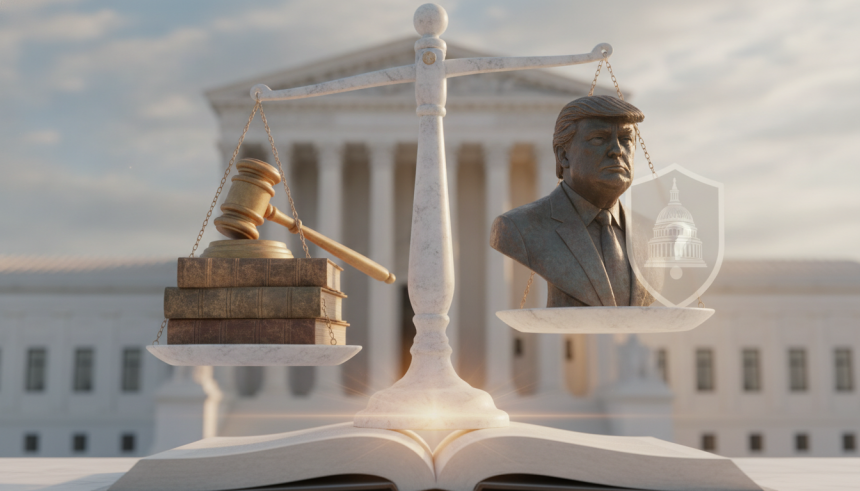
The Supreme Court is nearing the end of its term with the presidency itself under the microscope. At issue are former President Donald Trump’s broad assertions about the scope of presidential authority and protection from prosecution. The Court, meeting in Washington as the term winds down in late June, is considering how far constitutional shields extend for a president’s official acts, and what that means for criminal exposure after leaving office.
“The Supreme Court is wrapping up a term that has focused on President Donald Trump’s expansive claims of presidential power.”
The stakes are high. The ruling could shape how future presidents make decisions, how prosecutors bring cases, and how Congress checks the executive branch. It also arrives in a charged political climate, raising questions about timing, accountability, and the rule of law.
What Is at Stake for the Presidency
Trump’s position centers on wide protection for actions taken while in office. He has argued that the Constitution bars criminal charges for core official acts, warning that threats of prosecution could chill decision-making. His lawyers have urged the Court to draw a strong line around the presidency.
Critics counter that no person, including a president, is above the law. They say a sweeping shield could invite abuses of power and weaken deterrence. They also argue that courts have the tools to separate official duties from private conduct without endangering national leadership.
Legal scholars note that the Court must balance two goals: preserve an effective executive and maintain legal accountability. How the justices frame that balance will guide courts and prosecutors for years.
How Past Rulings Shape the Debate
History offers signposts. In 1974, the Court unanimously ordered President Richard Nixon to turn over White House tapes, curbing a claim of absolute privilege in a criminal probe. In 1997, the Court allowed a civil lawsuit against President Bill Clinton to proceed for alleged conduct before he took office. And in 1952, the Court rejected President Harry Truman’s effort to seize steel mills without congressional approval, signaling limits on unilateral power.
These cases form a rough map. They confirm that presidents receive respect for official functions but not a blank check. Still, none directly answered whether and when a former president can face criminal charges for acts tied to official duties. That is the gap the current case seeks to fill.
Arguments From Both Sides
Supporters of a broad shield fear a surge of local or federal prosecutions that could hound every departing president. They say immunity for official acts protects national security decisions and foreign policy from second-guessing in court. They urge narrow judicial review to avoid exposing sensitive information and to respect separation of powers.
Opponents say courts can handle sensitive matters with established tools, including classified procedures and careful discovery. They argue that clear limits are needed so future presidents cannot claim carte blanche. They point to guardrails such as statutes, grand juries, and judicial oversight as checks against politically driven cases.
- One side warns of chilled leadership and endless legal fights.
- The other warns of unchecked authority and weakened deterrence.
Possible Outcomes and Ripple Effects
The Court could recognize some immunity for core official acts while allowing prosecutions for private conduct or acts outside constitutional duties. It could send disputes back to lower courts to sort which actions are official and which are not. Or it could set a tougher standard for indicting a former president, requiring proof that an act was clearly outside any official role.
Any of these paths will affect how presidents, prosecutors, and Congress act next. A strong shield could narrow future cases tied to executive decisions. A narrower shield could open the door to more inquiries but place the burden on judges to police the line between public duty and private conduct.
What to Watch Next
Attention now turns to the Court’s final opinions and how the justices explain the test for official acts. Watch for concurring opinions that offer different paths for future disputes. Also watch how lower courts implement any new standard, which may require detailed factual hearings on a president’s motives and functions.
Beyond the legal rules, the decision will influence public trust. Clear guidance could reduce claims of selective justice. Vague guidance could invite more conflict and delay.
As the term ends, one fact stands out: the Court’s reasoning will shape the presidency long after this case closes. The boundaries it draws will guide how future leaders act, how the justice system responds, and how the country defines equal justice under law.