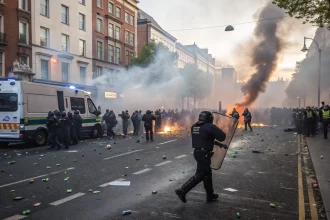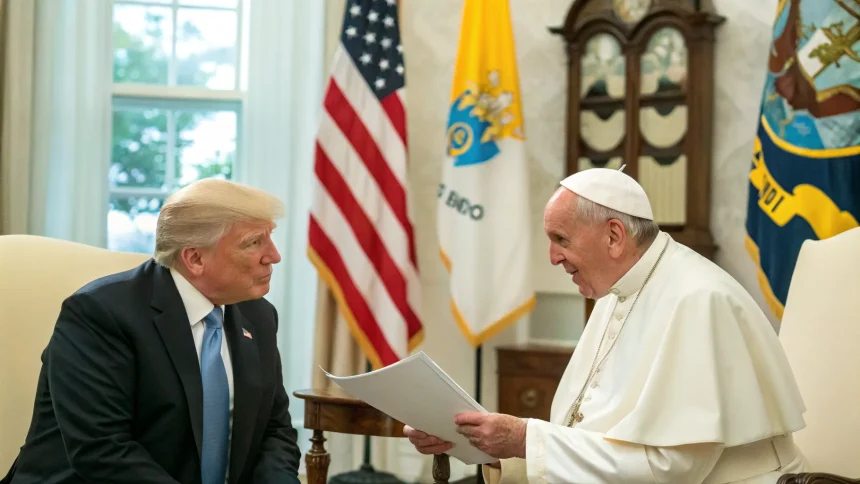
President Donald Trump said a deal with Iran to end the war is close, signaling a potential shift in a long and bitter conflict. On the same day, Pope Leo XIV issued his first encyclical, addressing the rise of artificial intelligence. The two developments touched security and ethics, drawing attention from diplomats, faith leaders, and the tech sector.
The statement on Iran suggested a breakthrough after years of confrontation and failed talks. The encyclical placed moral questions about AI on a global stage, indicating that the issue has moved from labs and boardrooms into public life. Both moves could set the tone for policy and debate in the months ahead.
Background on the Iran Talks
Negotiations with Iran have swung between escalation and dialogue for years. Sanctions, proxy clashes, and back-channel contacts have marked the cycle. Past efforts have stumbled over inspections, missile limits, and how quickly sanctions might be eased. Regional actors have often pushed different aims, making a single track deal hard to land.
Any agreement that “ends the war” would need security guarantees, verifiable steps on weapons programs, and a clear timeline for relief. It would also need buy-in from neighbors, who fear spillover violence and arms flows. The durability of a deal usually depends on enforcement and whether each side can sell the terms at home.
Trump Signals Progress on Iran Talks
“A deal with Iran to end the war is largely negotiated.” — President Donald Trump
Trump’s claim suggests talks have moved past early hurdles and into final drafting. Yet key questions remain. What is the scope of the cease-fire or settlement? How will compliance be monitored? And what happens if either side breaks terms? Without a published text, allies and critics are withholding judgment.
Supporters will likely hail momentum if it lowers violence and opens trade lanes. Skeptics will press for details on verification and the status of armed groups linked to Tehran. The response from regional capitals could shape whether the deal sticks or unravels.
Skepticism and Open Questions
Analysts often caution that last-mile talks can be the hardest. Sequencing matters: who moves first, what is phased, and how snap-back penalties work. Domestic politics can also derail progress if factions see the price as too high.
Energy markets may react if the deal affects supply routes or sanctions on exports. Defense planners will watch for changes in troop postures and militia activity. Humanitarian groups will look for aid access, prisoner releases, and steps to clear unexploded ordnance.
Pope Leo XIV Weighs In on AI
In his first encyclical, Pope Leo XIV addressed the rise of artificial intelligence, bringing a moral lens to a field often guided by speed and scale. The message signals the Church’s interest in human dignity, worker rights, and the risks of unchecked deployment.
Pope Leo XIV “weighed in today on the rise of AI during his first encyclical.”
The intervention could spur debate among policymakers and companies about safety, bias, and the duty to protect vulnerable groups. It also raises issues of consent, privacy, and the impact on jobs as automation spreads. Faith leaders have long engaged tech questions, and this move places ethical guardrails squarely on the agenda.
What Could Change Next
If the Iran deal advances, expect a focus on enforcement mechanics, dispute resolution, and timelines for relief. Confidence-building steps—like monitored pullbacks or data sharing—could follow. Any breach would test whether penalties have teeth.
On AI, the encyclical may add momentum to calls for audits, clear liability rules, and transparency about training data and model limits. Governments may push for cross-border standards so companies are not gaming weaker rules.
- Text and terms of the Iran deal, if released
- Reactions from regional states and security services
- Policy shifts sparked by the encyclical on AI
- Company responses on safety, bias, and worker impact
Both developments tap into urgent themes: peace after years of bloodshed, and control of tools that are reshaping daily life. Leaders will be judged by results, not words. For the Iran talks, that means a measurable drop in violence and clear, verifiable steps. For AI, it means guardrails that protect people while preserving fair innovation.
The next few weeks will reveal whether the Iran claim holds and how the encyclical shapes the policy debate. Watch for concrete actions, published terms, and timelines. Signals from regional capitals, parliaments, and major tech firms will show whether today’s statements become lasting change.