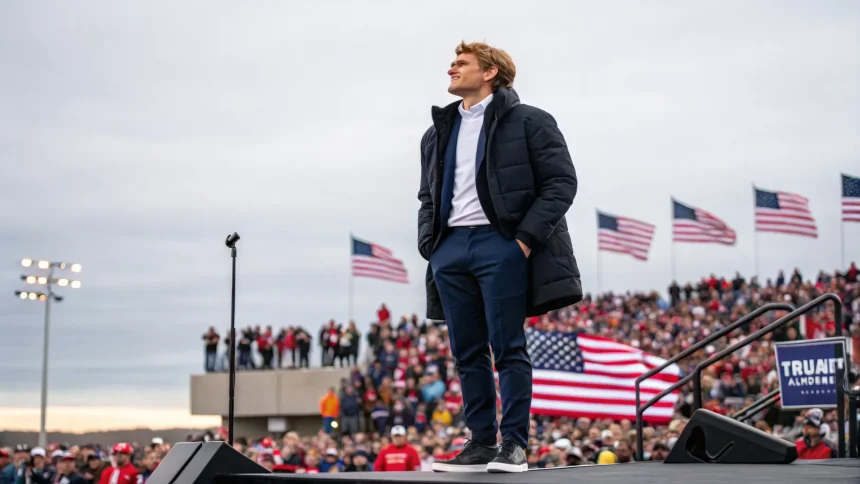
A New York Giants quarterback, identified as Jaxson Dart, introduced former President Donald Trump at a rally in Suffern, New York, igniting swift backlash and a flurry of reactions from fans and commentators. The appearance, unusual for an active NFL player, drew sharp debate about the line between personal politics and team identity in one of the league’s largest markets.
The moment threw the franchise into the center of a broader argument over athletes’ political speech. Supporters called it free expression. Critics said it blurred team affiliation with a polarizing figure. The episode raised familiar questions for the league, sponsors, and a fan base that spans the political spectrum.
Sports, Politics, and a Familiar Flashpoint
Public stances by athletes have long triggered strong responses. The NFL has wrestled with this dynamic for years. Colin Kaepernick’s protest during the national anthem set off boycotts and counter-boycotts. Drew Brees’s 2020 remarks led to an apology and locker room tension. Aaron Rodgers’s vaccine commentary drew intense scrutiny.
Teams try to insulate their brands from politics. But star players are public figures with large followings. When they appear at rallies, it is hard to keep that separate from the shield on their helmets. New York’s market magnifies the effect. Every move becomes a headline, and every headline becomes a test of loyalty.
Why This Appearance Hit a Nerve
Introducing a presidential candidate is not a casual handshake at a charity golf event. It places an athlete on a stage, endorsing not just a person but a platform. For a franchise with fans across New York and New Jersey, the risks are obvious.
- Fans often conflate a player’s stance with the team’s identity.
- Sponsors weigh reputational risks tied to public controversy.
- Teammates may hold varied views, which can strain locker room cohesion.
Even for those who argue athletes should speak their minds, the optics are tricky. An introduction is active participation, not a passive presence. That’s why the reaction came fast, and loud.
Inside the Locker Room: Unity vs. Individual Voice
Coaches preach unity. Players live real lives with real beliefs. Those two truths can collide. In similar moments, teams have leaned on well-worn playbooks: remind the public that individual views do not represent the organization, keep the focus on football, and urge respect inside the building.
That approach can work if teammates feel heard and the season’s goals remain clear. The alternative is lingering tension that colors every press conference. In the digital age, one clip can frame an entire year’s narrative.
What This Means for the Giants and the NFL
For the franchise, the next steps matter. A measured response can calm the waters. Overreaction can inflame them. Silence carries its own risks if rumors fill the vacuum. The NFL, meanwhile, tends to prefer business as usual. But the league also knows public trust is part of its product.
Brands tied to teams watch sentiment closely. They track spikes in negative chatter. If a controversy lingers, they re-evaluate ad placements and player partnerships. It’s not about punishing speech; it’s about predicting consumer behavior.
Fans Split, But Attention Is Locked In
Some fans see the appearance as a personal choice that deserves respect. Others argue that the jersey carries responsibility, especially in a divided moment. Both sides agree on one thing: they are paying attention. That attention has economic weight in ticket sales, merchandise, and ratings.
For players across the league, this serves as a case study in the cost of a political stage. The benefits may be personal conviction and a louder microphone. The costs can be strain at work, a change in public image, and an off-field story that won’t quit.
The fallout is still taking shape. The team’s challenge is to keep the focus on football without dismissing the concerns of a large and varied fan base. For the league, the lesson is familiar: athlete speech is here to stay, and platforms are only getting bigger. Expect more moments like this as election season heats up. The real test will be whether teams can protect the locker room while players speak as citizens—and whether fans will separate the game they love from the politics they don’t.