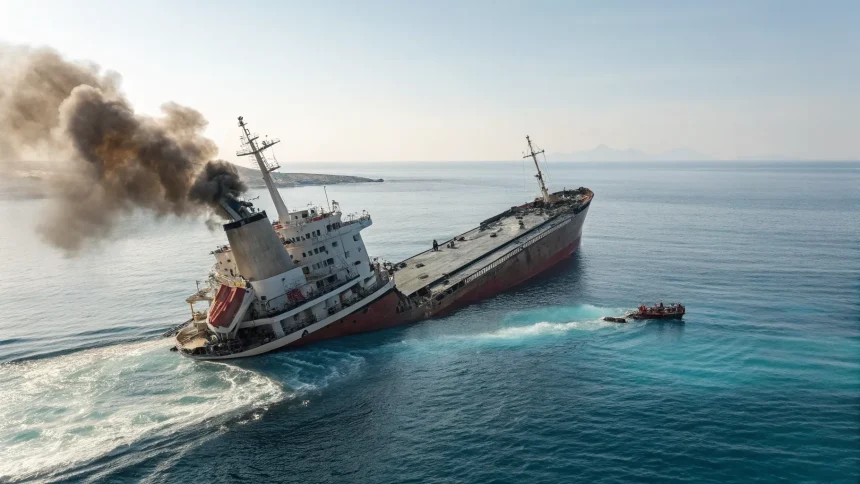
A Russian vessel that went down in the Mediterranean after an engine room explosion may have been transporting parts for submarine nuclear reactors, according to Spanish government documents. The incident, which triggered immediate questions about safety and cargo disclosure, has drawn attention from maritime authorities and nuclear experts across the region.
Officials have not released full details on the ship’s route or manifest. The condition of the wreck and the status of any hazardous materials remain unclear. Maritime responders are weighing next steps as investigators review documents and interview crew members and port operators.
Background and Context
The Mediterranean is one of the world’s busiest shipping corridors, with frequent transit of commercial and state-linked vessels. Cargoes can range from consumer goods to industrial equipment. When a ship sinks with suspected sensitive materials, coastal states must balance rescue, salvage, and environmental protection.
The suggestion that the cargo included reactor components raises the stakes. Parts used in submarine reactors are strictly controlled. Many countries require prior notification if such items pass through territorial waters, even when the materials are not radioactive fuels.
“A Russian ship that sank after its engine room exploded in the Mediterranean could have been carrying parts for nuclear reactors used in submarines,” according to Spanish government documents.
What Investigators Are Examining
Investigators are likely focused on three main areas: the cause of the blast, the accuracy of the cargo manifest, and potential environmental risk. Engine room explosions often stem from fuel leaks, maintenance failures, or electrical faults. A technical probe will look for signs of prior warnings or mechanical issues.
Authorities will also seek original shipping documents, export permits, and port inspection records to verify the nature of the cargo. If the parts were dual-use items, different licensing rules could apply. Divers and remote vehicles may be deployed to assess the wreck site, though depth, weather, and safety conditions will shape that timeline.
- Was hazardous cargo properly declared?
- Is there any radiological risk at the site?
- Which state has responsibility for salvage and oversight?
Safety and Legal Implications
The presence of reactor-related equipment does not on its own mean radiation risk. Many components are not radioactive. Still, officials will proceed with caution until they confirm the cargo type and condition. If any sealed sources or fuel assemblies were involved, responders would follow strict protocols, including perimeter monitoring and specialized containment.
International maritime rules require accurate cargo declarations and safe stowage, especially for sensitive goods. If the wreck lies in international waters, flag-state authorities lead. If it is within a coastal state’s search and rescue region or exclusive economic zone, that state can take steps to protect the environment and navigation.
Regional and Geopolitical Context
Trade involving military-related equipment draws scrutiny, especially amid tensions and sanctions that affect shipments of strategic goods. European governments have tightened checks on cargoes that could support naval capabilities. Any sign of undeclared reactor components would likely prompt broader reviews of port inspections and export controls.
Neighboring countries will watch for signs of pollution. Even routine fuel spills can harm fisheries and tourism. Radiation monitoring stations in the region may increase sampling as a precaution, though no readings have been reported by officials.
What Comes Next
Authorities are expected to publish preliminary findings once divers or remotely operated vehicles inspect the site and analysts verify the paperwork. If the cargo included controlled reactor parts, governments could pursue penalties or new safeguards. Salvage firms with nuclear expertise may be called in if warranted by the risk assessment.
For now, the central questions remain open: what exactly was on board, who knew about it, and whether the explosion relates to any cargo. The answers will shape not only the investigation but also future rules on sensitive shipments in one of the world’s busiest seas.
The sinking has already prompted calls for tighter cargo transparency and better emergency planning. Readers should watch for official manifest disclosures, environmental test results, and any moves by regional authorities to expand inspections on high-risk vessels.