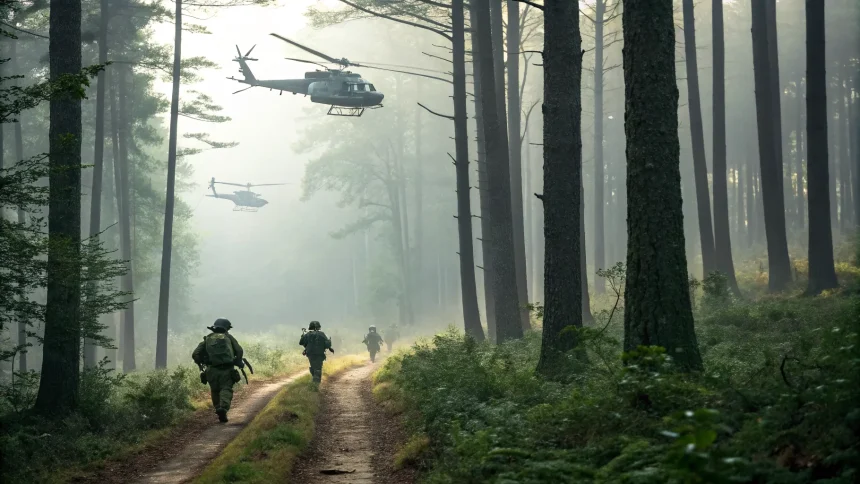
Authorities in Tennessee are searching thick, wooded terrain for an armed special forces veteran suspected of trying to kill his wife, prompting an expansive manhunt and public safety alerts across the area. The search began after a domestic incident and has focused on rural ground where visibility is low and escape routes are plentiful.
“Investigators are scouring heavily wooded terrain to find an armed special forces veteran suspected of trying to kill his wife,” Tennessee officials said.
Local, state, and federal agencies have joined forces as they track leads, canvass roadways, and warn residents to stay inside and report anything suspicious. The suspect’s training adds a layer of difficulty, officials noted, since survival skills and familiarity with weapons can extend an evasion.
Search Expands As Terrain Complicates Tactics
Heavily forested ground challenges even experienced trackers. Dense foliage weakens thermal imaging. Creeks and ravines hide footprints. Helicopters can sweep, but treetops limit what aircrews can see. Ground teams are moving methodically, checking hunting cabins, trailheads, and logging roads.
Former tactical officers say searches like this often hinge on patience. A suspect trained to live off the land can stretch food and water. He may also avoid cell use, which reduces digital traces. That forces investigators to lean on door-to-door work and trail cameras, while keeping perimeters flexible.
Public Safety First
Officials have urged residents to lock doors, secure vehicles, and avoid wooded shortcuts on commutes. Dog walkers and hikers were asked to choose open areas or stay home until the all-clear.
- Do not approach anyone matching alerts; call 911.
- Keep porch lights on and motion cameras active.
- Report unattended gear or signs of makeshift camps.
Schools and businesses near search zones often adjust schedules during manhunts. Bus routes may be altered. Outdoor events can be postponed. These changes help reduce foot traffic and keep roads clear for patrols.
Domestic Violence Context
The case also highlights the ongoing crisis of intimate partner violence. Public health data show about one in four women experience severe physical violence by an intimate partner in their lifetime, and firearms raise the risk of death. Advocates say quick protective orders, safe shelter access, and fast evidence collection are vital in the first hours after an attack.
In recent years, many jurisdictions have strengthened risk assessments to identify cases where access to weapons and prior threats increase danger. Coordinated responses between law enforcement and victim services can speed safety planning and medical care.
Experience And Evasion
When a suspect has military training, teams adapt. Searchers watch for counter-tracking, such as walking in streams or backtracking to confuse footprints. They also guard against ambush points by moving in mixed units and varying patterns. While training may help the person hide, it can also create a profile: knowledge of ridgelines, water sources, and shelter sites narrows the search map.
Investigators typically combine tips, trail cam images, and forensic clues to tighten the net. Fuel purchases, abandoned campsites, or a forced door on an outbuilding can reveal direction of travel. Every small clue helps build a timeline.
What Comes Next
Authorities will likely maintain a high presence until they confirm the suspect has left the area or is in custody. That could mean rotating checkpoints, late-night aerial passes, and expanded use of K-9 teams. If weather shifts, it may either hamper aerial support or, if cooler, improve thermal imaging at night.
For residents, the advice is steady and simple: stay alert and let officers do their work. For investigators, the task is clear but demanding—cover ground, protect the public, and close the distance without raising risk. The outcome may hinge on one phone call, a camera ping, or a set of footprints cutting across a muddy trail.
The search remains active. The key questions now are how long the suspect can evade detection and whether fresh tips will guide teams to a safe arrest. Watch for updates from state and county authorities as they press forward hour by hour.