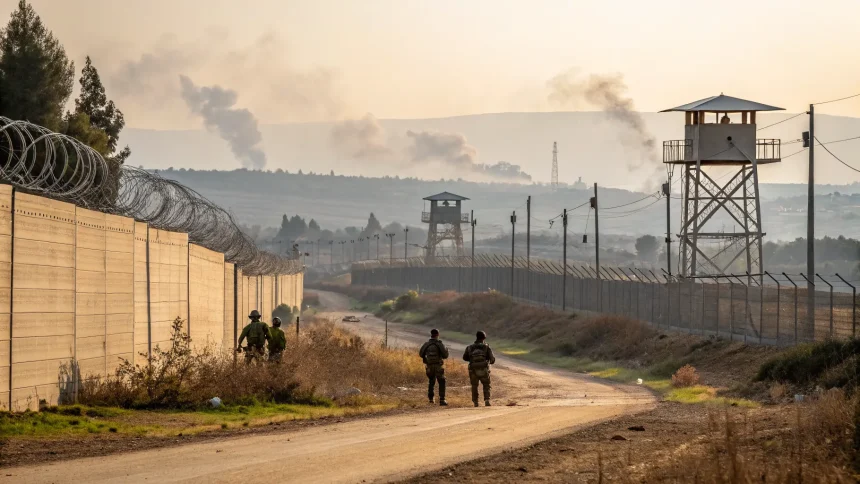
A fragile truce along the Lebanon-Israel frontier was extended after talks in Washington this week, but the calm is eroding as fresh exchanges of fire test the agreement and raise fears of a wider conflict. The extension, brokered amid diplomatic pressure, came as both Israel and Hezbollah weighed military options and political costs, leaving communities on both sides bracing for what comes next.
The fragile truce in Lebanon was extended after talks in Washington this week but has since come under threat as both Israel and Hezbollah have traded attacks.
The border has seen intermittent clashes since the Gaza war reignited tensions in late 2023. Prior pauses reduced direct fire at key points but never fully stopped rocket launches, cross-border raids, or airstrikes. With the latest attacks, the chances of a breakdown have grown, even as mediators push to keep the arrangement in place.
How the Truce Came Together
Washington has played a frequent role in trying to cool the northern front. Envoys have shuttled among capitals to secure quiet periods, reduce civilian harm, and prevent a spiral into a multi-front war. The recent extension followed new talks aimed at pairing security steps with political assurances.
Previous understandings focused on deconfliction lines, timing limits on strikes, and mechanisms to pass messages quickly when incidents occurred. None amounted to a formal cease-fire. Instead, they relied on restraint and back-channel communication to manage flashpoints that could trigger larger battles.
Rising Risks Along the Border
Renewed strikes suggest that each side is testing thresholds. Even limited exchanges can cause miscalculation, especially when responses come fast and public pressure favors a show of force. Any mass-casualty incident could upend the current pause.
Residents near the frontier face recurring displacement, school closures, and damage to farms and infrastructure. Local authorities have warned that a full breakdown would strain emergency services and complicate aid delivery. The longer the uncertainty lasts, the harder it is for families to return and rebuild.
- Cross-border fire can escalate within hours if command channels break down.
- Strikes near populated areas increase the chance of civilian losses.
- Disruption to roads and utilities hampers medical and relief operations.
Washington’s Role and Limits
U.S. involvement provides leverage and a forum for rapid problem-solving, but it cannot substitute for commitments by the parties. Diplomats have focused on restraint, clearer rules of engagement, and steps to prevent attacks from drawing in broader forces. They have also pressed for measures to protect civilians and allow humanitarian access where needed.
Analysts note that the talks aim to separate immediate security needs from longer-term political disputes. That approach can reduce immediate violence, though it leaves core disagreements unresolved. The risk is that any spike in hostilities will collapse the fragile balance that the extension sought to preserve.
What Stakeholders Are Watching
Military planners will watch for patterns in targeting, ranges of rocket fire, and whether strikes move closer to major towns. A shift in these areas could signal intent to widen the fight. Diplomats will look for signs that communication channels remain active and that agreed pauses are respected.
Humanitarian groups track access to border communities, evacuation routes, and hospital capacity. Even short lulls matter for safe passage, repairs, and getting supplies to isolated areas. If the exchanges intensify, these windows will shrink.
Possible Paths Ahead
There are three broad outcomes in the near term. The truce could hold under pressure, with sporadic violations but no major escalation. It could erode into a pattern of tit-for-tat strikes that steadily expands the target set. Or a single deadly incident could trigger a rapid slide into open war.
Preventing the worst-case scenario depends on fast de-escalation tools and credible consequences for breaching agreed limits. It also depends on maintaining political cover for restraint, which can be hard when public opinion hardens and leaders face calls to respond forcefully.
The latest attacks have again put the truce at risk. Yet the extension shows that a channel for restraint still exists, at least for now. The key test is whether that channel can absorb fresh shocks without breaking. Watch for quieter nights along the frontier, steady humanitarian access, and sustained diplomatic contact. If those hold, the pause has a chance to survive. If they fade, the window for avoiding a larger war could close quickly.