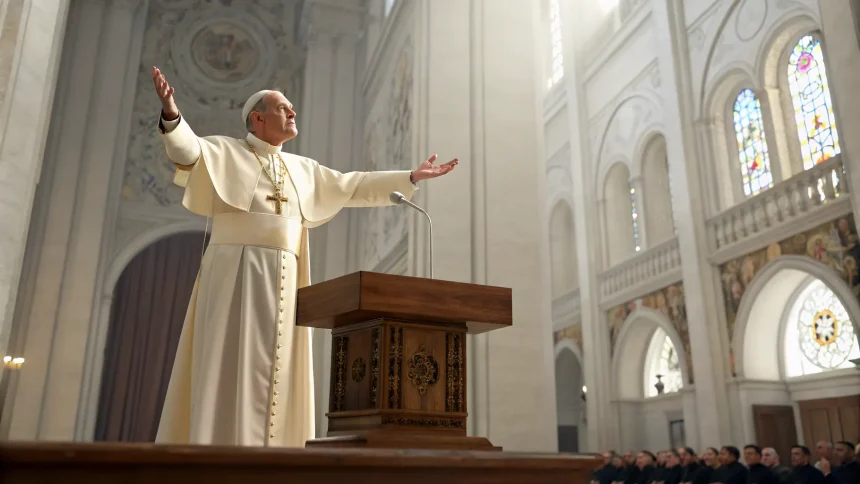
Pope Leo XIV signaled a sharper public voice during a recent trip abroad, then moved to temper reactions to his remarks after they drew unexpected readings. The pontiff, who took office last year, stepped into a difficult balance: speaking plainly on sensitive issues while keeping unity at the center of his message. The moment highlights how modern audiences parse religious leadership on the global stage and how fast interpretations can harden into headlines.
At the heart of the episode was a single thread—forthright criticism made in public—and the speed with which it was framed. His concern over how that criticism was understood shows a leader aware of the weight of each word and the risk of being boxed in by a narrow reading.
What Happened and Why It Matters
The pope’s comments came during a foreign visit, a setting that often invites bold statements and close media scrutiny. According to a summary of events, he offered some of his clearest critiques since his election last year. He later appeared uneasy about the way the remarks were interpreted.
On his recent trip abroad, Leo XIV made some of his most forthright comments since becoming pope last year, but grew uncomfortable at how that criticism was interpreted.
That arc—speaking candidly, then stepping back to frame intent—is familiar for global figures whose words cross cultures and political lines. For a religious leader with a worldwide flock, the stakes are higher. The same sentence can be heard as moral teaching in one place and as political pressure in another.
Background: The Weight of Papal Words
Papal travel has long mixed pastoral visits with policy overtones. Public speeches, prayers, and off-the-cuff exchanges often serve two audiences at once: local communities and the broader international public. Since the late 20th century, televised trips and social media have multiplied the reach and sped up the reaction cycle.
Leaders in the Vatican have typically tried to anchor such moments in themes like human dignity, peace, and care for the vulnerable. Yet each era brings its own pressure points. The challenge is to avoid becoming a proxy for partisan disputes while still naming moral concerns plainly.
Managing Interpretation in a Rapid News Cycle
The episode shines a light on how intent and impact can diverge. A pointed moral appeal may be reported as a political stance. Selective clips can lead to a frame that the original speaker did not intend. For a figure like the pope, even minor shifts in phrasing can draw strong reactions.
Communication experts often suggest three steps after a message is widely debated: reaffirm the core principle, clarify what was not said, and redirect attention to pastoral aims. The pope’s discomfort with certain readings appears to reflect that kind of recalibration.
- High-profile visits invite close parsing of language.
- Short sound bites can miss larger themes.
- Follow-up clarification helps protect broader goals.
Balancing Candor and Unity
There is a constant tension between speaking clearly on hard topics and keeping a broad community together. A blunter tone can be praised as honesty by some and faulted as divisive by others. Leaders must decide when urgency requires direct words and when patience calls for gradual steps.
Church observers often argue that clarity about moral teaching can coexist with restraint in political judgment. That mix allows room for debate on policy while keeping shared values in view. The latest moment suggests Pope Leo XIV is testing that balance early in his tenure.
Implications for the Church and Public Debate
How the pope’s words are received can affect local church leaders, who field questions from parishioners and civic officials. It can also shape the public’s sense of where the Church stands on disputed issues. The goal, often, is to guide conscience without replacing it.
This episode also shows how fast narratives form. Once a theme sets in, corrections travel more slowly. That dynamic places a premium on precise language, careful translations, and early context in speeches and interviews.
What to Watch Next
Future trips will test whether the Vatican adapts formats for sensitive material, such as providing longer transcripts, advance summaries, or structured Q&A with clear guardrails. Observers will also look for signs of how the pope frames moral appeals to avoid being cast as siding with a party or faction.
For now, the takeaways are simple. The pontiff chose stronger language than usual and then stepped in to shape how it was read. That choice suggests a leader who wants to speak plainly yet carefully. The coming months will show whether this approach steadies expectations or invites more debate. Either way, the handling of words—and how they are heard—will remain central to his mission.