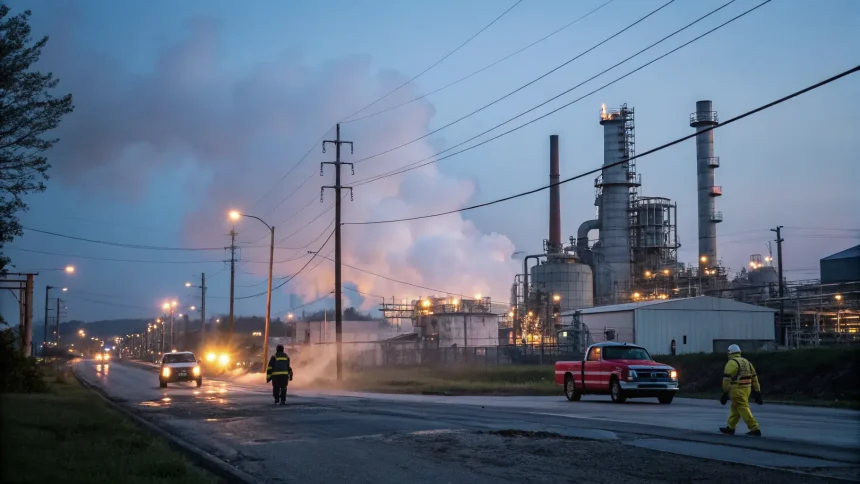
Two people are dead and 19 others are in the hospital after a chemical leak at a plant in West Virginia, according to authorities. The incident sparked an immediate emergency response and raised fresh questions about safety practices in a region with a long history of heavy industry. Officials have not released the cause, and investigators are working to learn how the leak occurred and whether alarms and protocols functioned as designed.
What Happened
Emergency crews responded to reports of a leak at an industrial facility, where workers were exposed to an unidentified substance. Officials said medical teams treated dozens on site and transported the most seriously affected to area hospitals. The names of the victims have not been released pending family notification.
“A chemical leak at a West Virginia plant has killed two people and sent 19 others to the hospital,” authorities said.
Local leaders urged residents to follow guidance from public safety officials while air and surface testing continues in and around the plant. Regulators are expected to examine maintenance logs, training records, and any recent changes to equipment or production schedules.
A Region Built On Chemistry
West Virginia’s Kanawha Valley has hosted major chemical manufacturers for generations. Communities near the Kanawha and Elk rivers remember past industrial accidents that strained public trust. In 2014, a spill on the Elk River disrupted drinking water service for hundreds of thousands, highlighting the stakes when chemical handling goes wrong.
Worker advocates say those memories have never fully faded. Industry groups argue that modern plants operate under strict federal and state rules, with constant monitoring and layered safety systems. Both perspectives will shape the debate as details of the latest incident emerge.
Safety, Oversight, And Accountability
Investigations by workplace and chemical safety agencies typically take months. They often look at whether sensors detected the leak in time, if ventilation systems performed correctly, and how quickly evacuation orders were given. Investigators will likely seek video, radio traffic, and shift reports to build a timeline.
Experts who study industrial safety point to recurring risk factors in serious incidents: aging infrastructure, deferred maintenance, contractor oversight, and inadequate emergency drills. They also cite pressure to keep production moving, which can influence decisions on shutdowns or repairs.
Union representatives often push for tighter standards on personal protective equipment and clearer authority for workers to halt jobs they deem unsafe. Company officials usually respond that they follow federal requirements and provide regular training. Until the investigation concludes, both sides are operating with partial information.
- Key issues under review will include detection systems, emergency response times, and training records.
- Investigators will assess whether existing safeguards matched the plant’s chemical hazards.
Community Impact And Health Concerns
Hospitalizations suggest significant exposure, though symptoms can vary widely depending on the substance. Doctors often watch for respiratory distress, skin and eye irritation, and longer-term effects that may not appear immediately. Public health officials typically recommend that anyone who was near the site and feels unwell seek care.
Nearby residents want clear answers on air and water quality. Even when monitoring finds no off-site contamination, fear can rattle neighborhoods and local businesses. Schools, clinics, and emergency services may review their own response plans as a precaution.
What Comes Next
The plant faces parallel inquiries from state regulators and federal workplace safety officials. If investigators find violations, fines and corrective orders may follow. If equipment failure is to blame, the plant could face a longer outage while parts are replaced and procedures updated.
Policy makers may revisit reporting rules and community alert systems once the facts are known. In recent years, some states have expanded requirements for facilities to share emergency information with local responders and the public. Residents often call for more transparency on the chemicals stored and used nearby.
This incident will likely renew attention on aging industrial corridors and the balance between jobs and safety. The immediate priority is care for the injured and support for the families who lost loved ones. The longer test is whether findings translate into changes that reduce the chance of another tragedy.
For now, the community waits for the investigation’s first findings. Watch for early reports on the leak’s source, the substance involved, and whether alarms and shutdown systems worked as intended. Those answers will set the path for accountability and any reforms to follow.