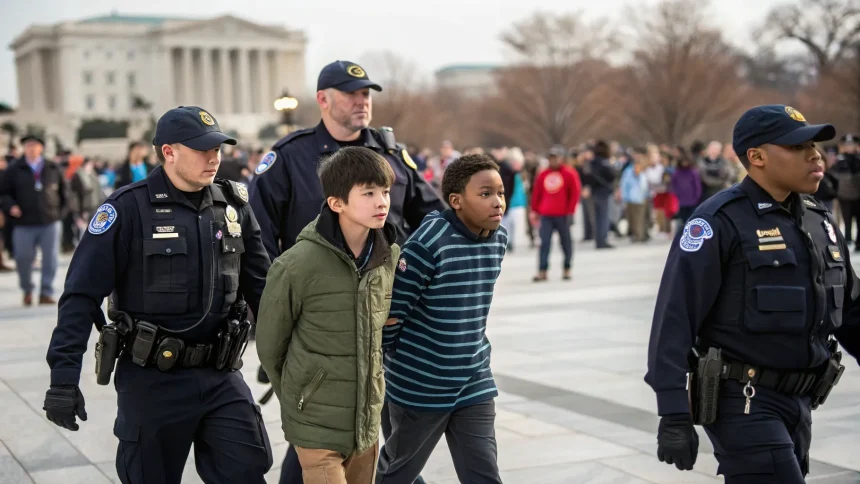
Eight juveniles were arrested in Washington, D.C., on Saturday, April 4, 2026, after a series of social-media-organized “teen takeover” gatherings drew large crowds and police response. Authorities said the arrests stemmed from multiple incidents across the city and were part of a broader effort to keep streets safe during a busy weekend.
The arrests came as city officials face rising pressure to balance public safety with youth engagement. The incidents were spread across several spots, with police moving in when crowds swelled and complaints mounted. No serious injuries were reported by the end of the night, according to early summaries.
What Happened on Saturday
Police said the juveniles were taken into custody after officers responded to reports of disruptive behavior and unsafe conditions. The gatherings were loosely organized on social platforms and moved quickly from place to place. Officers focused on clearing streets, dispersing crowds, and preventing property damage.
Authorities arrested eight juveniles stemming from various “teen takeover” events in Washington, D.C., on Saturday, April 4, 2026.
City officials did not immediately release detailed charge information. Parents were notified, and most of those detained were processed through juvenile procedures that emphasize release to guardians, officials said.
What Are “Teen Takeovers”?
The phrase “teen takeover” has become shorthand for large, fast-forming youth crowds drawn by posts that spread quickly. These events can include dancing, car meets, or impromptu parties. They may also lead to traffic disruptions, fireworks use, or scuffles when attendance surges.
Similar gatherings have appeared in many U.S. cities over the past few years. In some cases, they end with minimal issues after a brief police presence. In others, they can escalate, leading to arrests or damage. The speed and mobility of these groups often challenge routine crowd-control plans.
Community Reaction and Competing Priorities
Residents who live near popular gathering spots say sleepless nights and blocked streets are now part of spring and summer weekends. Small business owners welcome young customers but worry about sudden closures if crowds spill into storefronts. Some have added earlier closing times on high-risk nights.
Youth advocates argue that crackdowns can feed a cycle of distrust. They point to a lack of safe, affordable evening activities and public spaces for teens. They also note that many gatherings stay peaceful and that most young people follow the law.
Police leaders frame their approach as prevention. When small problems appear early—blocked intersections, fights, or fireworks—officers try to move crowds along before risks snowball. That split-second timing defines whether a night ends quietly or with cuffs and citations.
Policy Choices on the Table
City officials continue to weigh tools like targeted curfew enforcement, transit station monitoring, and street closures at known hotspots. Supporters say these steps reduce danger. Critics warn about sweeping in teens who are not breaking the law and creating negative encounters with officers.
Local agencies have also expanded summer jobs, recreation hours, and late-night programs in recent years. Advocates for these investments say steady options do more to calm weekends than reactive policing. Budget pressures remain a hurdle as agencies juggle staffing and overtime.
- Public safety: Prevent injuries, protect property, manage traffic.
- Youth rights: Avoid overreach and unnecessary criminal records.
- Access: Provide safe, appealing places for teens after dark.
What Saturday’s Arrests Signal
The eight arrests suggest officials are moving faster to prevent escalation. It also shows how gatherings can shift across multiple sites in one night, taxing patrol units and transit staff. The quick pace leaves narrow windows for outreach teams and community leaders to step in.
Experts in youth behavior say messaging matters. Clear ground rules, consistent enforcement, and visible alternatives—like late-night sports, music events, and transit discounts—help redirect energy. Cities that coordinate police, parks, transit, and schools tend to report steadier outcomes.
Business districts will watch the next warm weekend closely. If crowds grow, officials may announce temporary measures, such as earlier street closures or event perimeters. If programs and outreach keep numbers manageable, police may lean less on detention and more on dispersal orders.
Saturday’s arrests close out with a familiar checklist: no severe injuries, limited property damage, and many frustrated parents. The harder work comes next. Officials must match enforcement with options that meet teens where they are—online and on the move—before the next alert pings. The coming weeks will show whether the city can steady weekend nights with a lighter touch, or if faster, firmer tactics will define the season.