Former President Donald Trump issued a new threat against Iran, using profane language while demanding that Tehran allow traffic through the Strait of Hormuz. The comments target one of the world’s most sensitive shipping lanes, where any disruption can rattle energy markets and prompt military brinkmanship. The statement revives old tensions between Washington and Tehran and raises questions about the risks for global trade and regional security.
President Trump makes a new, profanity-filled threat against Iran to open the Strait of Hormuz.
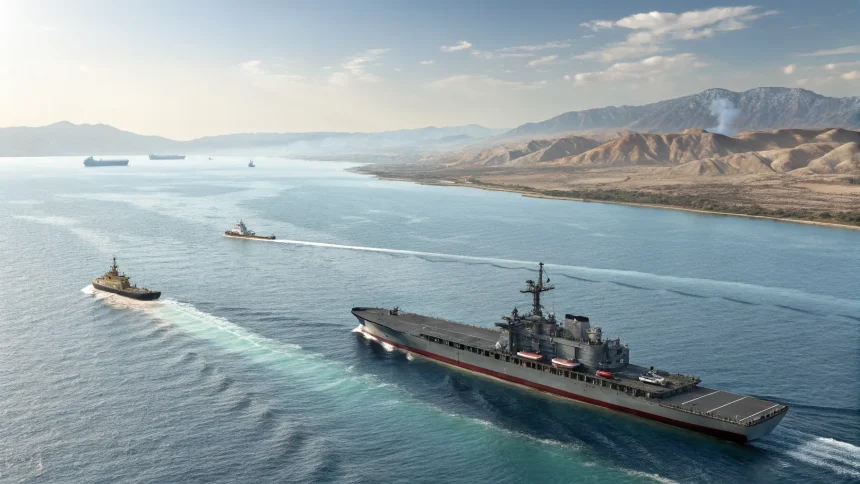
The Strait of Hormuz sits between Iran and Oman and connects the Persian Gulf to the Gulf of Oman and the Arabian Sea. It is a narrow choke point for oil and liquefied natural gas from producers such as Saudi Arabia, Iraq, the United Arab Emirates, and Qatar. Energy analysts often say roughly a fifth of the world’s oil trade passes through the strait.
Why the Strait Matters
Any dispute over access to the strait can raise shipping insurance costs, shift tanker routes, and push oil prices higher. Even threats can have an impact. Energy traders watch for signs of escorts for tankers, new naval patrols, and warnings from maritime authorities.
Iran has long argued it can respond to sanctions or military pressure by restricting traffic near its coast. The Islamic Revolutionary Guard Corps (IRGC) has seized and harassed foreign-flagged vessels in past standoffs. The United States and its partners insist international law protects transit through the strait.
Echoes of Past Flashpoints
Trump’s message recalls earlier flare-ups. During his presidency, he warned Tehran over attacks on tankers and threats to shipping. The U.S. sent additional forces to the region in 2019 after explosions damaged multiple vessels. In prior years, U.S. and Iranian forces traded warnings, and maritime insurers raised risk premiums.
Iran, for its part, points to U.S. sanctions as an economic blockade. Tehran claims it acts to enforce its maritime rules and protect its coast. Diplomatic efforts have come in waves, but mistrust has kept tensions high.
Legal and Military Stakes
Under widely accepted maritime rules, straits used for international navigation allow transit passage. The United States is not a party to the main treaty, but it says it follows those rules. Iran disputes aspects of this in its territorial waters.
Military planners warn that miscalculation is the greatest risk. A single seizure, drone strike, or misread radio call can drag navies into a rapid cycle of action and reaction. That can spook markets and endanger crews.
Industry Impact and Market Watch
Shippers track three questions in moments like this. Will escorts and convoy systems return? Will insurers widen war-risk zones? Will producers divert cargoes through pipelines or alternative routes?
- If escorts appear, costs rise and schedules slow.
- Higher insurance premiums can lift delivered oil prices.
- Pipeline workarounds exist, but capacity is limited.
Energy analysts say even short disruptions can swing prices by several dollars per barrel. Longer interruptions can pull strategic stockpiles into play and test diplomatic hotlines.
What Each Side Is Saying
Trump’s coarse warning signals a hard line on maritime access. He frames the issue as keeping trade open and deterring Iran. His critics argue the language risks escalation without a plan for de-escalation.
Iranian officials typically respond that threats justify stronger patrols and stricter checks. They say sovereignty and security come first. Regional partners often call for restraint and quiet talks to keep tankers moving.
Paths to De-Escalation
Experts suggest several steps that have helped in the past. Deconfliction channels between navies reduce the risk of misread moves. Clear notices to mariners help crews avoid restricted zones. Third-party mediation can secure releases of detained ships and set temporary rules of the road.
Energy coordination among producers can also soften market shocks. Tapping reserves or adjusting output gives traders more confidence that supplies will meet demand.
Trump’s threat brings old tensions back to the surface at a fragile chokepoint. The stakes are large, measured in daily barrels and the safety of civilian crews. The near-term test is whether rhetoric gives way to careful coordination at sea. Watch for signs of naval escorts, insurance shifts, and hotline diplomacy. If those appear, markets may steady. If not, the world’s narrowest oil artery could feel very tight very fast.