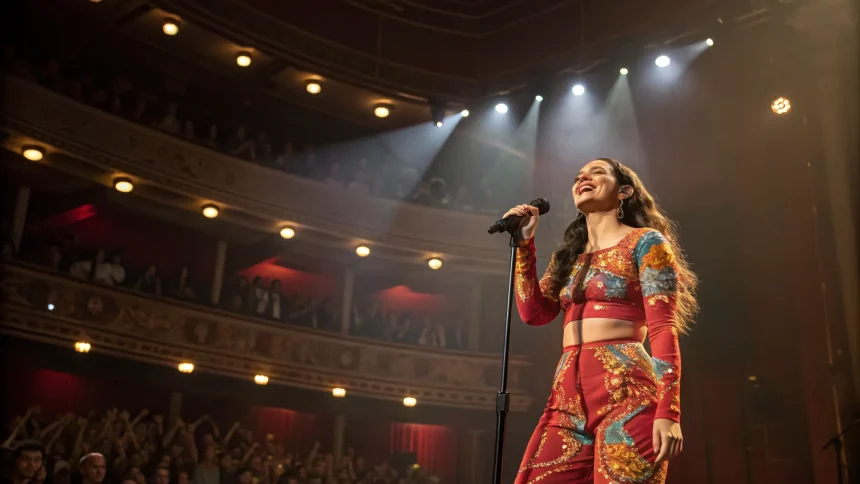
Rosalía returned to the stage in Madrid on Monday, March 30, only four days after cutting short a show in Milan due to food poisoning. The 33-year-old opened the first night of a four-show residency, signaling a fast recovery and a determined push to keep her schedule on track.
The Spanish star’s quick turnaround drew a cheer from fans and attention from the live music industry. The run in Madrid is set to anchor a busy stretch, with three more nights to go this week.
A Swift Return to the Spotlight
“Rosalía is back on stage after a brief bout of food poisoning. The ‘Lux’ artist, 33, opened night one of her four-night residency in Madrid on Monday, March 30, just four days after cutting her Milan stop short amid the illness.”
The comeback capped a tense few days for ticket holders who worried about more cancellations. Instead, the opening night went ahead, offering relief to fans and the venue alike.
Rosalía’s team did not detail further treatment or recovery steps, but the timing speaks to careful management. Artists often weigh vocal rest, travel demands, and venue logistics before greenlighting a return.
Background: A Star Built for Big Rooms
Rosalía rose from flamenco roots to global pop status with adventurous production and bold visuals. Her projects have earned major awards and a devoted fan base across Europe and Latin America.
Residencies have grown in appeal for touring artists. They reduce travel strain, allow tighter production control, and reward cities with repeat nights. For fans, multiple dates increase access and buzz.
The Milan hiccup fits a known pattern in live music. Illness can disrupt even the most dialed-in tour plans. Quick, clear communication and swift rebookings help stabilize momentum.
Health, Touring, and the Business at Stake
Food poisoning can sideline performers for a short period, especially when travel schedules are tight. Hydration and rest are standard responses, and timing a return is a calculated call.
From a business view, each canceled night ripples through crews, vendors, and local tourism. A quick return limits refunds and protects production budgets across lighting, sound, and staff.
Fans also make plans around these dates. Hotels, trains, and group travel add pressure to keep the show on. Monday’s performance in Madrid suggests the machine is running again.
What Madrid Means for the Weeks Ahead
A successful first night of a residency often sets the tone. It lets crews fine-tune staging while giving the artist room to adjust pacing and set list choices across the run.
Madrid is a home-stage advantage. Energy from local fans can boost confidence after a setback. It also offers a stable base for any needed health monitoring between nights.
- Four-night residency in Madrid began Monday, March 30.
- Milan show cut short four days earlier due to illness.
- Remaining three Madrid dates proceed as scheduled, barring new updates.
Signals for Fans and the Industry
The message is clear: the show goes on, with care. A measured restart lowers risk while restoring momentum. It also keeps anticipation high for the remaining dates.
If Milan is rescheduled, watch for an announcement once the Madrid run wraps. Venues often hold backup dates to catch postponed shows when possible.
The next few nights will test stamina and planning. Strong performances should put the brief disruption in the rearview and return focus to the music.
Rosalía’s quick rebound steadied a shaky week and gave Madrid a charged opening night. The remaining shows will reveal if the pace holds. Fans should watch for updates on Milan and any tweaks to the schedule. For now, the spotlight is back where she wants it—onstage.