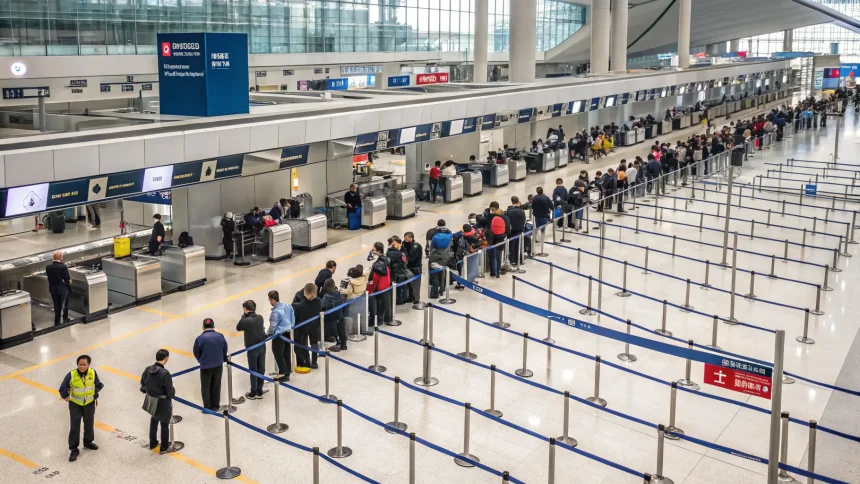
Long lines stretched through several major airports over the weekend as Transportation Security Administration absences piled up and security checkpoints slowed. Travelers faced extended waits during peak periods, raising concerns about staffing, scheduling, and the strain of a busy travel season on airport operations.
While the agency did not issue a broad shutdown or alert, delayed screenings were reported at select hubs. The situation highlighted how fragile the system can become when even a small share of officers are off the job on the same days. The pressure fell hardest on early morning and late afternoon waves, when flights cluster and lines build quickly.
What Officials Reported
“Some of the nation’s airports are still seeing long wait lines as Transportation Security Administration officers continued to call out sick over the weekend.”
The statement summed up the weekend’s trend. It pointed to a staffing squeeze that rippled through checkpoints and baggage screening rooms. With fewer hands on duty, secondary checks stacked up and travelers moved at a crawl in certain terminals.
Why Staffing Gaps Hit Hard
Airport security runs on tight scheduling. Most checkpoints open before sunrise to meet the first departure bank. When several officers call out at once, it forces supervisors to reassign posts, close some lanes, or extend shifts for available staff. Each of those choices can slow the line.
Absences also tend to cluster on weekends, holidays, and during flu season. Even a small uptick can tip a checkpoint from steady to sluggish. Larger airports can reallocate teams between concourses, but that takes time and coordination with airlines and local police.
Recent travel patterns have made this trickier. Demand remains strong on Fridays, Sundays, and Monday mornings. Those peaks leave little cushion when staffing dips.
Passenger Impact and Airline Response
Travelers caught in the backups faced missed flights and tense rebooking scrambles. Families with strollers and travelers with medical devices saw longer secondary screenings as fewer officers handled specialty lanes. Some airlines delayed departures to accommodate clusters of late-arriving passengers, while others closed doors on time to avoid rolling delays down the line.
Airlines urged customers to arrive earlier than usual. Some carriers shifted gate agents to help guide passengers through terminal routes and flagged which checkpoints moved fastest.
How Airports Tried to Ease the Crunch
Airport managers leaned on familiar playbooks. They opened overflow queues, brought in volunteer staff to direct traffic, and posted real-time wait estimates on terminal screens and apps. When possible, they opened additional lanes for TSA PreCheck and CLEAR to siphon off eligible travelers and reduce crowding in standard lines.
Local law enforcement monitored crowd flow at choke points and helped keep walkways clear. Concessions extended hours where crowds swelled, aiming to reduce frustration and keep people spaced out.
The Bigger Picture
Security staffing has long been a pressure point for the aviation system. Hiring and training take time. Retention is another hurdle, given irregular shifts and high-cost metro areas where many airports sit. Public health surges can magnify the strain if many employees call out over a short window.
There is also the calendar problem. High-travel weekends concentrate risk. Summer holidays, spring break, and major events pack terminals beyond typical weekday levels. If absences coincide with those peaks, slowdowns spread fast.
What Travelers Can Do Now
- Arrive earlier than usual, especially for morning and late afternoon flights.
- Use carry-on bags when possible to skip checked-bag lines.
- Check airport apps for live wait times and open checkpoints.
- Enroll in trusted traveler programs if you fly often.
- Keep IDs and electronics handy to speed screening.
What to Watch Next
Officials will track absentee rates into the week. If call-outs ease, lines should shorten as schedules reset. If they persist, airports may adjust lane openings, pull in overtime, or redirect staff from back-office roles to the floor.
Labor groups and agency leaders could revisit scheduling flexibility and short-term incentives to stabilize weekend shifts. Any changes would aim to protect peak periods without overworking current teams.
For now, travelers should pad their timelines and monitor their airport’s alerts. The weekend’s queues were a reminder that a thin margin at security can ripple through an entire day of flying. If staffing steadies, the lines will follow. If not, expect spotty slowdowns and a few frayed tempers at the rope line.