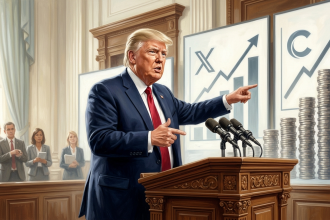
Federal Reserve Governor Michelle Bowman stressed the importance of central bank independence as political criticism over interest rates grows. She spoke ahead of a day-long conference on bank regulation she is hosting at the Fed. Her remarks come as former President Donald Trump intensifies attacks on the Fed and Chair Jerome Powell for not cutting rates.
Bowman, appointed to the Fed’s Board of Governors by Trump and recently elevated by him to a top regulatory role, drew a clear line between politics and policy. Her comments signal that officials intend to keep decisions focused on data and the Fed’s legal mandate. The timing adds urgency, with rate policy under constant scrutiny from investors and elected leaders.
Political Pressure Intensifies
Recent criticisms from Trump have focused on the pace and level of interest rate cuts. He has argued that rates should be lower. Powell has defended the central bank’s approach, citing inflation trends and employment data in past public comments.
Bowman’s statement was brief but pointed. It addressed a concern that has grown in election seasons and volatile markets alike.
“It’s very important … that we maintain our independence with respect to monetary policy,” Bowman said in a CNBC interview.
Her emphasis reflects a core principle at the Fed: policy should not be set to please any political figure or party. It should be guided by the goal of stable prices and maximum employment.
Why Fed Independence Matters
The Fed’s independence is designed to keep short-term politics from driving long-term economic choices. History offers cautionary tales when that firewall weakens. In the late 1960s and early 1970s, political pressure on the central bank coincided with policies that fed higher inflation. Restoring credibility later required painful rate hikes.
Today’s backdrop is different, but the lessons still apply. Inflation pressures have eased from recent peaks, yet remain a key concern. The labor market has cooled from its hottest levels, but remains resilient. Balancing these forces takes time and steady judgment.
- The Fed’s mandate: stable prices and maximum employment.
- Rate decisions aim to balance inflation risks with job growth.
- Market confidence depends on predictable, data-driven policy.
Signals for Banks and Markets
Bowman’s stance holds special weight for banks. As a senior regulatory voice, her hosting of a conference on bank regulation signals continued focus on oversight while policy debates rage. Banks must plan for credit, liquidity, and capital needs under different rate paths. A clear commitment to independence can reduce uncertainty in those plans.
Investors watch political commentary, but they react more strongly to the Fed’s guidance and economic data. A firm message on independence can steady expectations. It suggests the rate path will hinge on inflation readings, wage growth, credit conditions, and financial stability, not campaign rhetoric.
Competing Views and the Policy Debate
Supporters of immediate rate cuts argue that higher borrowing costs strain households and small businesses. They say easing would help housing, autos, and investment. Critics worry that premature cuts could reignite price pressures. They prefer waiting for clear evidence that inflation is on a durable path to the Fed’s target.
Bowman’s comments align with a cautious, data-first approach. They do not signal a specific rate move, but they suggest the process will remain insulated from politics. That stance may reassure global partners and credit markets that rely on a stable dollar and clear policy signals.
What to Watch Next
Key indicators in the months ahead include inflation reports, job gains, wage growth, and consumer spending. Bank lending surveys and credit spreads will show how higher rates are affecting borrowing. Fed officials will also weigh financial stability risks, including commercial real estate and regional bank balance sheets.
Public commentary from political figures will continue. But the decisive inputs for policy will be the data and the Fed’s assessment of the outlook. Bowman’s message suggests that institutional guardrails remain in place.
By restating that principle at a moment of loud political pressure, Bowman set a clear marker. The central bank intends to follow its mandate and resist calls that are not grounded in economic evidence. For households, businesses, and markets, the takeaway is simple: watch the data, not the noise.