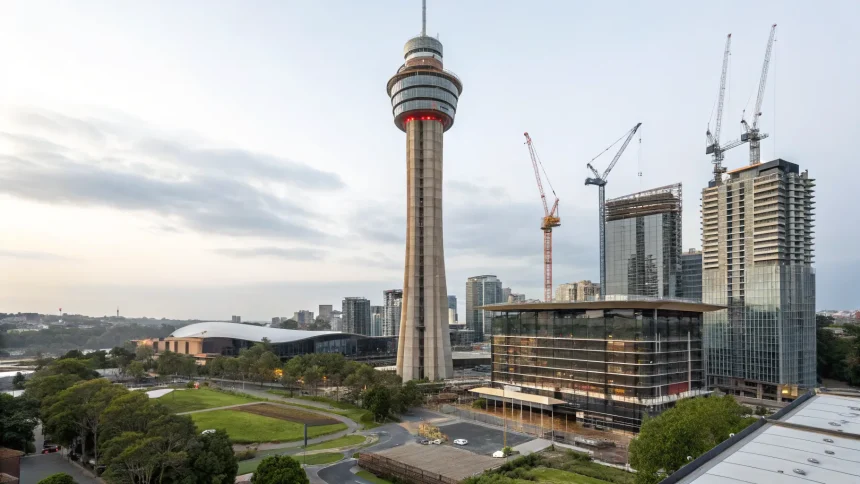
The world’s tallest hybrid timber tower is moving toward completion in Sydney, marking a high-profile test of low-carbon construction at skyline scale. Called Atlassian Central, the project blends mass timber with concrete and steel to reach a height once thought out of reach for wood-led structures. The building is slated to anchor the city’s tech precinct near Central Station, signaling a shift in how major office towers may be designed and built.
Developers describe the structure as a “plyscraper,” a nod to engineered wood products used in its frame. The goal is to cut embodied carbon while meeting strict safety, strength, and fire standards. Its backers see it as a model for dense urban growth with a smaller footprint.
Background: Timber’s Rise in Tall Buildings
Mass timber has moved from niche to mainstream over the past decade. Projects in Norway, Sweden, Canada, and the United States have shown that engineered wood can meet modern code requirements for taller buildings. Earlier milestones include Mjøstårnet in Norway and Ascent in Milwaukee, each demonstrating new levels of scale and performance for predominantly timber structures.
Hybrid systems—mixing timber with steel and concrete—have opened the door to even greater heights. They pair timber’s lighter weight and carbon storage with the stiffness and fire protection benefits of conventional materials. That mix is central to Atlassian Central’s approach.
“The new world’s tallest hybrid timber tower is nearing completion.”
Industry observers say the project’s delivery will be watched closely by regulators, insurers, and major tenants. Success could speed approvals for more large-scale timber buildings in global cities.
Design and Engineering
Atlassian Central’s structure relies on a mass timber frame supported by a concrete and steel core. Engineers chose the hybrid method to control sway at height, manage fire performance, and allow for efficient floor spans. Prefabricated timber elements are designed to be craned into place, which can reduce on-site noise and speed up the build.
The design team has promoted a façade strategy that balances daylight, shading, and ventilation to help cut operational energy use. Structural redundancy, advanced sprinklers, and charring behavior of thick timber members are part of the fire safety plan, a common feature of modern high-rise timber projects.
It “features an innovative design that incorporates concrete and steel to reach unprecedented heights.”
Why It Matters: Carbon, Cost, and Code
Buildings account for a major share of global emissions when both operations and materials are counted. Timber can store carbon for the life of a building, while concrete and steel deliver strength and durability. The hybrid model aims to keep the benefits of each.
- Embodied carbon: Timber reduces emissions linked to materials compared with all-concrete structures, according to many life-cycle studies.
- Construction speed: Factory-made timber parts can shorten schedules and limit disruption around busy sites.
- Fire safety: Modern mass timber is designed to char on the surface, slowing burn rates under controlled conditions.
Critics caution that timber must come from responsibly managed forests and that end-of-life choices will shape the true carbon outcome. They also point to insurance costs and code limits that can hold projects back in some regions. Supporters argue that high-profile towers can push standards forward by proving performance at scale.
Market Impact and What Comes Next
Atlassian Central is likely to influence city planners, developers, and corporate tenants assessing future office needs. If the tower meets its performance targets, more tech and financial firms may consider hybrid timber for headquarters projects. Cities facing housing and office shortages could also view timber as a way to add height with fewer emissions.
Other proposals—such as tall timber-hybrid towers in Europe and North America—are lining up in planning pipelines. Many are waiting for stronger data on costs, leasing, and long-term maintenance. Atlassian Central’s operations phase will be key to understanding energy use, occupant comfort, and acoustic performance over time.
For Sydney, the tower also carries symbolic weight. Rising above the transport hub at Central Station, it positions the city as a test bed for new construction methods and climate goals. It could also shape local supply chains for engineered wood, including fabrication and specialized labor.
As Atlassian Central nears the finish line, attention turns to delivery details and early occupancy. If the building performs as planned, it may clear the path for taller, cleaner towers in dense urban cores. The next measures to watch include final commissioning, energy benchmarks in the first years of operation, and how insurers and building officials respond to the tower’s real-world record.