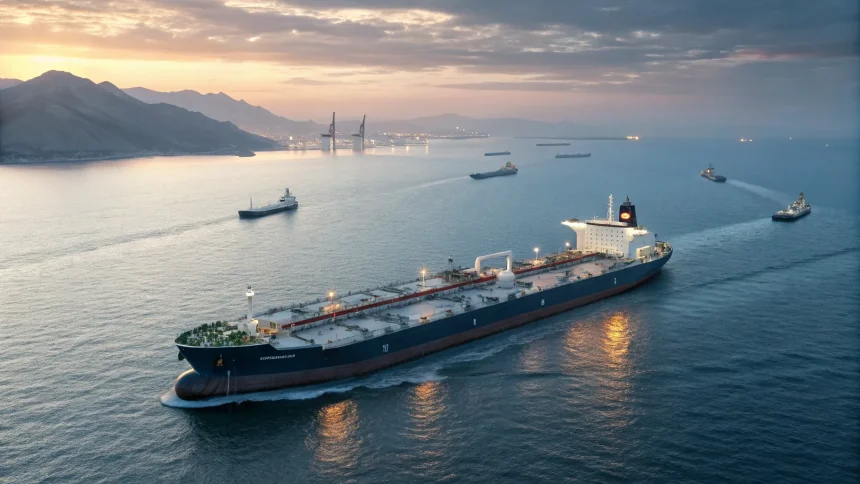
Greek shipowner George Prokopiou’s Dynacom has kept oil moving through the Strait of Hormuz despite an outbreak of war with Iran, sending at least five tankers through the chokepoint in recent days. The sailings, tracked across one of the world’s most sensitive waterways, signal how commercial shipping is adapting under pressure as energy buyers seek steady supplies during conflict.
The Strait of Hormuz sits between Oman and Iran. It is the narrow gateway from the Persian Gulf to the open ocean. Any disruption there can ripple through fuel markets across Asia, Europe, and the United States. Dynacom’s continued transits show the company’s appetite for risk and the strong demand for deliveries even as threats to ships and crews rise.
“George Prokopiou’s Dynacom has sent at least five tankers through the Strait of Hormuz since the outbreak of war with Iran.”
Why Hormuz Matters Right Now
Roughly a fifth of the world’s oil moved by sea passes through Hormuz each day. The channel is about 21 miles wide at its narrowest point, with two-mile shipping lanes in each direction. Traffic there supports exporters in Saudi Arabia, Iraq, the United Arab Emirates, and Kuwait, as well as LNG shipments from Qatar.
In past flashpoints, including tanker attacks in 2019 and vessel seizures in the Gulf, insurance costs surged and some ships paused voyages. War risk premiums can rise by several multiples during active hostilities. Even short delays or diversions can add days and large costs to a voyage and may lift global prices.
Risk, Reward, and the Price of Moving Oil
By sending multiple tankers through Hormuz, Dynacom appears to be weighing strong charter rates and contractual commitments against security concerns. Owners face a web of decisions on each voyage: crew safety, routing, insurance cover, flag-state guidance, and potential naval escorts.
- Higher freight rates can offset war risk premiums and security costs.
- Delays or diversions can strain supply chains and push prices higher.
- Any incident could trigger broader restrictions or policy responses.
Owners and charterers often review intelligence from maritime security firms and national navies before approving a transit. Decisions can change hour to hour as conditions shift. Even with escorts or heightened alerts, the narrow channel leaves little margin if tensions escalate.
Signals for Energy Markets
Steady sailings through Hormuz help keep oil and LNG flowing to refineries and power grids. Traders watch the pace of transits and any signs of congestion or delay. If more owners follow Dynacom’s path, short-term supply concerns may ease, limiting price spikes. If others hold back, buyers could bid up barrels from outside the Gulf, raising costs for consumers.
Refiners in Asia are especially exposed to Gulf supplies. European buyers also track Hormuz, though they can pivot to West African or U.S. shipments when needed. Such shifts take time and add freight costs, which can show up at the pump.
Safety and the Human Factor
Every voyage through a conflict zone puts crews on the front line. Companies typically raise onboard security protocols, adjust watchkeeping, and liaise with nearby warships. Clear rules, real-time updates, and rapid reporting of incidents can reduce risk, but they cannot remove it.
Port calls and bunkering plans may also change to avoid higher-risk areas. Owners review contingency plans for medical support and evacuation. These measures increase voyage complexity and cost, but they are central to keeping ships and people safe.
What to Watch Next
Key indicators in the coming days include the number of daily transits through Hormuz, changes in war risk insurance rates, and any new guidance from flag states and maritime authorities. Freight markets will signal how widely owners price in danger premiums. A sudden slowdown in sailings would point to rising caution, while a steady pace would suggest owners still find the trade-off acceptable.
For now, Dynacom’s decision to keep cargoes moving shows how vital the Strait remains even in war. Energy buyers need supplies, and shipowners are making calculated choices to meet that demand.
The outlook hinges on security conditions and policy steps by regional and global powers. If risks intensify, costs will climb and routes may shift. If tensions cool, premiums could fall and flows may normalize. Either way, Hormuz will remain a pressure point for markets and a test of maritime resilience.