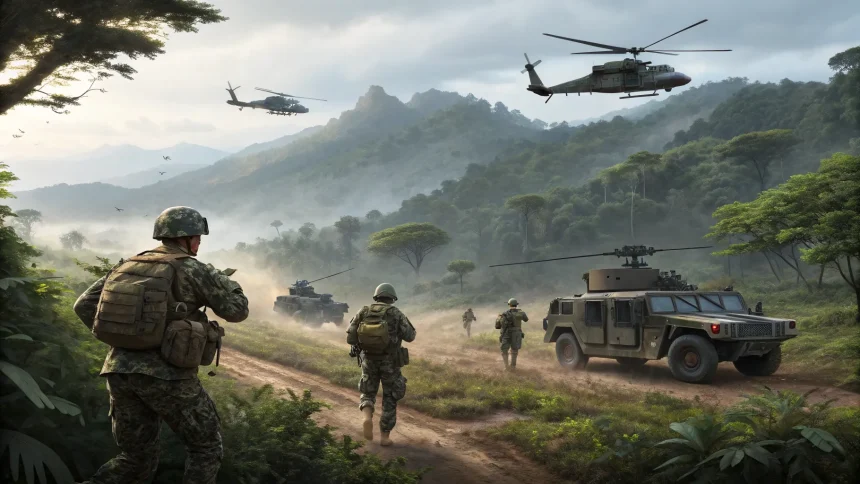
The United States and Ecuador have begun joint military operations against groups labeled as terrorist organizations inside Ecuador, according to a Tuesday announcement from U.S. Southern Command. The move marks a new phase in security cooperation as Ecuador struggles with violent crime tied to drug trafficking and prison gangs. Details on timing, location, and scope were not released, but the announcement signals closer coordination between the two countries as attacks on civilians, police, and critical infrastructure rise.
“The United States and Ecuador conducted joint military operations against designated terrorist organizations in Ecuador,” U.S. Southern Command announced Tuesday.
Rising Violence And A Shift In Strategy
Ecuador has faced a steep jump in homicides and high-profile attacks since 2021. Security experts link the surge to cocaine routes that pass through its ports and to conflicts among local and foreign-linked gangs. In January 2024, the government declared an internal armed conflict and labeled dozens of criminal groups as terrorist organizations. Troops were deployed to cities, highways, and prisons after coordinated attacks, kidnappings, and a live takeover of a television studio in Guayaquil shocked the country.
The homicide rate climbed from single digits a few years ago to one of the highest in the region by 2023. Prisons have seen repeated massacres, with security forces struggling to control weapons and gang command structures behind bars. Businesses and schools in major cities have adapted to curfews and checkpoints amid rolling states of emergency.
What The Joint Operations Could Involve
Southern Command did not provide operational details. Based on past cooperation, joint efforts often include intelligence sharing, training, maritime and aerial patrols, and logistics support. U.S. officials have previously supplied equipment such as vehicles, communications gear, and scanners, and have funded training for counter-drug missions. Ecuador has also sought help to monitor coastal waters and to protect key ports used by traffickers to move cocaine to North America and Europe.
Analysts say the new operations may target gang leadership, weapons flows, and smuggling routes. They could also support prison security, where armed groups coordinate extortion and contract killings. Any direct U.S. role on the ground is likely to remain limited and focused on advising, given Ecuador’s sensitivities over foreign military presence.
Support, Skepticism, And Human Rights Concerns
Many Ecuadorians support a tougher approach after recent attacks on civilians, police, and judges. Business groups have backed a stronger security presence to keep ports and supply chains open. Families in high-crime neighborhoods say patrols make streets feel safer, at least in the short term.
Rights advocates caution that labeling gangs as terrorists can blur legal lines. They warn that military-led policing risks abuses if oversight is weak. Past crackdowns in the region have shown that short-term drops in crime can fade if reforms to courts, prisons, and social programs stall. They stress transparent rules of engagement and public reporting on arrests, seizures, and civilian harm.
Regional Stakes And Drug Trafficking Pressures
Ecuador sits between major cocaine producers and key maritime routes. As other countries tightened controls, traffickers shifted operations, exploiting Ecuador’s ports, dollarized economy, and weak border monitoring. The chaos in prisons allowed gangs to recruit and organize. Security officials say coastal provinces and trade hubs remain flashpoints, with illicit shipments hidden in export containers.
- Maritime and port security are central to stopping cocaine exports.
- Prison control is key to breaking gang command networks.
- Judicial capacity is needed to hold captured leaders.
What To Watch Next
Officials are likely to track measurable outcomes from the joint operations. These could include seizures of weapons and drugs, arrests of identified leaders, and reduced attacks on police. Courts will face pressure to process cases quickly while protecting due process. Any rise in civilian complaints or reports of misuse of force could bring calls to scale back the military role.
The United States may deepen support if results are clear and abuses are limited. Expanded training, better port scanners, and maritime patrols could follow. If gang violence shifts to new areas, both countries will need flexible plans to respond.
The announcement signals a tighter partnership during a volatile period. Ecuador’s security crisis grew over years and will not be solved by raids alone. The joint effort may buy time, but lasting gains will depend on stronger prisons, cleaner police units, and safer ports. Clear reporting on the operations, including goals and outcomes, will be critical for public trust at home and abroad.