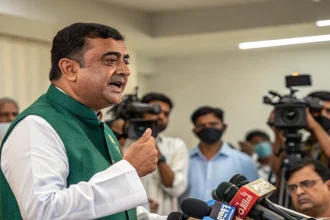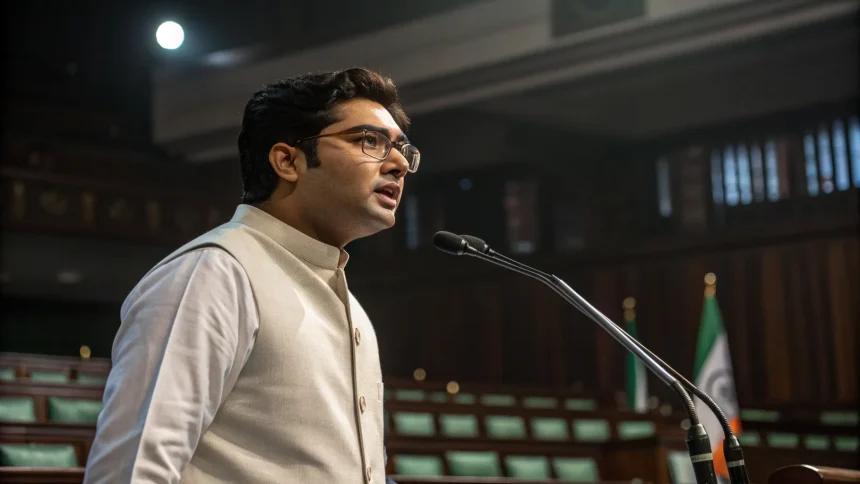
Trinamool Congress leader Abhishek Banerjee on Tuesday accused the Centre of shortchanging West Bengal in the Union Budget 2026, sharpening a long-running fight over how funds are shared between New Delhi and the states. Speaking soon after the budget presentation, the TMC MP alleged political bias in allocations and warned of wider strain on India’s federal compact.
“Neglect of West Bengal in the Union Budget 2026,” he said, attacking what he called “subscription-based federalism.”
His charge signals another tense budget season in Parliament. It raises questions about whether fiscal support is being guided by need and formula, or by politics and party lines.
Background: A Recurring Centre–State Flashpoint
Clashes over budgetary support are not new. State governments across party lines have, at times, argued that central funds arrive late, are tied to rigid conditions, or fall short of promises. West Bengal’s ruling TMC has been among the most vocal, pointing to earlier disputes over dues for rural jobs, housing schemes, and disaster relief.
The Union government, for its part, has repeatedly said that transfers follow set rules. It cites tax devolution recommended by the Finance Commission and centrally sponsored schemes with shared costs. Officials have also argued in past years that releases depend on utilization certificates, audits, and performance benchmarks.
That tug-of-war has real effects on the ground. States plan welfare programs, salaries, and projects around expected central support. When funds are delayed or cut, projects slow, and contractors, local bodies, and beneficiaries face uncertainty.
What “Subscription-Based Federalism” Suggests
Banerjee’s phrase hints at a deeper worry. It suggests that access to funds may feel contingent on political “alignment” rather than objective criteria. While he did not present detailed figures, the critique taps into a broader national debate over:
- How much discretion the Centre holds in scheme design and releases.
- Whether conditionalities disadvantage opposition-ruled states.
- How audit and compliance demands affect cash flow to states.
Policy experts have long noted that India’s fiscal system mixes formula-driven tax devolution with a patchwork of centrally sponsored schemes. This can create friction. States demand flexibility and predictable cash, while the Centre seeks oversight and measurable outcomes.
Competing Claims on Fairness
Supporters of the West Bengal government say the state faces high social spending needs and climate risks, and thus requires steady central help. They argue that delays ripple through rural livelihoods and urban services, making it harder to meet growth and welfare goals.
The Centre’s typical response has been that rules apply equally to all. It points to nationwide frameworks for transfers, digital tracking of payments, and audits designed to improve accountability. Officials have also argued in previous budget cycles that better compliance by states leads to faster releases.
A senior state finance official, speaking on background in recent years, characterized the friction as less about formulas and more about cash timing and conditions. Economists echo that timing can matter as much as totals, especially for capital projects that depend on steady tranches.
Implications for West Bengal and Beyond
If West Bengal’s leaders act on these allegations, several outcomes are possible. The state legislature may recalibrate its budget, delay or reprioritize projects, or seek court review of unpaid claims. Political confrontation could intensify during budget debates, with opposition parties lining up on either side of the fairness issue.
For businesses and citizens, the stakes are practical. Road and housing projects need predictable financing. Rural employment programs rely on timely wage payments. City services—from transit to drainage—often tap central schemes that require state matching funds.
Other states will watch how this plays out. If talks produce clearer release schedules or simpler conditions, the benefits could be nationwide. If the argument hardens, expect more litigation, more audit disputes, and more claims of bias from state capitals.
What to Watch Next
The coming days in Parliament will be important. Lawmakers are likely to press the finance ministry for a state-wise picture of allocations and releases. Committees may ask for timelines on pending dues and for clarity on compliance steps needed to unlock funds.
Key signals to track include:
- Any official clarification on West Bengal’s share and release schedule.
- Responses from allied and opposition chief ministers.
- Follow-up data on scheme-specific transfers during the fiscal year.
Abhishek Banerjee’s charge adds heat to a familiar dispute but also renews the call for predictable, transparent funding. As budget talks continue, the test will be whether both sides move from accusation to clear data, timelines, and fixes that keep projects running and services intact.
For now, the claims of neglect and the rebuttals of equal treatment frame the debate. The outcome will shape not only West Bengal’s fiscal room but also the tone of Centre–state cooperation in the year ahead.