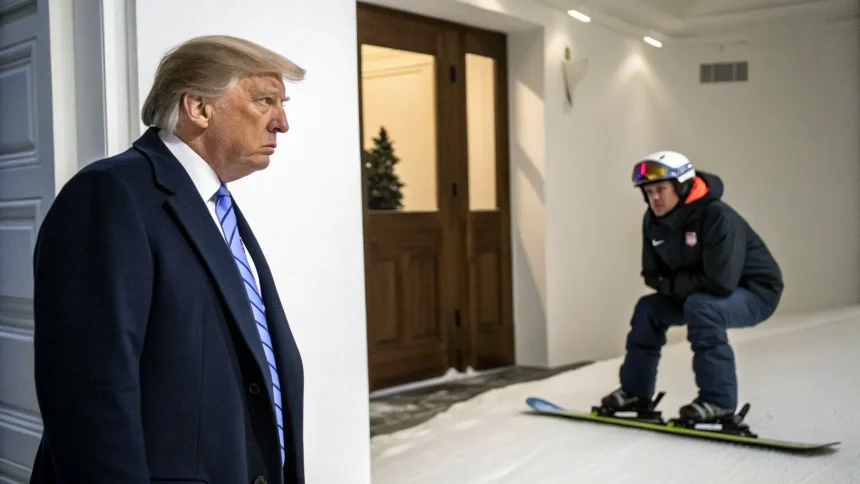
The U.S. president criticized a prominent freestyle skier as a “real loser” in a post on Truth Social after the athlete said representing the United States felt “a little hard” in the current political climate. The exchange, which unfolded online, quickly drew national attention and renewed debate over patriotism, sports, and speech. The remarks surfaced as athletes prepare for major international competitions, amplifying the stakes around national representation and public commentary.
What Sparked the Clash
The skier’s comment came during an interview about competing under the American flag. The athlete said the national mood and political divisions had complicated the experience of wearing U.S. colors abroad. The president responded on Truth Social, calling the skier a “real loser,” a phrase that spread widely on social media and cable news.
“Representing the U.S. is a little hard given the political climate.”
“A real loser.”
Neither side expanded at length in the immediate aftermath. But the short exchange touched a nerve among fans, athletes, and commentators who have watched similar disputes in recent years.
Longstanding Tensions Over Patriotism and Protest
Sport and politics have collided often in the United States. Past controversies include athlete protests during the national anthem, public criticism of athletes by elected officials, and the broader role of sports figures in civic life. Supporters of outspoken athletes argue that competition on the world stage should not silence personal beliefs. Critics say national teams carry a duty to present a united front.
Freestyle skiing, like many Olympic sports, places athletes in a global spotlight for brief windows. Comments about national identity or political division can draw outsize attention during those periods. Sponsors, governing bodies, and fans all watch closely when words risk overshadowing results.
Reactions From Across the Spectrum
Early reaction split along familiar lines. Some fans defended the skier’s right to speak honestly about the climate at home. Others condemned the tone, saying the national team demands pride above politics.
- Free speech advocates said athletes should not face personal attacks for sharing views.
- Critics argued that public disparagement of the country can undermine teammates and supporters.
- Team officials and sponsors stayed mostly quiet, seeking to avoid inflaming the issue.
Sports analysts noted that international rivals often seize on internal disputes as motivation. Yet they also observed that public dustups tend to fade once competition begins.
Social Media as a Political Stage
The president’s use of Truth Social, a platform favored by political allies, ensured the response reached a committed audience first. The message then jumped to larger networks, where it was reposted and debated. Athletes and politicians now often trade remarks in real time, raising the chance of swift escalation.
Communication experts say platforms reward sharp language and fast reactions. That dynamic can make measured debate harder. It also increases the pressure on athletes, who may find a single sentence reshaped into a national story within minutes.
Implications for Team USA and the Athlete
For the skier, the episode may bring attention that cuts both ways. It can rally supporters who value candor. It can also strain ties with officials or sponsors wary of controversy. Teammates could feel the impact if focus shifts from training to media questions.
National teams have handled such moments with private talks and public statements emphasizing unity. They often remind athletes of media policies but avoid punishments that can inflame debate. Any formal response from the governing body would signal how far the dispute has traveled inside the program.
What Comes Next
Much will depend on whether either party adds context or seeks to cool tensions. A follow-up from the skier acknowledging the weight of the jersey, while restating personal concerns, could reset the tone. A more tempered statement from the White House could do the same.
History suggests on-field performance can quiet controversy. If the skier delivers strong results, attention may return to competition. If the dispute lingers, it could shape public views of both the athlete and the administration’s approach to sports and speech.
The episode highlights a recurring theme in American life: athletes carry not only medals hopes but also the burden of national debate. As major events near, watch for official guidance from team leaders, any sponsor reaction, and whether both sides choose to move on or keep the fight alive online.