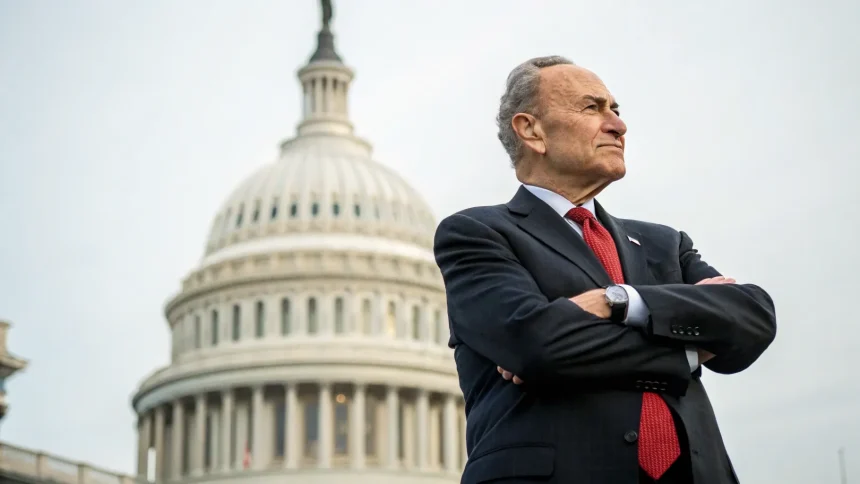
Senator Chuck Schumer’s decades in public office have made him one of the most influential voices for New York in Washington. Representing the state in the U.S. Senate since 1999, he now stands at the center of major national debates as Congress confronts budget deadlines, global conflicts, and domestic priorities.
Schumer, a Democrat, rose through New York politics before arriving in the Senate. His long tenure offers insight into how seniority, committee work, and leadership shape policy and funding for a large, diverse state. It also provides a lens into how New York’s needs are negotiated in a closely divided Congress.
From Albany to Washington: A Career Built Over Decades
Schumer’s career began in the New York State Assembly in the mid-1970s and moved to the U.S. House, where he served for nearly two decades before winning his Senate seat. The path shows a steady climb through legislative bodies and a deep familiarity with lawmaking.
“He assumed office to represent New York in the U.S. Senate in 1999.”
“Before serving in the U.S. Senate, he represented New York in the U.S. House of Representatives between 1981 and 1999, and the New York State Assembly between 1975 and 1980.”
That record places him among the longest-serving elected officials from New York at the federal level. Experience has given him leverage with federal agencies and the appropriations process.
Leadership and Influence on National Policy
Schumer has served as Senate Majority Leader since 2021, a role that gives him control over the Senate calendar and key negotiations. The job demands constant talks with the White House and House leadership. It also requires balancing moderate and progressive wings inside his caucus.
His leadership has been central to negotiations on government funding, infrastructure, semiconductor manufacturing support, and judicial confirmations. Allies say his approach is pragmatic and focused on passing bills rather than making statements. Critics argue that compromises sometimes dilute core priorities.
For New Yorkers, his leadership often translates into concrete gains. Federal funds for transit, housing, and disaster relief have been top concerns, especially after storms and during the pandemic recovery. He frequently highlights projects that touch everyday needs, from broadband access to rail tunnels under the Hudson River.
What Matters Most for New York
New York’s economy depends on finance, tech, health care, education, and tourism. Each sector watches Washington closely. Schumer’s seniority helps steer grants, disaster aid, and regulatory decisions that affect these industries.
- Infrastructure: Long-delayed rail and transit upgrades remain a priority for the region.
- Housing: Federal support for affordable housing and rental aid is central to city and state budgets.
- Public Safety: Funding for law enforcement and community programs is a recurring focus.
His office often points to federal dollars secured for clean energy projects, coastal protections, and small businesses. Such wins can be decisive for local governments struggling with rising costs.
Balancing Local and National Stakes
Schumer’s challenge is to align national deals with state needs. Big-city priorities can collide with concerns from rural and suburban communities. In recent sessions, that tension has surfaced around immigration policy, crime, and education funding.
As Majority Leader, he must also manage Senate rules, which give the minority broad power to delay or block bills. That reality pushes him to broker agreements that can attract cross-party votes. It also narrows the scope of what can pass.
Observers say his strategy often hinges on timing. He brings bills to the floor when there is momentum, public pressure, or a deadline that forces action. The method is designed to deliver results without overexposing divisions inside his caucus.
The Road Ahead
Looking ahead, Schumer faces a packed agenda. Government funding, Ukraine and Israel aid, border measures, and cost-of-living issues dominate near-term debates. The outcomes will shape New York’s budget, its transit projects, and its social services.
New York’s delegation will watch how he pairs economic priorities—such as job training and manufacturing—with climate and housing goals. The question is how much can pass in a closely divided Senate during an election year.
Schumer’s long tenure positions him to keep New York front and center in those talks. His record suggests an emphasis on practical deals that deliver funds and keep government running. For voters, the measure will be simple: whether the results show up in subways, schools, hospitals, and paychecks.
As Congress moves through another high-stakes session, the impact of his leadership will be felt in both policy and projects. Expect New York’s senior senator to keep pressing for federal support while navigating tight margins and tight timelines.