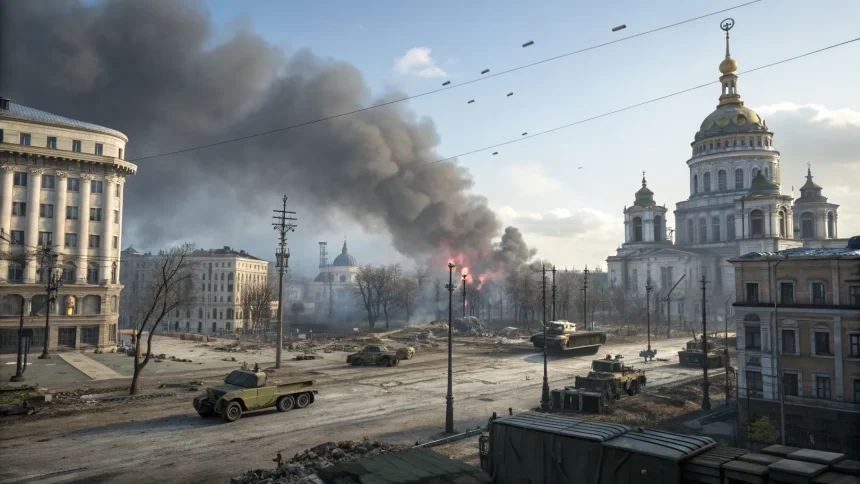
A fresh strike hit Ukraine a day after Russia launched one of its largest air attacks in months, firing hundreds of drones and dozens of missiles, including a powerful hypersonic weapon that reached western regions. The timing suggests a sustained campaign to pressure air defenses and critical infrastructure across the country.
Officials have not released a full damage assessment from the latest strike. But the scale of the earlier barrage raised alarms in Kyiv and among Ukraine’s allies, who warn that winter brings renewed risks to power grids and essential services.
Background: A War of the Air
Since the full-scale invasion in 2022, Russia has relied on waves of missiles and drones to hit Ukraine’s cities, energy sites, and industrial hubs. Iran-made Shahed drones and cruise missiles such as Kalibr have become a regular threat. Ballistic systems like Iskander and air-launched munitions add to the mix.
Ukraine has improved its defenses with Western systems, including NASAMS, IRIS-T, and Patriot batteries. These systems have helped reduce the lethality of some attacks. Yet large, mixed salvos can overwhelm radar coverage and ammunition supplies, especially when launched at night and across multiple regions.
Escalation With Hypersonic Weapons
The latest escalation featured a hypersonic missile that struck western Ukraine. Such weapons fly at very high speeds and can maneuver, making them hard to track and intercept. Russia has used the Kinzhal missile before, though Ukraine has claimed several interceptions with Patriot systems in past waves.
“The strike comes a day after Russia bombarded Ukraine with hundreds of drones and dozens of missiles, including a powerful new hypersonic missile that hit western Ukraine.”
The use of a hypersonic system points to a testing pattern. Russia appears to be probing where Ukraine’s long-range air defenses are deployed and how quickly they can respond over distance. Western regions had seen fewer hypersonic strikes earlier in the war, though they have not been immune to long-range attacks.
Targets and Tactics
Large mixed salvos serve several goals. They strain air defenses, reduce interceptor stocks, and increase the odds that some weapons break through. They also test gaps between defense zones and push defenders to reveal their positions by switching on radars.
- Drones act as decoys and as low-cost strike tools.
- Cruise missiles fly at low altitude to evade radar.
- Ballistic and hypersonic weapons shorten reaction time for defenders.
Analysts say the pattern matches earlier winter campaigns against power plants, substations, and repair crews. Even partial damage can force rolling blackouts, slow industry, and create pressure on civilians.
Impact on Civilians and Infrastructure
Every large attack brings risk to residential areas. Falling debris from intercepted missiles has caused injuries and fires in past waves. Power loss can disrupt hospitals, schools, and water systems. Local authorities often move rapidly to restore service, but repeated strikes prolong outages and raise repair costs.
Western Ukraine serves as a logistics hub for aid and commerce. A hit there can affect storage sites, rail links, or temporary power supplies. Even if the precise target was military, shock waves from high-speed weapons can damage nearby buildings.
International Response and Next Steps
Ukraine’s partners have focused on air defense missiles, radar upgrades, and generator support. Additional interceptors and spare parts are a persistent need. Training to integrate systems from different countries is another priority.
European states have discussed pooling funds to buy more interceptors and accelerate deliveries. The United States and others have backed efforts to protect the grid with mobile transformers and hardened substations. Aid officials caution that humanitarian needs climb when electricity and heating falter.
What to Watch
Several factors will shape the next phase:
- Frequency and size of Russian salvos over the coming weeks.
- Ukraine’s interceptor stock levels and ability to rotate defenses.
- Damage to power infrastructure and speed of repairs.
- Any shifts in Russian targeting to western regions and border areas.
- Delivery timelines for promised air defense systems and munitions.
The latest strike signals that air attacks remain central to Russia’s strategy. The inclusion of a hypersonic weapon adds pressure on Ukraine’s defenses and highlights the need for steady supplies of interceptors. As winter deepens, the security of the power grid and the pace of aid will be key indicators of resilience. The next rounds of support, and how quickly they arrive, could determine how well Ukraine withstands the campaign.