As offices fill back up, a quieter issue is pressing on workers’ minds: access to fresh air and greenery between meetings. In many jobs, stepping outside is a luxury. Across cities and suburbs, workers say tight schedules and building designs leave little room for outdoor time during the day.
“Getting into nature can be challenging during the workday. Many professions allow little time or access to the outdoors.”
The concern is not only about morale. It’s about health, productivity, and fairness. Employers are weighing how to offer “micro-doses” of nature without cutting into output. City planners are asking how to bring trees, terraces, and parks closer to the office door.
The Office–Nature Gap
For decades, office plans prioritized desks and conference rooms. Outdoor space was an afterthought, if it existed at all. Window access, daylight, and terraces often lost out to rentable floor area.
Hybrid work briefly shifted those priorities. Many companies invested in rooftop seating, plant-filled lobbies, and nearby walking paths to lure people back. But workers say schedules have tightened again, leaving “green breaks” squeezed out by calls and deadlines.
Manufacturing, healthcare, and service workers face steeper limits. Breaks are timed. Facilities can be landlocked. Stepping outside may require passing through security, changing footwear, or crossing busy loading areas.
Why Nature Breaks Matter
Decades of research tie short outdoor breaks to lower stress, steadier heart rates, and fewer headaches. Even brief views of trees or sky can help the brain reset.
Workplace studies have linked greenery and daylight to higher focus and fewer sick days. A widely cited study associated “green” offices with double-digit gains in productivity compared with sparse spaces. While numbers vary by job and setting, the direction is consistent.
Mental health is also part of the picture. Clinicians point to the restorative effects of natural light and quiet. Workers who can step outside report feeling less drained by late afternoon.
Employers Weigh Practical Fixes
Companies are testing low-cost options that don’t disrupt operations. The goal is simple: shorten the distance between a desk and a breath of fresh air.
- Create shaded seating within a one-minute walk of work areas.
- Add operable windows or indoor greenery near high-traffic zones.
- Stagger breaks so stepping outside feels permitted, not punished.
- Mark safe, quick walking loops around buildings.
Facilities teams note trade-offs. Terraces demand structural upgrades. Operable windows can complicate HVAC. Outdoor areas raise maintenance and safety questions. Yet many report that small steps, like pocket gardens or door-adjacent benches, deliver outsized goodwill.
Access and Equity Concerns
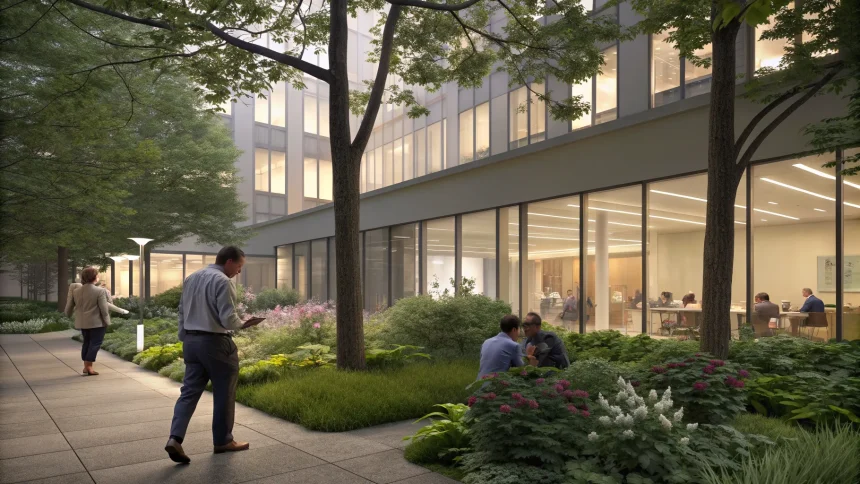
Access is uneven. White-collar campuses often add courtyards and rooftops. Shift workers and contractors may have only a parking lot. Urban towers with little setback space offer limited solutions beyond indoor plants and sky views.
In dense districts, public space plays a role. When sidewalks are crowded and parks are distant, five-minute breaks vanish in elevator waits. Some cities now push for “parklets,” trees along curb lanes, and mid-block open spaces that anyone can use.
Unions and worker advocates argue that time is as important as design. A bench helps only if people feel safe taking a break. Clear policies and visible manager support make the difference.
What Experts Recommend
Health researchers say small, frequent nature moments beat rare, long outings. Two or three five-minute outdoor breaks can calm the nervous system and sharpen attention.
Office designers suggest measuring what matters: how close is the nearest outdoor seat, how long do elevators take, and how many workers can use a terrace without crowding. These metrics guide upgrades without major renovations.
City officials can help with shade trees, safe crossings, and pocket parks near job centers. Employers can map the nearest public green spots and nudge teams to use them.
The Road Ahead
Economic pressures will keep schedules tight. But ignoring nature access has costs, from burnout to turnover. Employers that make outdoor time easy signal that well-being is not just a slogan.
The test is simple and practical: can a worker get fresh air, greenery, and daylight in five minutes or less? If not, the company has work to do.
The coming year will show whether small fixes—closer seating, friendlier break policies, smarter building entries—can turn a daily grind into a day with breathing room. For many workers, that shift cannot come soon enough.